Industrial Forklift Sizing: How to Match Counterbalance Electric Truck Capacity to Peak Loads Without Over-Specifying
News 07/11/2026
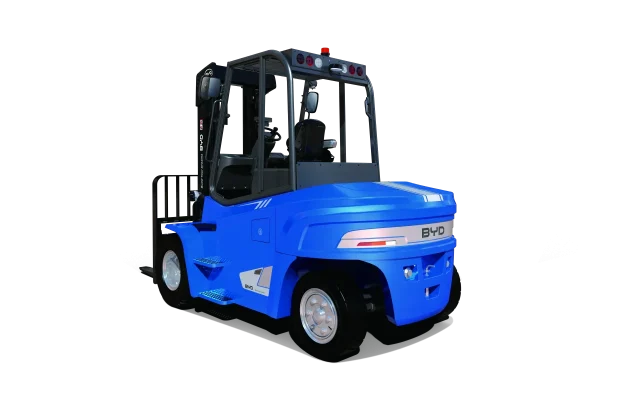
Sizing an industrial forklift is not a matter of picking the largest capacity on the price sheet. The goal is to find the lowest rated capacity that safely covers your heaviest real load, at the height and load center where that load actually travels. Over-specifying raises purchase cost, adds machine weight, and can reduce the agility you need in tight aisles. Under-specifying creates a stability and safety problem. This guide explains how to find the balance, using the four-wheel counterbalance electric forklift as the reference machine.
Why Peak Load Is Not the Same as Rated Capacity
Forklift capacity is a rated figure tied to a specific load center and lift height. A truck may be rated at a given capacity with the load center at 24 inches and the forks at a stated height. Move the load farther out on the forks, or lift it higher, and the safe capacity drops. This is why the heaviest pallet on your floor is only the starting point.
Three quantities drive the decision:
- Actual peak load: the heaviest load, including pallet, packaging, and any attachments, that the truck will lift in normal operation.
- Load center: the horizontal distance from the fork face to the load’s center of gravity. A load that overhangs the pallet increases this distance.
- Lift height: the height at which the load is carried and placed. Capacity data should be read at your real stacking height, not at floor level.
A truck rated comfortably above your peak load at a short load center may be marginal once the same load sits farther out and goes up several meters. Always compare the load and the rating at the same load center and height.
Working Through the Sizing Decision Step by Step
The sequence below keeps the analysis grounded in your operation rather than in a catalog headline figure.
1. Record the real load envelope
List the heaviest loads, not the average. Note pallet dimensions, whether loads overhang, and whether attachments such as clamps or special forks will be used. Attachments add weight and shift the effective load center, so their effect must be included.
2. Fix the lift height and load center
Identify the highest shelf or stack level the truck must serve and the load center at which loads are normally handled. If loads vary, use the combination that produces the most demanding condition.
3. Check the capacity chart at that condition
Capacity charts from the manufacturer show how rated capacity changes with load center and lift height. Read the value at your actual condition, then compare it with the peak load. A margin above the peak load is prudent, but the size of that margin should follow your own risk assessment and any site rules, not a guessed percentage.
4. Confirm the aisle, floor, and ramp conditions
Capacity is only one constraint. Measure the narrowest aisle, note floor condition and any slopes, and confirm the truck’s dimensions and turning requirements suit the building. A higher-capacity truck is often larger and heavier, which can make existing aisles or floor slabs the limiting factor.
5. Match the battery and charging plan to the shift pattern
Electric trucks need a charging plan that fits the duty cycle. Confirm the number of shifts, available charging windows, and whether opportunity charging is feasible on your site. The right battery and charger combination depends on your schedule; ask the supplier to confirm it against your actual shift data rather than assuming a standard pack will do.
Where Over-Specifying Costs You
Buying more capacity than the duty requires is a common and expensive habit. The effects are practical, not just financial:
- Higher purchase and energy cost: a larger machine and battery generally cost more to buy and to run.
- Larger footprint: a heavier truck may need wider aisles or stronger floors, which can force building changes.
- Reduced maneuverability: extra size can slow cycle times in confined storage areas.
- False confidence: an oversized rating can mask the fact that the real constraint is load center or lift height, not nominal capacity.
Over-specifying is not automatically safer. The safer choice is a truck whose capacity chart covers your true peak condition with a sensible, documented margin.
Matching the Truck to Common Handling Tasks
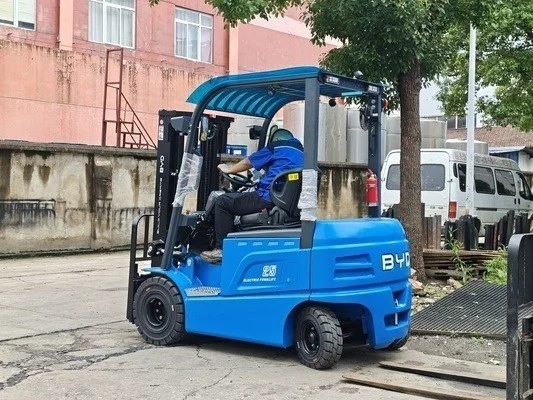
Four-wheel counterbalance electric trucks are a common general-purpose choice in factories, loading docks, and warehouse transfer work. Whether one suits a specific task depends on the conditions below.
| Condition | What to confirm |
|---|---|
| Heavy pallets at low height | Peak load and load center; capacity at the working height |
| High racking | Capacity at the maximum lift height, not floor-level rating |
| Narrow aisles | Truck dimensions, turning radius, and aisle width |
| Ramps or sloped floors | Grade, surface condition, and the manufacturer’s guidance on slope operation |
| Multi-shift operation | Battery capacity and charging windows across the shift pattern |
Where a task falls outside these conditions, such as very narrow aisles or purely horizontal pallet movement, a different truck type may be the better fit. Those cases should be assessed separately rather than forced onto a counterbalance machine.
Frequently Asked Questions
Should I size to the heaviest load or the average load?
Size to the heaviest load the truck will actually handle, evaluated at the load center and lift height where it is handled. Average loads tell you about productivity, not about safe capacity.
Does a higher rated capacity always mean a safer truck?
No. Safety depends on the capacity available at your real load center and height, plus stability, floor, and operating conditions. A truck rated above your peak load at a short load center can still be marginal when the load is carried farther out or lifted high.
How much margin above the peak load should I allow?
There is no universal figure. The appropriate margin depends on load variability, attachment use, operating conditions, and your site’s safety rules. Document the basis you use and confirm it with the supplier against the capacity chart.
Can a four-wheel counterbalance electric truck handle outdoor loading docks?
It can be considered where the surface, slope, and weather exposure suit electric operation. Confirm floor condition, grade, and the manufacturer’s guidance before committing, since these factors affect both capability and safety.
What information should I give a supplier to get an accurate recommendation?
Provide peak load and load center, maximum lift height, aisle width, floor and ramp conditions, shift pattern, and charging options. These details let the supplier match a four-wheel counterbalance electric forklift and configuration to your actual duty rather than to a generic estimate.
Before finalizing a size, verify the capacity chart at your true load center and lift height, confirm the aisle and floor constraints, and check the charging plan against your shift pattern. Share your operating conditions, peak load, and lift height with our team to discuss a suitable four-wheel counterbalance electric forklift configuration.