Industrial Forklift Specification: What to Confirm About Drive Motor Power and Gradeability Before Ordering a Four-Wheel Counterbalance Electric Truck
News 09/11/2026
Drive motor power and gradeability are two of the easiest specification items to misread on an industrial forklift datasheet, and two of the most expensive to get wrong. Before you order a four-wheel counterbalance electric forklift, confirm how the motor rating was measured, what load and slope the gradeability figure describes, and whether both numbers still hold under your real duty cycle. A high motor rating does not automatically deliver the climbing ability you need, and a quoted gradeability percentage is meaningless without the load, slope condition and speed attached to it.
This guide covers the checks a buyer can complete before placing an order, using the manufacturer’s technical documentation as the authority on any specific model.
Start With the Duty Cycle, Not the Motor Rating
Motor power only matters in relation to the work the truck must do. Before comparing kilowatt figures, write down the operating profile: average and peak load, lift height, travel distance per trip, number of shifts, and the steepest ramp the truck will use. These inputs decide whether continuous or peak motor output is the relevant number.
A truck that shuttles light loads on flat concrete and a truck that climbs a loading ramp with a near-capacity load every cycle place very different demands on the drive system. The same motor rating can be adequate on one site and marginal on the other. Confirm with the supplier which rating — continuous, peak, or a short-term boost — appears on the datasheet, and under what test condition it was obtained.
Reading Drive Motor Power Correctly
Datasheets often present a single power figure, but the underlying conditions vary. Ask the supplier to clarify the following points in writing.
- Rating basis: whether the figure is continuous, peak, or a time-limited boost, and the duration attached to it.
- Measurement standard: the standard or internal test method used, if one is stated.
- Battery voltage and type: motor output depends on the supply; confirm the battery voltage and chemistry the rating assumes.
- Drivetrain losses: whether the rating describes motor shaft output or power at the wheels.
- Thermal limits: any duty-cycle restriction, such as a maximum continuous climbing time, stated in the manual.
Where a datasheet gives no basis, treat the number as indicative only and ask the supplier to confirm it against your operating profile. Do not compare kilowatt figures across brands without checking that both were measured the same way.
Gradeability: What the Percentage Really Means
Gradeability describes the steepest slope a truck can climb under stated conditions. The conditions are the important part. A gradeability figure should be read together with load, slope surface, speed, and whether the truck starts from rest on the slope or arrives with momentum.
Three common sources of confusion:
- Load: gradeability at rated load is lower than gradeability unladen. Confirm which one is quoted.
- Speed: a truck may climb a slope slowly at full load. Ask what speed the figure corresponds to.
- Surface: a figure obtained on a clean, dry test slope may not transfer to a wet ramp, a dock plate, or a rough yard surface.
Also check how the grade is expressed: percent grade and degrees are not interchangeable. A slope described as a percentage is the rise divided by the run, so the same physical ramp has a different number in each unit. Confirm the unit before comparing figures.
A Simple Pre-Order Comparison Table
Use a table like this to collect supplier answers in one place. Leave cells blank until the supplier confirms them in writing; do not fill gaps with assumptions.
| Item to confirm | Why it matters | Supplier answer |
|---|---|---|
| Drive motor rating basis | Continuous, peak and boost figures are not comparable | |
| Gradeability load condition | Rated-load and unladen figures differ | |
| Gradeability speed | A slow climb may not suit the duty cycle | |
| Test surface and conditions | Wet or rough surfaces change real capability | |
| Maximum continuous climb time | Thermal limits may restrict long ramps | |
| Battery voltage and capacity | Output and run time depend on the supply |
Matching Both Figures to Your Site Conditions
The specification only works if it matches the site. Walk the route the truck will use and record the steepest ramp, its length and surface, plus any transitions such as dock levellers or floor joints. Then compare those observations with the supplier’s confirmed figures.
Consider these practical points:
- Ramp length: a short steep ramp and a long moderate ramp stress the drive system differently.
- Starting on a slope: stopping and restarting on a grade is more demanding than passing over it at speed.
- Load centre: a load held further from the carriage reduces stability and effective capacity, which in turn affects safe climbing.
- Surface condition: rain, oil, dust or loose material can reduce traction on ramps.
- Charging pattern: shift length and charging breaks determine whether the battery can support the required duty.
If a site ramp is close to the quoted limit, ask the supplier whether the configuration is suitable and what operating restrictions apply. A margin between the quoted figure and the actual site condition is a reasonable precaution; the appropriate margin depends on how often the ramp is used and how critical the load is.
Questions to Settle Before Signing
Before ordering, confirm that the quotation and technical annex state the motor rating basis, the gradeability load and speed conditions, and any duty-cycle limits. Ask whether the figures apply to the exact battery and configuration being purchased, since a different battery option can change output and run time.
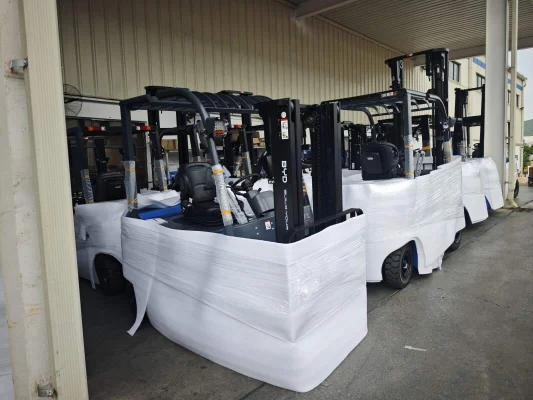
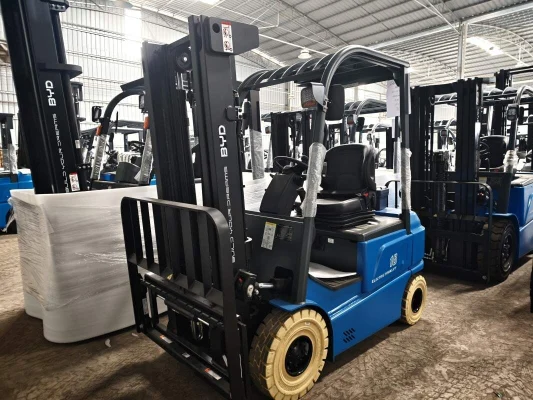
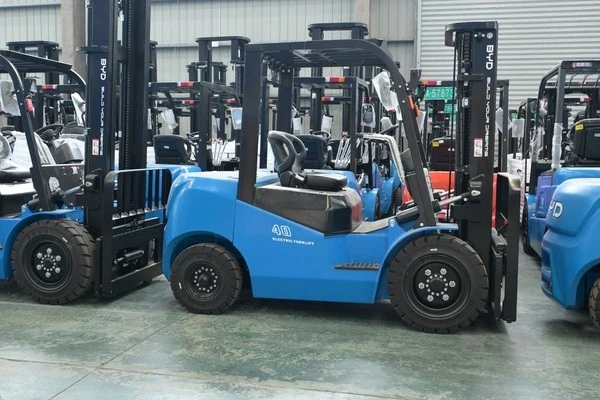
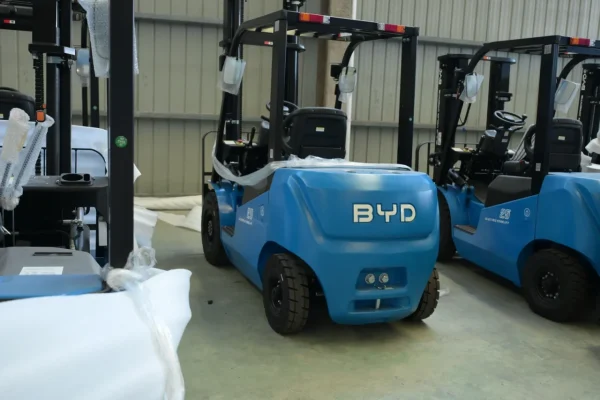
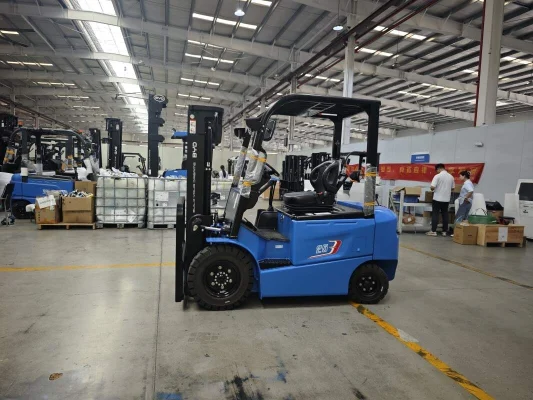
If you are evaluating a BYD four-wheel counterbalance electric forklift, share your load, lift height, ramp details and shift pattern with the supplier so the selection and configuration can be checked against your actual conditions. Model-specific power and gradeability data should come from the current manufacturer technical documentation, not from general assumptions.
Frequently Asked Questions
Is a higher drive motor power always better?
No. A higher rating may help on demanding ramps, but it also affects energy use, heat and cost. The right figure depends on load, ramp and duty cycle, and it must be compared on the same rating basis.
Can I use the gradeability figure to judge a ramp on my site?
Only if the load, speed, surface and starting condition match your site. A quoted figure obtained unladen on a dry test slope does not describe a loaded climb on a wet ramp.
Why do two suppliers quote different gradeability percentages?
They may use different load conditions, speeds, surfaces or units. Ask each supplier to state the test conditions before comparing the numbers.
What should I provide when requesting a configuration check?
Give the maximum load, lift height, load centre, steepest ramp and its length, surface type, shifts per day and charging arrangements. These details let the supplier confirm whether the proposed truck suits the work.