Key Infrastructure Requirements Supporting Zero Emission Forklift Deployment Across Industrial Facilities
News 06/10/2026
More industrial operations shift to zero emission forklifts to reduce on-site emissions and align with sustainability goals. However, successful deployment depends heavily on matching site infrastructure to zero emission technology needs. Traditional internal combustion forklifts rely on fuel storage and exhaust systems that do not match zero emission design requirements. This guide outlines core infrastructure changes facilities must implement to support safe, reliable zero emission forklift operation.
Core Power Infrastructure Adjustments
All zero emission forklifts rely on either battery electric power or hydrogen fuel cell power, each with unique power infrastructure needs. Most facilities need upgrades to existing electrical systems to support consistent, reliable operation.
On-Site Charging Capacity Upgrades
Battery electric zero emission forklifts require dedicated on-site charging infrastructure. Existing facility electrical panels often lack sufficient capacity to support multiple simultaneous chargers, especially when production equipment also draws power during peak shifts. Facilities must calculate total peak power demand across all on-site systems before sizing new electrical capacity.
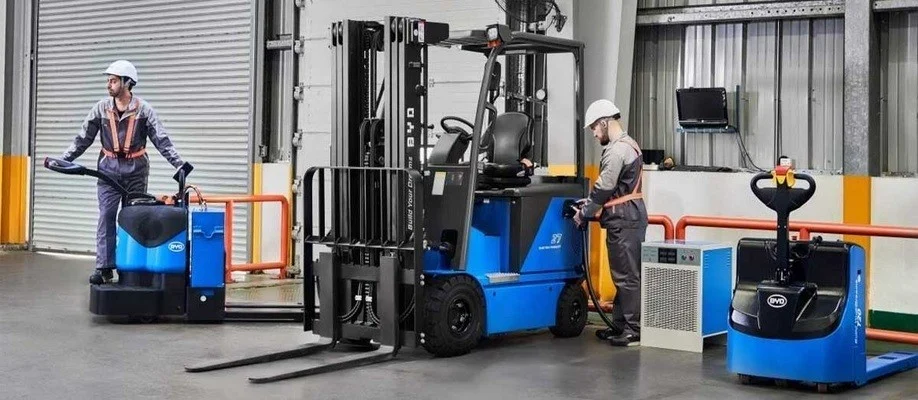
Two common charging models require different infrastructure setups: opportunity charging and shift-based battery swapping. Opportunity charging places chargers near active work zones, allowing operators to top up battery power during breaks. This model requires additional wiring runs to connect chargers to remote locations across the facility. Battery swapping relies on spare charged batteries that operators swap into forklifts at the start of each shift. This model requires dedicated space to store and charge extra batteries, plus temperature control and ventilation supporting lithium-ion battery banks.
Hydrogen Fuel Cell Specific Power Infrastructure
Hydrogen fuel cell zero emission forklifts produce power through on-site reaction of stored hydrogen, so they require on-site fuel storage and dispensing infrastructure. Many facilities partner with third-party hydrogen suppliers to manage storage and regular fuel delivery. Site layout must accommodate large delivery truck access to storage tanks, and storage locations must meet local building codes governing compressed gas placement.
Space Allocation Requirements
Zero emission forklift infrastructure requires dedicated space that often differs from space allocated to traditional internal combustion forklift fueling. Facilities must assess available unused space and adjust layouts to meet these needs.
Charging and Fueling Zone Placement
Zero emission charging and fueling zones cannot share space with traditional fueling stations in most cases. Charging zones need clear, unobstructed access away from high-traffic pedestrian routes to prevent accidental damage to charging cables and connectors. Indoor charging zones require proper ventilation to dissipate heat generated during charging cycles.
Auxiliary Space Needs
Battery electric fleets need extra space to store spare charged batteries and battery swapping equipment. This space must support the heavy weight of multiple lithium-ion battery banks, so floor load capacity verification is required before installation. Hydrogen fuel cell fleets often need outdoor space accommodating compressed hydrogen storage tanks to meet safety code requirements. Many facilities convert underused loading docks or unused storage closets into charging zones, but must complete structural checks before moving forward.
Safety and Code Compliance Requirements
Zero emission forklift infrastructure has unique safety and compliance requirements that differ from traditional forklift infrastructure. Facilities must address these requirements before deploying new fleets to avoid code violations and safety hazards.
Electrical Safety Modifications
High-power charging stations require dedicated ground fault protection and circuit breakers matched to charger output. Older facilities often need updated wiring to handle consistent high load from multiple chargers, which reduces overheating and fire risk. All new electrical installations must pass local electrical code inspections before operation.
Environmental and Regulatory Compliance
Lithium battery storage areas require fire suppression systems designed to address lithium-ion fires, because standard water systems do not work effectively against this type of fire. Local code officials typically require formal inspections before new charging infrastructure goes live. Hydrogen installations must meet national fire protection association standards governing gas storage and handling.
Frequently Asked Questions
Can small facilities deploy zero emission forklift fleets without major infrastructure upgrades?
Some small fleets with one or two zero emission forklifts can use existing low-power electrical capacity through off-peak charging. Off-peak charging draws power when other production or facility equipment is idle, so it avoids overloading existing electrical panels. Facilities with only one or two units can also place chargers in existing unused space to avoid new construction. Larger fleets with three or more units almost always need at least electrical panel upgrades to handle multiple simultaneous chargers.
What is the biggest common infrastructure mistake new zero emission forklift adopters make?
Most new adopters underestimate total peak power demand when multiple chargers run at the same time during shift breaks. They size electrical capacity to accommodate average use instead of peak use, which leads to frequent tripped breakers and reduced charging speed during busy work periods. Another common mistake is overlooking future fleet expansion, which leaves no extra capacity accommodating additional units later, requiring costly secondary retrofits.
Do zero emission forklifts need different ventilation than traditional internal combustion models?
Battery powered zero emission forklifts produce no exhaust during operation, so they need less overall ventilation supporting daily operation than internal combustion models. However, battery charging rooms still need proper ventilation to dissipate heat and any potential gas release from older lead-acid battery units. Hydrogen fuel cell models also produce no exhaust during operation, but storage and fueling areas need ventilation to prevent trapped gas buildup.
Can existing indoor facility floors support new zero emission forklift infrastructure?
Most modern industrial facility floors can support the additional weight of chargers, battery banks and storage racks. Older facilities with uneven or thin concrete floors need load testing before installing heavy battery swapping systems or hydrogen storage supports. Any new structural additions, like raised platforms accommodating charging zones, also need load testing to confirm compliance with local building codes.
Final Actionable Steps
Deploying zero emission forklifts requires upfront infrastructure assessment before any equipment purchase. Facilities should start with a full audit of current electrical capacity, available open space and local code requirements that apply to zero emission technology. Teams should also plan for future fleet growth to avoid costly retrofits after initial deployment. Each zero emission technology (battery electric, hydrogen fuel cell) has unique infrastructure needs, so final selection should align with existing site capabilities and operational demands. Proper upfront planning reduces unexpected costs and ensures long-term reliable operation of zero emission forklift fleets across industrial sites.