LiFePO4 Forklift Procurement: Verifying Battery Capacity Claims Against Four-Wheel Counterbalance Electric Truck Load and Lift Requirements
News 04/11/2026
A LiFePO4 forklift battery datasheet usually lists one impressive number: nominal capacity in ampere-hours or kilowatt-hours. That figure alone tells you very little about whether a four-wheel counterbalance electric forklift will complete a shift with the loads and lift heights you actually run. Procurement decisions go wrong when buyers treat the headline capacity as a guaranteed working-energy figure, then discover the truck cannot sustain the duty cycle. This guide explains which claims to verify, which documents to request, and how to connect battery data to load and lift requirements before you issue a purchase order.
Why nameplate capacity is not working energy
Nominal capacity describes energy stored under defined test conditions. A usable-capacity claim should state the discharge rate, cut-off voltage, temperature, and depth of discharge used in the test. Without those conditions, two batteries with identical ampere-hour ratings may deliver noticeably different energy during a real shift.
Several factors separate nameplate figures from energy delivered at the truck:
- Discharge rate. Capacity measured at a low current does not automatically translate to the higher currents a loaded counterbalance truck draws during acceleration and lifting.
- Voltage sag under load. Internal resistance causes voltage to drop; the truck’s controller may derate or stop before the battery reaches its stated cut-off.
- Temperature. Cold or hot ambient conditions shift usable capacity and charging behavior.
- Depth of discharge policy. If operations plan to stop at a partial state of charge to protect cycle life, the practical energy per shift is lower than the full rating.
- Auxiliary loads. Lights, fans, and onboard chargers draw energy that the traction duty cycle does not account for.
Ask suppliers to present capacity claims alongside the test conditions. A claim you cannot trace to defined conditions is a marketing figure, not a procurement input.
Matching battery data to load and lift requirements
The truck side of the equation matters as much as the battery. A four-wheel counterbalance electric forklift’s energy demand depends on the load, the lift height, the number of handling cycles, travel distance, floor conditions, and any ramps on the route. Higher lift heights and heavier loads generally increase energy drawn per cycle, but the exact relationship depends on the truck’s hydraulic system and controller settings.
Build a duty-cycle profile before comparing batteries
Document the following and share it with the supplier when requesting a configuration:
- Rated load you intend to handle, plus the load center distance at which that load is carried.
- Maximum and typical lift heights, including any free-lift requirement.
- Handling cycles per hour and hours per shift, with breaks noted.
- Travel distance per cycle and aisle width, since tight aisles mean more direction changes.
- Floor surface, gradients, and dock transitions.
- Ambient temperature range in storage and working areas.
- Charging window, available charger capacity, and whether opportunity charging is planned.
This profile lets the supplier size the battery and charger against your operation rather than against a generic average. It also gives you a written basis to compare quotations.
Questions that expose weak capacity claims
When a quotation states a LiFePO4 forklift battery capacity, request clarification on each point below. Vague answers are a signal to keep asking.
| Claim area | What to request |
|---|---|
| Nominal capacity | Rated voltage, ampere-hours, and kilowatt-hours, plus the discharge conditions used |
| Usable energy | Recommended depth of discharge and the resulting usable energy per cycle |
| Continuous and peak current | Battery management system limits compared with the truck’s controller demand |
| Charging | Charger model, charge profile, typical recharge time from a stated state of charge, and temperature limits |
| Cycle life | Test conditions behind any cycle-count claim, including depth of discharge and temperature |
| Compatibility | Confirmed fit with the specific four-wheel counterbalance model, voltage, and connector type |
Where a supplier cannot provide a tested figure, treat the value as unverified and plan a conservative operating assumption instead.
Reconcile battery voltage and truck configuration
Battery voltage must match the truck’s design voltage, and the battery management system must communicate correctly with the truck’s controller where such communication is part of the design. Confirm connector type, compartment dimensions, weight, and counterweight implications. A battery that fits physically but exceeds the compartment’s rated limits creates a safety and compliance question that belongs in the technical agreement, not in a verbal assurance.
Procurement checklist and acceptance points
Use a written technical specification as the basis of the order. The following items are commonly worth pinning down before shipment:
- Confirmed truck model, rated capacity, load center, and maximum lift height.
- Battery voltage, capacity, and the test conditions behind every performance claim.
- Battery management system protection thresholds and fault reporting method.
- Charger specification, installation requirements, and charging time expectations at stated temperatures.
- Delivery scope: battery, charger, cables, connectors, documentation, and any commissioning support.
- Warranty terms, including what voids coverage and how capacity degradation is assessed.
- Spare parts availability and service response arrangements in your region.
At acceptance, verify the delivered battery and charger match the agreed specification, check that the truck powers up and completes a representative handling cycle, and confirm that documentation matches the delivered configuration. Record actual performance during the first weeks of use against the duty-cycle profile you supplied. If measured energy use differs materially from the quotation’s assumptions, raise it while warranty and commercial leverage remain strong.
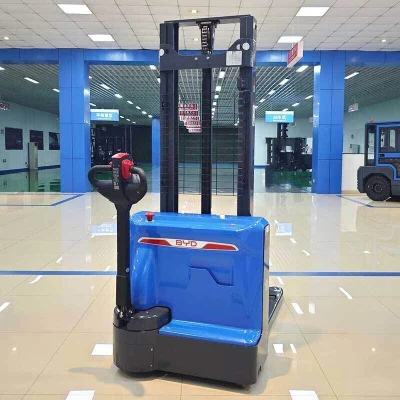
A cautious approach is to treat any capacity figure as a claim to be evidenced, not a specification to be trusted. Once you have your load, lift height, cycle count, and charging window documented, share those details with our team to discuss configuration options across our BYD four-wheel counterbalance electric forklift range. We will confirm which parameters require verification against the manufacturer’s technical data rather than estimate them.
Frequently asked questions
Does a higher ampere-hour rating always mean longer runtime?
Not necessarily. Runtime depends on usable energy at your discharge rate and temperature, the truck’s efficiency, and how deeply you discharge the battery. Compare ratings only when the test conditions match.
Can I compare a lithium battery claim directly with a lead-acid rating?
Only with care. The two chemistries behave differently under load and charging, and usable capacity depends on the discharge policy. Ask both suppliers to state test conditions and recommended depth of discharge.
What if the supplier cannot provide test conditions?
Ask for the manufacturer’s technical datasheet. If conditions remain unavailable, plan conservatively and clarify in the purchase agreement how capacity shortfalls will be handled.
How does lift height affect battery sizing?
Higher lifts generally increase energy drawn per cycle, but the amount depends on the truck’s hydraulics and controller. Provide maximum and typical lift heights so the supplier can size the battery against your duty cycle.