LiFePO4 Forklift Battery Data Logging: What Telemetry Should Four-Wheel Counterbalance Electric Truck Buyers Request
News 08/11/2026
A LiFePO4 forklift battery can report far more than state of charge, yet many procurement teams never specify which data they expect to receive. The result is a truck that runs well but offers little evidence when a shift ends early, a charger behaves oddly, or a warranty discussion begins. Telemetry is most useful when you decide the question first, then request the signals that answer it. This guide outlines the records worth asking about during a four-wheel counterbalance electric forklift purchase, how to phrase the requirement, and what to verify before signing.
Start With the Decisions Telemetry Must Support
Battery data has value only when it changes a decision. Before listing signals, identify who will use the records and what they need to settle. Common examples include:
- Operations: whether a truck finishes a shift on one charge, and when charging should begin.
- Maintenance: whether an early shutdown traces to the battery, the charger, or the truck.
- Procurement and finance: whether actual duty cycles match the assumptions used at purchase.
- Warranty discussions: whether recorded conditions fall inside agreed operating limits.
A short list tied to real decisions is easier to specify and easier to verify than a long list of impressive-sounding fields nobody reads.
Core Signals to Request in the Technical Specification
The following categories are typical of battery management systems on lithium-powered counterbalance trucks. Exact availability, naming, and sampling intervals vary by supplier, so treat this as a request list to confirm rather than a guaranteed feature set.
State of charge and state of health
State of charge supports daily charging decisions. State of health, usually expressed as a percentage of original capacity, helps track gradual change over months. Ask how each value is calculated and whether it is a direct measurement or an estimate.
Voltage, current, and temperature
Pack voltage, charge and discharge current, and cell or module temperatures reveal how hard the battery works. Temperature records matter in hot warehouses and cold loading docks. Ask which sensors exist, where they sit, and how often values are logged.
Events and alarms
Overvoltage, undervoltage, overcurrent, overtemperature, and communication faults should be time-stamped. Event logs turn a vague complaint into a checkable sequence.
Charge and discharge history
Session counts, energy in and out, and depth of discharge help confirm whether the truck matches its intended duty. Request the recording interval and the retention period, since both affect what can be reconstructed later.
How to Write the Requirement and What to Confirm
Vague requests produce vague answers. Put the telemetry requirement in the inquiry document and ask the supplier to respond point by point. Useful items to confirm:
- Which signals are standard and which are optional on the quoted configuration.
- Whether data leaves the battery through a display, a wired connection, a local network, or a cloud portal, and who owns the account.
- Logging interval, memory capacity, and how long records are kept.
- Data format and export options, including whether files can be downloaded without vendor assistance.
- Access control, so that operators see status while service staff see diagnostics.
- What happens to logging when the truck is powered down or the network is unavailable.
Where the supplier cannot confirm a parameter, ask what test condition would establish it. A stated measurement method is more useful than a confident number without context.
Acceptance Checks and Common Mistakes
Telemetry should be checked at delivery, not months later. A practical acceptance sequence:
- Request a sample export from the exact configuration quoted and open it on your own equipment.
- Compare a full charge and a partial discharge against the truck’s own display.
- Confirm that timestamps follow the expected time zone and that clock drift is addressed.
- Verify that event logs survive a power cycle.
- Confirm who receives alerts and through which channel.
Frequent mistakes include buying a data portal without agreeing on export rights, assuming every truck in a fleet reports the same fields, and overlooking the cost of connectivity or subscriptions. Another is treating logged data as proof of a fault without checking the charger and truck-side connections first.
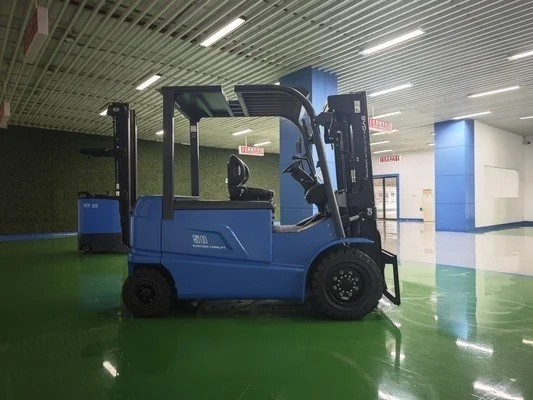
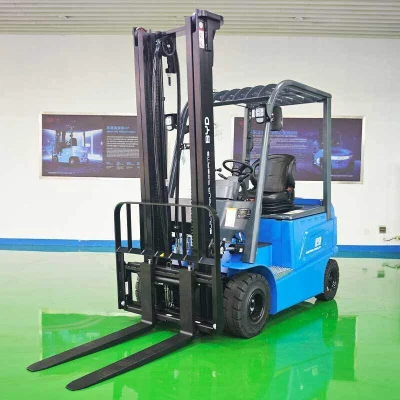
If your operation involves multiple shifts, varied lift heights, or outdoor ramps, share the actual load, lift height, aisle width, floor conditions, and charging routine with the supplier. That information lets the telemetry requirement match the real duty cycle instead of a generic template, and it supports a more accurate configuration discussion on a four-wheel counterbalance electric forklift.
Frequently Asked Questions
Does every LiFePO4 forklift battery include data logging?
No. Logging capability and the signals recorded depend on the battery management system and the configuration ordered. Confirm the exact field list and export method in writing before purchase.
How often should data be recorded?
There is no universal interval. Faster sampling captures short peaks but fills memory quickly; slower sampling suits long-term trend review. Ask the supplier what interval the system supports and choose one that answers your specific questions.
Can telemetry data support a warranty claim?
It can help document operating conditions, but whether it supports a claim depends on the warranty terms and the agreed operating limits. Review both documents together and confirm what evidence the supplier accepts.
Is cloud access required?
Not necessarily. Some systems offer local display, wired export, or on-site network access. Cloud portals can add convenience but may involve subscription costs, connectivity requirements, and data ownership questions that belong in the contract.