LiFePO4 Forklift Charger Sizing: Matching Output Current to Four-Wheel Counterbalance Electric Forklift Battery Capacity and Shift Patterns
News 31/10/2026
Charger sizing a LiFePO4 forklift battery is not a matter of buying the largest output available. The practical question is whether the charger’s output current, voltage window and charge profile suit the battery capacity, the work cycle and the available charging window. On a four-wheel counterbalance electric forklift, an undersized charger leaves the pack short of full charge between shifts, while an oversized one may exceed what the battery management system and site electrical supply can accept. This guide sets out the conditions that decide the right match, the figures to collect before ordering, and the trade-offs that matter in daily operation.
Start With Battery Capacity, Not Charger Output
Charger output current is usually expressed as a fraction of battery capacity, commonly written as a C-rate. A 1C charge delivers a current equal to the battery’s ampere-hour rating; a 0.5C charge delivers half that. LiFePO4 cells generally tolerate higher charge rates than flooded lead-acid batteries, but the acceptable rate is set by the battery manufacturer’s specification and the battery management system, not by the charger alone.
Two packs illustrate the arithmetic. A 48 V, 400 Ah LiFePO4 pack charged at 0.5C would call a charger output near 200 A; the same pack at 0.3C would call roughly 120 A. These are worked examples, not recommendations. The permitted continuous charge current must come from the battery datasheet supplied with the specific product.
Voltage and Charge Profile Must Match the Pack
Output current alone does not define a compatible charger. Confirm the nominal voltage, the maximum charge voltage the battery accepts, and the charge profile the battery management system expects. A charger whose absorption or finishing voltage sits above the pack’s limit should not be used, even if its current rating looks suitable. Ask the battery supplier which charger settings are approved, and confirm that the charger communicates with, or at least respects the limits of, the battery management system.
Nameplate Current Versus Usable Current
Charger nameplate output is measured under stated conditions. Site voltage, cable length, connector type and ambient temperature can all reduce the current actually delivered to the battery. When comparing options, ask the supplier how output is rated and what derating applies at the temperatures and input voltages present at your site. Do not assume the nameplate figure reaches the pack unchanged.
Match Charging Time to the Real Shift Pattern
The shift pattern decides how much charging time is genuinely available, and that window, together with the energy consumed per shift, sets the minimum charger output. Work through the following steps using your own measured figures.
- Energy used per shift: estimate ampere-hours drawn from the pack during a shift, based on duty cycle, load weight, lift height and travel distance. Where no measured data exists, treat this as an estimate to be refined after the first weeks of operation.
- Available charging window: record the actual minutes the truck is parked and connected, including breaks, shift changes and overnight periods. A nominal eight-hour window is rarely eight hours of charging.
- Depth of discharge: decide the lowest state of charge the operation will accept. Charging from a deeper discharge needs more energy returned in the same window.
- Charger efficiency and finishing time: the final part of a charge typically delivers less current than the bulk phase, so the last portion of the window contributes less energy than the first.
A common error is sizing the charger to the average energy use rather than the worst shift. Peak days, cold storage, heavy loads and long travel routes all raise consumption. Another error is assuming opportunity charging removes the need for a full charge; frequent short top-ups can work well with LiFePO4, but only if the battery management system and the supplier approve that pattern.
Single-Shift, Multi-Shift and Opportunity Charging
In a single-shift operation with a long overnight window, a lower-output charger may return the pack to full charge comfortably, and a smaller unit can reduce peak electrical demand. In multi-shift work, the window between shifts is short, so a higher-output charger or a second battery becomes the practical choice. Opportunity charging during breaks suits LiFePO4 packs better than lead-acid in principle, but the acceptable partial-state-of-charge behaviour must be confirmed with the battery supplier. No single pattern fits every site, and the choice should follow the measured window rather than habit.
Site Power, Safety and Configuration Checks
Before fixing an output current, verify that the site can support it. The charger’s input demand, the capacity of the circuit feeding it, connector ratings and ventilation all constrain the practical maximum. LiFePO4 chargers are commonly specified with communication to the battery management system, temperature monitoring and protection against overvoltage and overcurrent; confirm which of these the proposed unit provides and how it behaves if communication is lost.
Also confirm the physical and operational fit: connector type, cable length to the parking position, charger mounting, and whether the charging area is designated and ventilated as required by local rules. These points are often settled after the electrical sizing, but they can rule out an otherwise suitable charger.
Questions to Put to the Supplier
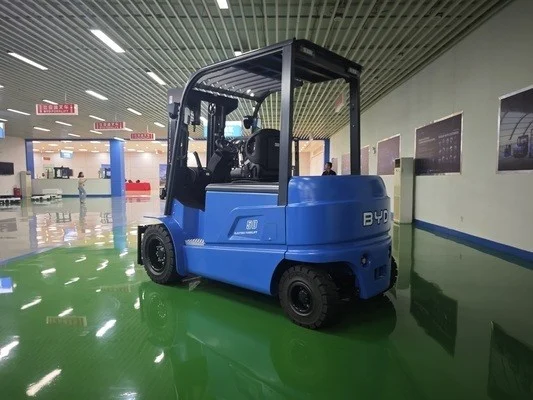
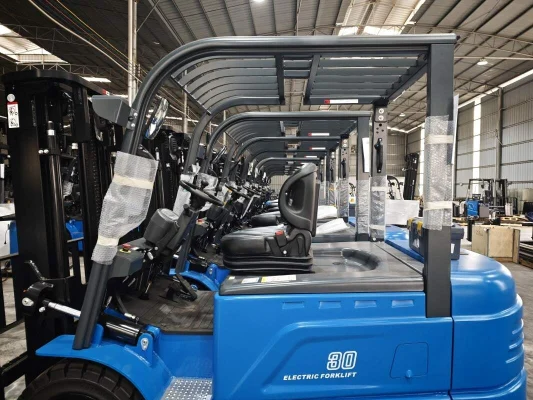
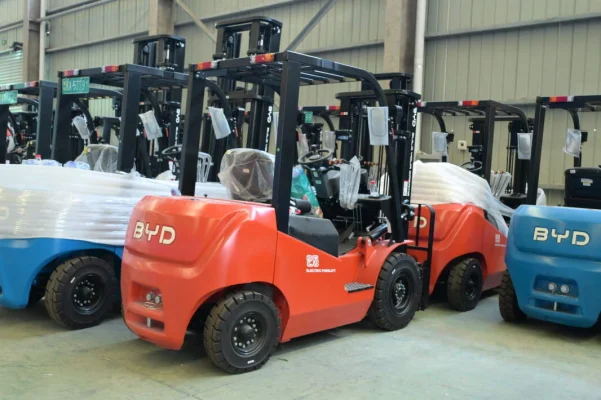
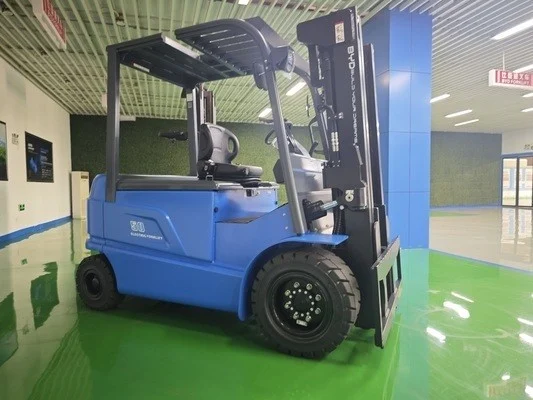
For a four-wheel counterbalance electric forklift running a LiFePO4 pack, ask the battery and charger supplier to confirm in writing: the permitted continuous and peak charge current, the maximum charge voltage, the approved charge profile, the charger output rating conditions, and the behaviour when the battery management system limits current. If you are evaluating a BYD four-wheel counterbalance electric forklift with a lithium battery, provide your measured duty cycle, pack capacity, required lift height and charging window so the selection and configuration can be checked against the manufacturer’s technical data. Where a figure is not published, ask rather than assume.
Frequently Asked Questions
Can a higher-output charger damage a LiFePO4 forklift battery?
It can if the output exceeds the charge current the battery manufacturer permits, or if the charge voltage exceeds the pack limit. The battery management system may limit or interrupt the charge, but protection should not be relied on as a substitute sizing method. Size to the battery specification.
Is a 1C charge rate acceptable on every LiFePO4 pack?
No. Some cells and packs accept high rates and others do not, and the permitted rate can change with temperature. The battery datasheet is the authority. Treat any general statement about LiFePO4 charge rates as background only.
How do I know whether my charging window is long enough?
Compare the energy drawn per shift with the energy the charger can return in the measured window, allowing for the slower finishing phase. If the margin is small, plan a second battery, a higher-output charger or a change to the charging schedule. Measure the window rather than estimating it from shift length.
Does opportunity charging replace a full overnight charge?
Not automatically. Partial charging during breaks can reduce the energy that must be returned overnight, but whether it suits a given pack depends on the battery management system, the supplier’s guidance and the depth of discharge reached. Confirm the approved pattern before relying on it.