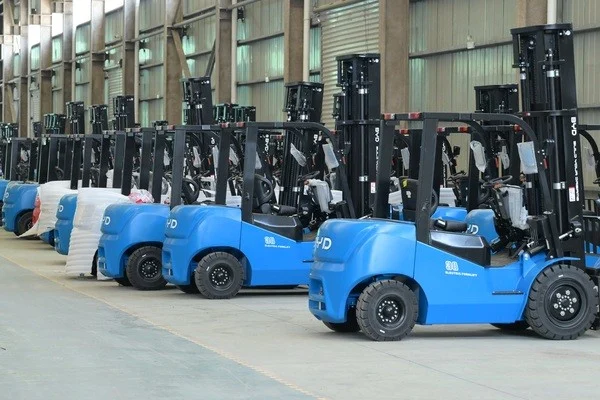
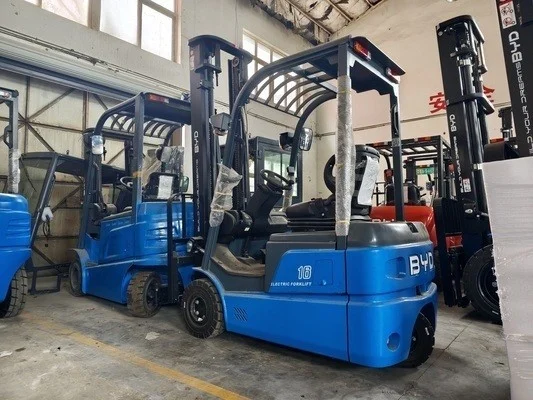
LiFePO4 Forklift Opportunity Charging: Planning Shift Breaks and Charger Placement Around Four-Wheel Counterbalance Electric Trucks
News 03/11/2026
Opportunity charging a LiFePO4 forklift works best when the charging window and the charger location are planned together. On a four-wheel counterbalance electric truck, the practical questions are simple: when does the operator actually have a break long enough to plug in, where can the truck stand safely while charging, and what information must be confirmed with the supplier before the layout is fixed? This article sets out a planning method, not a set of guaranteed numbers. Battery, charger and truck specifications vary, so treat every value below as something to verify against the manufacturer’s technical data.
What Opportunity Charging Means on a Four-Wheel Counterbalance Truck
Opportunity charging is the practice of adding charge during natural pauses in the shift rather than waiting until the battery is depleted. The aim is to keep usable capacity available across the working day without turning every break into a full recharge event.
LiFePO4 (lithium iron phosphate) chemistry is often discussed in this context because lithium batteries generally accept partial charging without the need to complete a full cycle each time. That is a general material characteristic, not a promise about any particular pack. Whether partial charging suits your operation depends on the battery management system, the charger, the duty cycle and the supplier’s instructions. Confirm with the manufacturer that the specific battery and charger combination permits opportunity charging, and follow their stated limits on state of charge, temperature and charging current.
Three planning variables drive the whole exercise:
- Break length and frequency. How long the truck can stay plugged in, and how often.
- Energy used per interval. How much capacity the duty cycle consumes between breaks.
- Charger placement. Whether the truck can reach a charger without blocking aisles, exits or loading zones.
None of these can be settled from a brochure alone. They need the actual shift pattern and the actual site layout.
Planning Shift Breaks Around Charging Windows
Map the real break pattern, not the nominal one
Start by writing down when the truck is genuinely idle: meal breaks, shift handover, scheduled maintenance pauses, and any waiting time at dock doors or staging areas. A break that looks like twenty minutes on paper may be ten minutes once the operator walks to and from the truck. The charging window is the time the truck is parked and connected, not the time the operator is away from the seat.
A useful exercise is to observe one or two typical shifts and log idle intervals. This is a planning observation of your own operation, not a test of the truck. It tells you where charging could realistically fit.
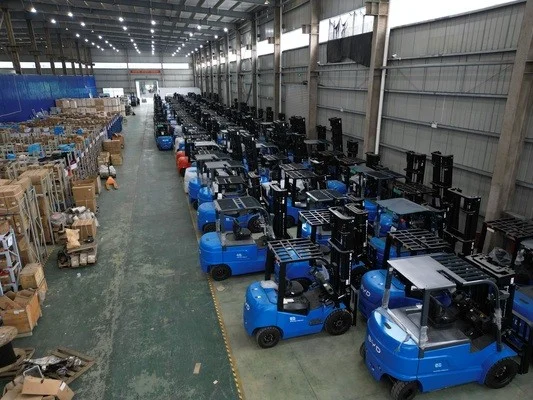
Match charging windows to the duty cycle
Heavy duty cycles with frequent lifting, long travel distances and ramp work consume more energy than light pallet movement on flat floors. The heavier the cycle, the more valuable short, frequent charging windows become. Conversely, a light single-shift operation may not need opportunity charging at all, and a conventional recharge between shifts could be simpler.
Ask the supplier to help estimate energy consumption from your load weights, lift heights, travel distances, ramp gradients and shift length. Do not accept a rule of thumb as a substitute. If the supplier cannot provide an estimate without site data, that is a signal to gather the data first.
Protect the break itself
Charging should not eat into the operator’s rest time or create pressure to skip safety checks. Plan the connection as part of the parking routine: park, apply the parking brake, switch off, connect, and record the event if your site requires a charging log. Keep the sequence short and repeatable so it does not become a reason to delay charging.
Set honest limits
Opportunity charging is not a fix for an undersized battery or an overloaded schedule. If the truck cannot complete the shift even with charging during every available break, the answer is usually a different battery capacity, a different charger rating or a change in the duty cycle, not more frequent plugging. Confirm the battery’s usable capacity and the charger’s output with the manufacturer before committing to a schedule.
Placing Chargers Where the Truck Can Actually Use Them
Start from the truck’s stopping points
The best charger position is close to where the truck already stops, provided the stop is safe. Candidate locations include a marked parking bay near the operator break room, a dedicated charging bay beside a staging area, or a wall position that does not intrude into a pedestrian route.
Walk the route with the truck’s dimensions in mind. A four-wheel counterbalance electric forklift needs room to approach, align and reverse out. Check turning clearance, overhead obstructions, and whether the charging position blocks fire exits, emergency routes or loading dock approaches.
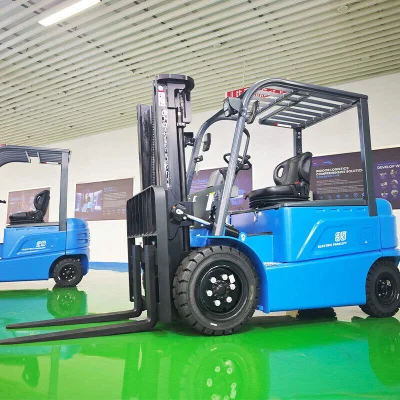
Check the electrical and environmental conditions
Charger placement is also an electrical decision. The available supply, cable routing, protection devices and ventilation all need review by a qualified person. Confirm with the charger and truck supplier what supply the charger requires and what installation conditions apply. Do not assume a wall socket is adequate.
Consider the environment as well. Dust, moisture, temperature extremes and wash-down practices affect both charger and battery. If the area is wet or dusty, ask the supplier whether the equipment is suitable there and what protection is needed.
Keep cables and connectors out of traffic
A charging cable stretched across a walkway is a trip hazard and a damage risk. Route cables overhead, in a cable management system, or position the charger so the cable stays within the charging bay. Protect connectors from being driven over or struck by other equipment.
Plan capacity to grow
If more trucks may be added, note whether the chosen position and supply can support additional chargers later. This is a layout question, not a commitment to buy. Raising it early avoids rework.
Simple comparison of placement options
| Option | Advantages | Points to verify |
|---|---|---|
| Dedicated charging bay | Keeps cables clear of traffic; predictable routine | Floor space, approach clearance, supply availability |
| Wall position near break area | Convenient during operator breaks | Pedestrian separation, cable routing, ventilation |
| Position beside staging area | Uses existing idle time | Blocking risk, dock traffic, environmental exposure |
These are layout patterns, not recommendations. The right choice depends on your site survey and the supplier’s installation requirements.
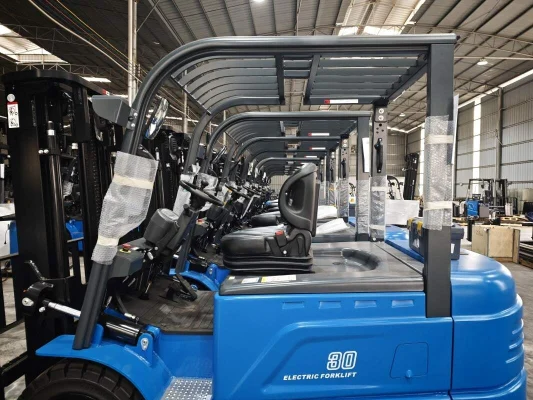
What to confirm before installation
- Battery and charger compatibility, including permitted opportunity charging.
- Required electrical supply and protection, confirmed by a qualified electrician.
- Charger environmental rating and ventilation needs.
- Connector type, cable length and cable management.
- Clearance needed to park and leave the charging position safely.
- Site rules on charging logs, inspections and emergency procedures.
Frequently Asked Questions
Can a LiFePO4 forklift battery be charged during short breaks?
Often it can, but only if the battery management system and charger are designed to allow it and the manufacturer confirms the practice. Partial charging behaviour, current limits and temperature conditions are specific to the product. Ask the supplier rather than assuming.
How many charging breaks does a four-wheel counterbalance truck need per shift?
There is no universal number. It depends on energy consumed per interval, usable battery capacity and the length of each break. Estimate consumption from your duty cycle and compare it with the battery data the manufacturer provides. If the numbers do not work, review battery capacity or charger rating instead of adding more plug-ins.
Where should the charger be installed?
Close to a safe, marked stopping point the truck already uses, with clear approach and exit space, protected cable routing and a supply confirmed by a qualified electrician. Avoid positions that block aisles, exits or dock traffic, and check environmental conditions with the supplier.
Does opportunity charging shorten battery life?
That depends on the chemistry, the battery management system and how the practice is applied. General statements about lithium batteries accepting partial charging are not a guarantee of service life. Follow the manufacturer’s guidance on charging frequency, temperature and depth of discharge, and record charging events so any issues can be reviewed.
If you are planning charging around a four-wheel counterbalance electric forklift, the most useful next step is to gather your shift pattern, load weights, lift heights, travel distances, floor and ramp conditions, and the proposed charging location. Share these details with the supplier so the battery, charger and layout can be checked against your actual operation before any installation decision is made.