Multi-Shift Warehouse Operations: Matching LiFePO4 Forklift Power Capacity to Operational Demands
News 09/10/2026
Multi-shift warehouse operations rely on consistent forklift performance to meet output targets. Downtime from drained or underperforming batteries directly cuts into productivity and order fulfillment speed. Traditional lead-acid batteries often require mid-shift swapping or extended charging periods, which create unwanted disruptions across consecutive work shifts. LiFePO4 forklift batteries solve many pain points linked to lead-acid technology, but only when power capacity matches your specific operational demands. This guide breaks down key sizing factors, compares capacity needs across common applications, and outlines clear selection steps to avoid costly mistakes.
Core Challenges Facing Multi-Shift Warehouse Forklift Fleets
Continuous daily operations create unique power demands forklift fleets must meet. Most traditional setups rely on multiple lead-acid batteries per forklift to cover multiple shifts, which requires dedicated storage space, extra labor and strict safety protocols around battery swapping. Under-sizing power capacity creates mid-shift downtime that derails schedules. Over-sizing increases upfront costs without adding meaningful operational benefit. Proper matching balances cost and performance to support continuous operations.
Key LiFePO4 Forklift Power Capacity Factors Aligned With Operational Demands
Daily Operating Hours Per Truck
Total daily operating hours directly determines minimum power capacity your fleet needs. Single 8-hour shifts require smaller capacity packs than two 10-hour shifts or 24-hour three-shift operations. You must calculate total energy draw across your full work period between full charges, rather than basing sizing on peak use alone. LiFePO4 batteries deliver 100% usable capacity, unlike lead-acid which only allows 50% usable capacity to extend lifespan. This means you can calculate based on actual energy needs without adding extra headroom linked to depth of discharge limits, unlike lead-acid alternatives.
Average Load Weight & Travel Distance
Heavier loads and longer travel routes increase energy consumption per operating hour. Forklifts moving fully loaded pallets across large distribution centers use more power than units moving small, light loads across short distances in small warehouses. Most operations add 10-15% extra capacity to offset unexpected energy use from unexpected routing changes or peak order periods.
Opportunity Charging Access
LiFePO4 chemistry supports fast, safe opportunity charging during short break periods. This changes required base capacity calculations. Operations with regular charging windows during shift changes or meal breaks can use smaller capacity packs, as partial top-ups offset energy use across the day. Operations without any opportunity charging access must size packs to cover full energy needs across every consecutive shift without top-ups, requiring larger total capacity.
Capacity Comparison: Common LiFePO4 Forklift Applications
Light-Duty Multi-Shift (Ecommerce Small Parts Picking)
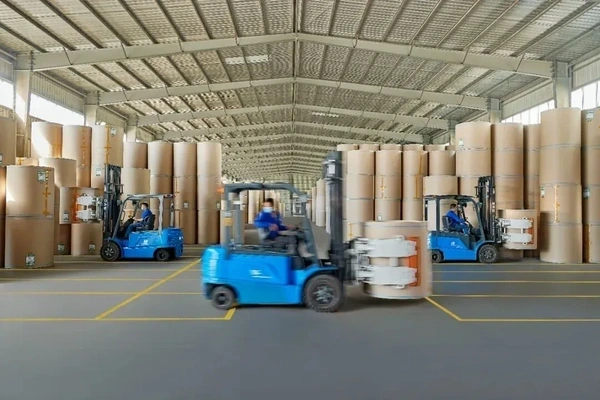
Light-duty operations typically run two shifts, with average loads below 2000 lbs and short travel distances between picking zones. Most setups work well with 48V 200Ah LiFePO4 packs. When paired with 15-minute opportunity charging during shift changes, this capacity covers 16 hours of daily operation without disruption. Same-footprint lead-acid packs would require mid-shift swapping to cover this same schedule.
Medium-Duty Multi-Shift (General Warehouse Storage)
Medium-duty operations handle loads between 2000 and 4000 lbs, with daily operation ranging from 16 to 20 hours across two shifts. Most applications require 48V 300Ah to 400Ah LiFePO4 packs to meet energy needs. This capacity supports full shifts without mid-shift charging, eliminating need for extra battery storage and swapping labor. Lead-acid alternatives would require at least two full spare batteries per forklift to match this operational output.
Heavy-Duty Multi-Shift (Bulk Storage & Port Handling)
Heavy-duty operations handle loads above 4000 lbs, often running 24 hours across three shifts. These applications require higher voltage packs, typically 80V 500Ah or larger, to meet continuous energy demand. Even with 24/7 operation, regular 10-minute opportunity charging during driver changeovers keeps this capacity sufficient. Lead-acid setups in these environments require three or more spare batteries per truck, taking up large amounts of valuable warehouse space.
Selection Limitations You Must Consider
Even with correct capacity calculations, several factors can impact LiFePO4 forklift performance. Key limitations include:
- Charger compatibility: Older chargers designed for lead-acid batteries do not match LiFePO4 charging profiles. You must upgrade chargers to match your new pack voltage and capacity to avoid reduced lifespan or safety issues.
- Temperature extremes: LiFePO4 available capacity drops in extremely cold or hot environments. Operations in locations outside 50-80 degree Fahrenheit range should add 10-20% extra capacity to offset this drop.
- Initial cost: Higher capacity LiFePO4 packs carry higher upfront costs. While long-term savings from reduced maintenance and no battery swapping offset this cost, you must align sizing with your budget constraints.
Actionable Sizing Process
- Map your operational data: Record daily hours per shift, number of consecutive shifts, average load weight, and average daily travel distance per forklift.
- Calculate total expected energy consumption across your full work period between charges.
- Add 10-20% capacity buffer based on operating temperature, opportunity charging access, and future business growth projections.
- Verify charger and forklift frame compatibility with your selected LiFePO4 pack capacity.
- Deploy one test unit across a full week of operation before rolling out changes across your entire fleet.
Frequently Asked Questions
Can LiFePO4 forklift batteries support 24/7 three-shift operations?
Yes, when matched with correct capacity and access to opportunity charging during short break periods. Higher capacity packs can also run full shifts without mid-shift charging if sized appropriately to your operation’s energy needs.
How does LiFePO4 capacity compare to lead-acid forklift batteries?
LiFePO4 batteries deliver 2-3 times more usable capacity than same-size lead-acid batteries. They also hold voltage more consistently under load, which keeps forklift performance steady through entire shifts.
Do I need extra LiFePO4 capacity buffer in cold storage warehouses?
Yes. Cold temperatures reduce available capacity of LiFePO4 batteries. Most operations add a 15-20% capacity buffer to offset performance loss in environments below freezing.
Does opportunity charging eliminate need for higher LiFePO4 capacity?
No. Opportunity charging reduces required base capacity, but you still need enough capacity to cover energy use between charging breaks. Sizing incorrectly will still lead to unexpected downtime mid-shift.
Properly matched LiFePO4 forklift power capacity delivers consistent performance across multi-shift warehouse operations, eliminates downtime linked to battery swapping, and reduces long-term operational costs. By aligning capacity with your specific operational demands, factoring environmental conditions, and testing before full deployment, you can maximize benefits from LiFePO4 technology across your entire forklift fleet.