3 Ton Electric Forklift Tire and Floor Surface Matching: Selecting the Right Configuration
News 01/11/2026
Tire choice on a 3 ton electric forklift is a floor-matching decision, not a catalog upgrade. The same truck can run smoothly on a sealed warehouse floor and chew through tires on rough concrete or outdoor yards, and the wrong compound or profile can affect traction, steering effort, floor condition and operator comfort. Matching tires to the surface means confirming what the truck actually drives on, how far it travels, what it carries and where it charges before choosing a tread or compound. This guide covers the practical selection criteria, the trade-offs behind each option and the details worth confirming with a supplier.
Start with the Floor, Not the Tire Catalog
A four-wheel counterbalance electric forklift carries most of its weight on the front wheels, and those wheels also take the load during lifting and braking. The floor therefore determines how the tire wears, how much grip is available and whether the truck can turn without scrubbing. Before comparing tread patterns, walk the routes the truck will use and record the surface type, condition and transitions.
Floor conditions that change the choice
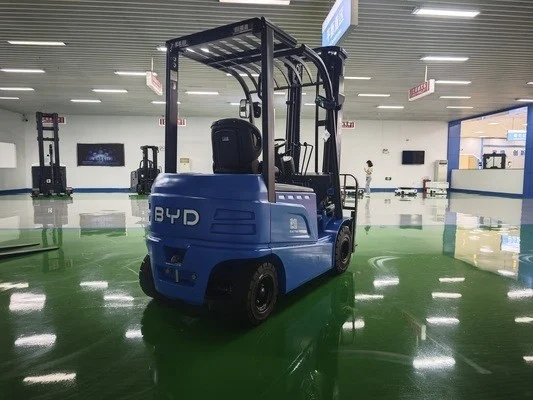
- Sealed indoor floors such as epoxy or polished concrete: smooth, non-marking tires reduce scuffing and keep steering predictable.
- Bare concrete with joints and patches: tread depth and compound toughness matter more than appearance; sharp edges and debris accelerate wear.
- Rough or outdoor yards: loose gravel, mud and standing water call a tread pattern with more open channels and a compound suited to abrasion.
- Ramps and dock plates: traction on inclines depends on tread contact and surface condition, and wet steel plates behave differently from dry concrete.
- Mixed routes: a truck that works indoors and crosses an apron outdoors needs a compromise, and the proportion of time on each surface should guide it.
Floor condition also affects the building. Non-marking tires are usually specified where scuff marks on light floors are unacceptable, while harsher compounds may leave marks and generate more noise. Neither property is universal; confirm the supplier’s stated tire characteristics rather than assuming them.
Match Tire Type and Compound to the Duty Cycle
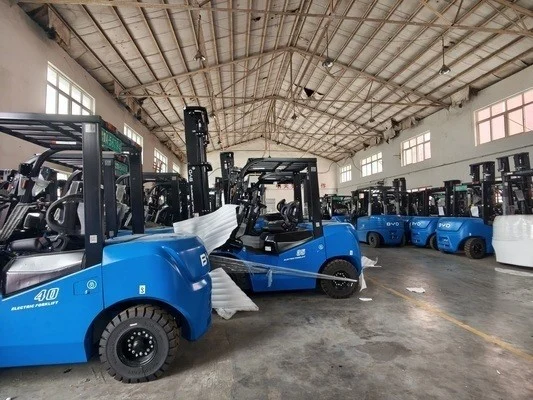
Most counterbalance electric forklifts in this class use solid rubber or press-on tires rather than pneumatic tires, because solid tires suit smooth industrial floors and resist punctures. The compound and tread are the main variables. A softer compound generally grips better and runs quieter but wears faster; a harder, more abrasion-resistant compound lasts longer on rough surfaces but may offer less grip and more noise. These are general material tendencies, not guaranteed outcomes, and actual wear depends on load, speed, distance and floor condition.
Selection criteria worth comparing
| Criterion | What to check | Why it matters |
|---|---|---|
| Surface type | Sealed, bare concrete, rough outdoor, mixed | Drives tread pattern and compound choice |
| Floor condition | Debris, joints, oil, water, incline | Affects traction and cut or chunk damage risk |
| Travel distance | Shift length and route length | Longer distances raise heat and wear |
| Load and lift height | Rated capacity, load center, lift height | Front tire load rises with load and lift |
| Turning and aisle | Aisle width and turn frequency | Scrubbing on tight turns accelerates wear |
| Charging location | Indoor or outdoor, floor type | The truck must reach the charger safely |
Steering axle tires and drive axle tires do different jobs. Drive tires transmit traction and take more wear on abrasive floors, while steering tires scrub during turns. Some fleets use different compounds on each axle; whether that is worthwhile depends on the routes and should be discussed with the supplier rather than assumed.
Configuration Details that Affect Tire Life and Safety
Tire matching interacts with several truck settings. A 3 ton electric forklift should be configured with tires rated to carry the actual wheel loads at the intended lift height and load center, not just the nominal capacity. If the load center moves forward, for example with long loads or attachments, wheel loading changes and the tire specification should be checked against the manufacturer’s technical data.
Practical points to verify
- Wheel load rating: confirm tire and wheel capacity against the truck’s axle loads under the intended duty, using supplier data.
- Overall width and aisle: tire width and profile affect the truck’s footprint and the clearance available in aisles and doorways.
- Ground clearance: rough yards may need more clearance, and a tire change can alter it.
- Braking and traction: wet or contaminated floors reduce grip regardless of tread; operating speed and route planning should reflect that.
- Floor protection: non-marking tires help where floor appearance matters, but they do not eliminate wear from grit or sharp debris.
- Battery and charging route: a lithium battery truck may be opportunity-charged during breaks, so the route to the charging point is part of the surface assessment.
Common mistakes include choosing tires by appearance alone, ignoring the outdoor crossing on an otherwise indoor route, and fitting a harder compound to reduce wear without checking how it affects traction on ramps or wet floors. Another frequent error is judging wear only by tread depth; cuts, chunking and flat spots caused by braking or tight turns can matter more than remaining tread.
Turning Site Conditions into a Configuration Request
A useful inquiry gives the supplier enough to recommend a configuration rather than a generic tire. Gather the following before requesting a quote on a four-wheel counterbalance electric forklift and its tire setup:
- Floor types along the full route, including transitions and outdoor sections
- Surface condition: cleanliness, joints, slopes, dock plates, wet areas
- Typical and maximum load, load center and lift height
- Shift length, distance travelled and number of turns per shift
- Aisle widths, doorways and any floor-load limits
- Indoor or outdoor charging, and the route to the charger
- Any requirement to avoid floor marking or reduce noise
Ask the supplier to state the tire type, compound and load rating they propose and the conditions those choices assume. Where a parameter is not available, such as exact wheel loads or floor friction, treat the recommendation as provisional and confirm it against the truck’s technical documentation. A tire that suits one warehouse may be a poor match on a rough yard, and no single configuration is universally best.
Frequently Asked Questions
Can I use the same tires indoors and outdoors?
Often yes, with a compromise tread and compound, but the proportion of time on each surface matters. A truck that spends most of its shift on sealed floors but crosses gravel twice a day needs different priorities from one working mainly outdoors. Describe both surfaces to the supplier and ask what the proposed tire assumes.
Do non-marking tires last as long as standard tires?
That depends on the compound and the floor. Non-marking tires are chosen to reduce visible marks, and their wear behaviour should be confirmed with the tire supplier rather than assumed to match another compound. Load, distance and surface abrasion all influence life.
How does lift height affect tire selection?
Raising a load shifts wheel loading, and the tire and wheel must be rated for the resulting axle loads at the intended height and load center. Provide the maximum lift height and load center so the supplier can check the specification against the truck’s technical data.
What should I check when tires wear unevenly?
Uneven wear can point to tight turning routes, braking habits, incorrect inflation where applicable, mismatched tires or floor debris. Record where the wear appears and review the route and operating practice before simply replacing tires, and ask the supplier to inspect the wheels and mounting as well.