Verifying Residual Capacity When a Four-Wheel Counterbalance Electric Forklift Handles Off-Center Factory Loads
News 04/11/2026
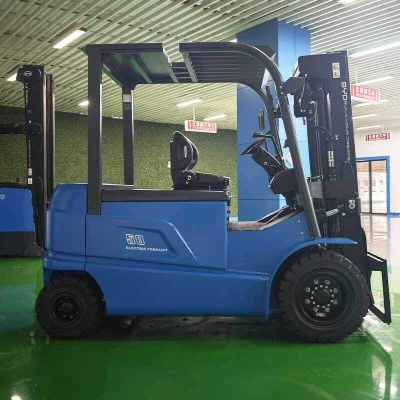
An off-center load reduces the capacity a four-wheel counterbalance electric forklift can safely handle, even when the pallet weight sits below the truck’s rated figure. The rated capacity on the data plate assumes a specific load center, usually a stated distance from the fork face, and a specific lift height. When a factory load shifts that center forward, sideways or upward, the truck’s available capacity falls. Verifying residual capacity means comparing the actual load geometry with the truck’s rating conditions before the lift, not trusting the plate number alone. This article explains how that check works in factory settings and which figures buyers should confirm with the supplier.
Why Off-Center Loads Change the Capacity Equation
A counterbalance truck stays upright because the load moment around the front axle stays within what the chassis and rear axle can resist. Load moment grows with weight and with distance from the front axle. A load whose center of gravity sits farther forward, or off to one side, produces a larger moment than a centered load of equal weight. That is why a truck rated at a nominal capacity may only handle less when the load center moves outward.
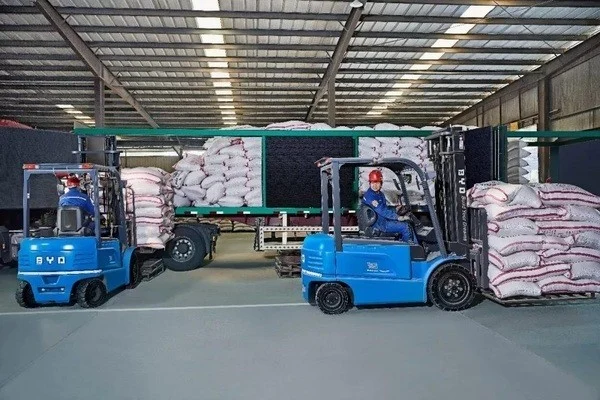
Factory operations create off-center loads in ordinary ways. A pallet may be loaded unevenly, with dense goods on one end. A long component may overhang the fork tips. An attachment such as a clamp or a side-shifter adds weight and moves the effective center. A load may be picked up at an angle, so the weight sits partly on one fork. Each condition changes the geometry the rating assumes.
The practical consequence is that residual capacity is a calculation based on the actual load center, not a fixed number. Buyers should treat the data plate as the starting point and ask what capacity remains under their real load conditions.
Reading the Data Plate and the Load Chart
The data plate states rated capacity at a defined load center and lift height. Many trucks also carry a capacity chart that shows reduced capacity at greater load centers or heights. The chart is the more useful document when loads are not uniform.
Three figures matter most:
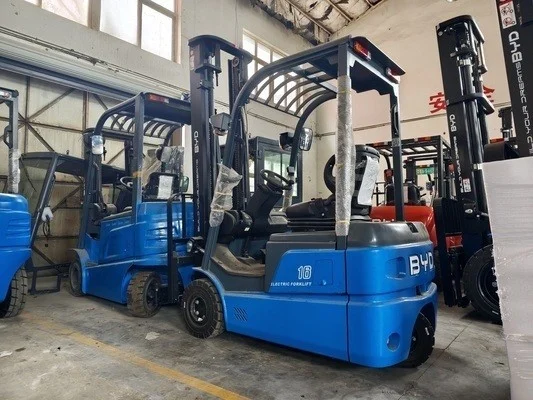
- Rated capacity: the maximum weight at the stated load center and height.
- Load center: the horizontal distance from the fork face to the load’s center of gravity, as defined in the rating.
- Lift height: the height at which the rating applies, since capacity often decreases as the mast raises the load.
For any load whose center sits farther out than the rated distance, the available capacity is lower than the plate figure. The exact reduction depends on the truck’s stability characteristics and must come from the manufacturer’s capacity chart or engineering data. Do not estimate it by simple proportion unless the supplier confirms that method applies to the model.
Checking Residual Capacity in a Factory Workflow
Step 1: Measure the Real Load Center
Identify where the load’s center of gravity actually sits relative to the fork face. Uneven pallets, overhanging parts and attachments all move it. Record the worst realistic case, not the average, because the truck must remain stable under the heaviest offset the operation produces.
Step 2: Confirm the Lift Height
Note the maximum height at which the load is carried and placed. A load that is stable at floor level may exceed capacity near the top of the mast. Check the capacity chart at the actual working height.
Step 3: Account for the Attachment
Any attachment adds weight and usually moves the load center forward. The attachment supplier should provide a capacity reduction figure, and the truck supplier should confirm how that reduction combines with the truck rating. Never assume the plate capacity still applies with an attachment fitted.
Step 4: Compare with the Capacity Chart
Match the measured load center and lift height against the chart. If the load falls outside the charted range, the configuration needs supplier review rather than an assumption.
Step 5: Record the Limit at the Point of Use
Post the verified limit where operators pick up the load. A number on a plate is easy to ignore; a clear statement of the maximum weight and center at that station is harder to miss.
Parameters and Configuration Details That Affect the Result
The table below lists the items that most often decide whether a four-wheel counterbalance electric forklift suits an off-center factory load. It separates what to check from what to ask the supplier, and it does not assign values that depend on a specific model.
| Parameter or configuration | Why the factory cares | What to confirm with the supplier | Standard, optional or to verify |
|---|---|---|---|
| Rated capacity and load center | Sets the baseline against which residual capacity is judged | Plate rating, capacity chart and the load center each figure assumes | Standard information; verify model data |
| Capacity at lift height | Off-center loads often combine with high placement | Chart values at the actual working heights | Verify from model documentation |
| Attachment effect | Clamps, shifters and rotators add weight and offset | Derating method and combined rating with the attachment | Depends on attachment; confirm |
| Battery and counterweight arrangement | Battery mass contributes to stability | How the specified battery affects the rated capacity | Model-specific; confirm |
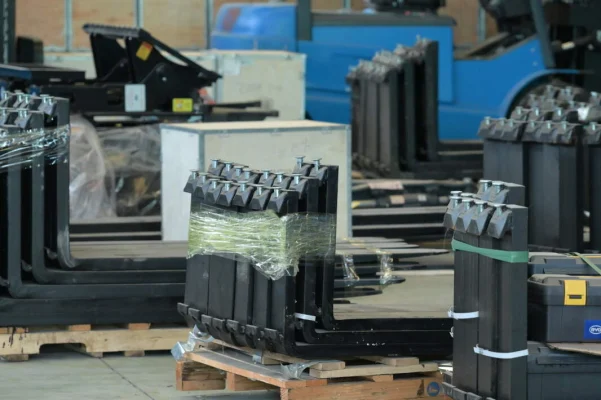
| Mast and fork dimensions | Fork length and spread change where the load sits | Fork length options and the load center they imply | Optional configurations; verify |
| Tyre type and floor condition | Stability and traction on factory floors | Recommended tyre type and floor limits | Verify against site conditions |
| Aisle and turning space | Affects how the load is approached and carried | Turning radius and aisle width data | Verify from model dimensions |
Treat every cell marked “verify” as a question, not an assumption. A supplier who cannot provide a capacity chart or derating method leaves the buyer unable to confirm residual capacity at all.
Frequently Asked Questions
Can a load under the rated weight still exceed capacity?
Yes. If the load center sits farther from the fork face than the rating assumes, or the lift height is greater, the available capacity can be lower than the plate figure even when the weight is below it. The capacity chart shows the reduced figure.
How do I handle a pallet that is loaded unevenly?
Measure the worst realistic center of gravity and treat that as the load center. If the offset is large, consider repacking, using a different pallet arrangement or asking the supplier whether the configuration still fits the chart.
Does a side-shifting attachment change the capacity?
Attachments add weight and usually move the load center forward, so the effective capacity is normally lower. The attachment supplier and the truck supplier should confirm the combined rating rather than leaving the operator to estimate it.
What should I give the supplier to get a reliable answer?
Provide the load weight, the measured load center, the maximum lift height, any attachment fitted, the aisle width and the floor and slope conditions. With those figures, the supplier can check the capacity chart against the actual task.
What to Confirm Before Purchase
Before choosing a four-wheel counterbalance electric forklift, gather the data the capacity check depends on: the heaviest load, its measured center of gravity, the maximum lift height, the attachment or fork configuration, the aisle and turning space, floor condition and slope, and the shift pattern with charging arrangements. Ask the supplier to show the capacity chart at your working height and load center, to explain how any attachment affects the rating, and to state which battery configuration the rating assumes.
Then check the delivered configuration against those answers: confirm the plate and chart match the quoted model, confirm the attachment derating in writing, and mark the verified limit at each pick-up point. Where a load falls outside the charted range, or where aisle or height requirements push beyond what a four-wheel counterbalance truck can handle, treat that as a signal to review the task rather than to stretch the rating. Sharing your actual operating conditions with the supplier is the most reliable route to a configuration that keeps residual capacity within safe limits.