Lithium Ion Forklift Load Capacity Ratings: What Procurement Teams Should Verify Beyond the Data Plate
News 03/11/2026
When you review a lithium ion forklift data plate, the rated capacity is a starting point, not a complete answer. The plate shows a maximum load at a defined load center and lift height, but real-world handling often involves attachments, uneven loads, and varied lift heights that change the safe working limit. Procurement teams should verify several factors beyond the plate to avoid overloading and ensure the truck matches the task.
Why the Data Plate Is Only a Baseline
The data plate states capacity at a specific load center—typically 24 inches (600 mm)—and often at a defined lift height. If your loads have a different center of gravity or you use attachments, the actual capacity decreases. The plate does not account for these variables. Also, capacity ratings assume a level surface and proper tire condition. Slopes, rough floors, and worn tires can reduce stability. Therefore, use the plate as a reference, but verify the real capacity your operation requires.
Key Load and Application Factors to Verify
Load Center and Attachments
Load center is the horizontal distance from the vertical face of the forks to the center of gravity of the load. A longer load center reduces capacity. If you use attachments such as sideshifters or clamps, they add weight and shift the load center forward. Request a capacity rating that includes the attachment, or ask the supplier to calculate the derated capacity. Without this, you may exceed the safe limit.
Lift Height and Mast Configuration
Capacity often decreases as lift height increases. The data plate may show a single capacity at a specific height, but if you routinely lift to higher levels, verify the capacity at your maximum height. Mast type (e.g., duplex, triplex) and free lift can also affect stability. Provide your highest lift height and the supplier can confirm the capacity at that height.
Ground Conditions and Slopes
Outdoor yards, ramps, and uneven surfaces demand additional stability margins. The plate rating assumes a flat, smooth floor. If your route includes slopes or rough terrain, discuss these conditions with the supplier. They may recommend a different model or a capacity reduction. Do not assume the plate capacity applies on ramps.
Battery and Counterweight
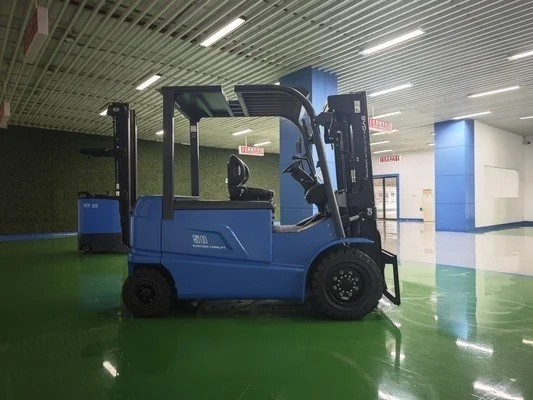
Lithium ion batteries are often lighter than lead-acid equivalents, which can affect counterbalance. The truck’s design must account for the battery weight to maintain stability. Confirm that the battery supplied is the one specified in the capacity rating. A different battery weight could alter the center of gravity and reduce safe capacity.
Load Handling Equipment and Duty Cycle
If you use push-pull attachments, double-deep handling, or other specialized equipment, the capacity rating must reflect these. Also, consider duty cycle: frequent heavy loads may require a truck with a higher nominal capacity to avoid running at the limit continuously. Share your typical load weight and frequency with the supplier.
Questions to Ask Before You Request a Quote
To get an accurate proposal, provide the supplier with the following information. This helps them confirm the right configuration and avoid surprises.
- Maximum load weight and dimensions (including pallet or container).
- Load center (distance from fork face to load center).
- Maximum lift height and any free lift requirements.
- Attachments planned and their weight.
- Ground conditions: floor type, slopes, thresholds.
- Operating environment: indoor, outdoor, cold storage, etc.
- Typical duty cycle and shift pattern.
- Charging infrastructure and available power.
Also ask the supplier to provide a capacity chart that shows capacity at various load centers and lift heights. This document is more useful than the plate alone. Ensure the quote references the correct battery and any derating.
Frequently Asked Questions
Does a higher capacity rating always mean a better forklift?
Not necessarily. A higher nominal capacity may come with a larger, heavier truck that is less maneuverable in tight aisles. Match capacity to your actual loads with a margin, but also consider aisle width and floor loading.
Can I use the data plate capacity if I add an attachment?
No, attachments typically reduce capacity. You need a revised capacity rating that accounts for the attachment’s weight and its effect on load center. Consult the supplier.
How does lithium ion battery weight affect capacity?
Lithium ion batteries can be lighter than lead-acid batteries of similar energy. The truck’s counterweight and design must compensate. Always use the battery specified in the capacity rating; substituting a lighter battery may reduce stability.
What should I do if my loads vary in weight?
Base your capacity requirement on the heaviest load you will handle, but also consider how often you handle it. If heavy loads are frequent, choose a truck with additional capacity margin to avoid continuous operation at the limit.