Specifying Lift Height and Mast Free-Lift Clearance When Sourcing Four-Wheel Counterbalance Electric Forklift Trucks
News 21/10/2026
Incorrect sizing of lift height and mast free-lift clearance creates costly operational issues many four-wheel counterbalance electric forklift owners encounter. Whether you source new equipment your warehouse or manufacturing facility, getting these two parameters right ensures smooth daily operations and avoids unexpected modifications after delivery. This guide covers core concepts, sizing steps, and common mistakes you need address during sourcing.
Core Definitions: Lift Height vs Free-Lift Clearance
Many new buyers confuse these two mast specifications, but each serves unique critical purpose your operation.
- Maximum Lift Height: This measures the maximum vertical distance from the ground to the top of your fork tips when the mast fully extends. This value determines how high your forklift can reach to place or retrieve loads on storage racks.
- Mast Free-Lift Clearance: This value describes how far you can raise the fork carriage before the mast’s nested sections start extending upward past the mast’s collapsed overall height. This specification matters most when working in spaces with low overhead clearance.
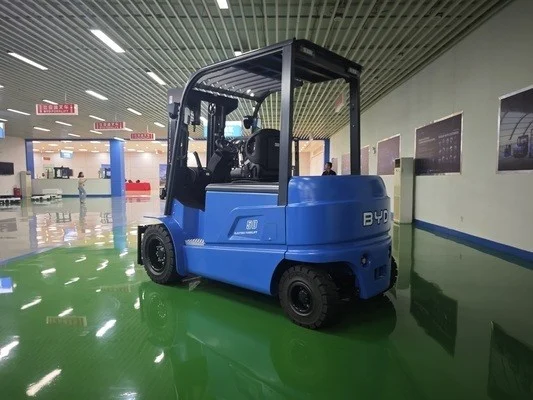
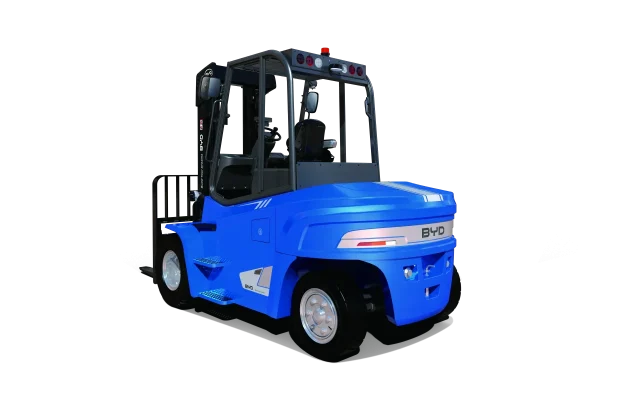
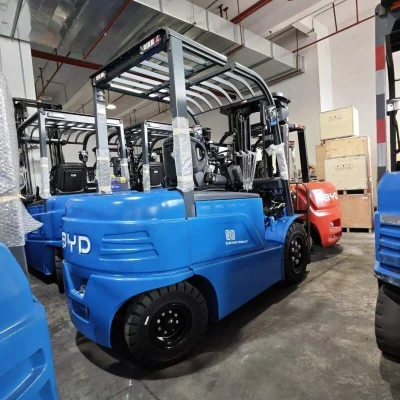
BYD four-wheel counterbalance electric forklifts offer multiple mast configurations to match different clearance and lift requirements, so correct specification upfront eliminates unnecessary costs later.
Key Sizing Factors Your Operation Requires
Maximum Lift Height Calculation
To calculate your required maximum lift height, start with three core measurements: the height of your tallest storage beam from the ground, the height of your loaded pallet, and extra clearance between the top of your load and any overhead obstacles. Common overhead obstacles include sprinkler systems, HVAC ductwork, ceiling beams and loading dock door frames.
Never set your maximum lift height equal exactly to the height of your tallest rack. You need extra room to maneuver loads into place without hitting overhead structures. Always confirm your final calculation against your facility’s actual on-site measurements, not blueprints alone.
Free-Lift Clearance Sizing
Free-lift clearance becomes critical if your operation involves loading or unloading cargo from inside shipping containers, working under low doorways, or operating in aisles with low overhead clearance. If your free-lift clearance falls too short, you cannot lift a load inside an enclosed space without extending the mast sections into the roof or overhead structure.
Different mast types offer different free-lift capabilities: duplex masts typically deliver lower free-lift clearance, while triplex masts offer full free-lift as standard configuration.
Application-Based Sizing Verification Table
| Parameter | Why It Matters | Verification Step | Configuration Notes |
|---|---|---|---|
| Maximum Lift Height | Prevents collisions with overhead structures | Measure tallest storage beam height plus overhead obstacle clearance from ground level | Confirm rated maximum lift matches your calculation under your target maximum load |
| Mast Free-Lift Clearance | Enables safe load handling inside low-clearance enclosed spaces | Measure interior roof clearance of your most restrictive work area | Full free lift comes standard on triplex masts; it remains optional on some duplex mast designs |
| Load Center Distance | Shifts effective carrying capacity at maximum lift height | Confirm how rated capacity changes with increased lift height from your supplier | Larger load centers reduce maximum carrying capacity when mast reaches full extension |
| Collapsed Mast Height | Determines ability to pass through low facility doorways | Measure clearance of your lowest facility door opening | Lower collapsed mast height requires matched free-lift configuration to maintain operational ability |
Common Sizing Mistakes You Need Avoid
Even experienced operations teams make these three common mistakes when specifying mast parameters:
- Ignoring overhead obstacles beyond rack height: Many buyers calculate lift height only based on rack height, leaving no extra room for sprinklers, ductwork or other ceiling features. This mistake leads to damaged equipment and facility structures when you try lift loads to maximum height.
- Confusing free-lift clearance with total lift height: Some buyers assume higher total lift height automatically gives enough free-lift clearance for enclosed spaces. This error leaves you unable to unload containers or work under low doors, requiring expensive mast replacement to fix.
- Forgetting capacity changes at full lift: The rated maximum capacity your forklift applies to lower lift heights. As lift height increases, maximum carrying capacity drops, especially with larger load centers. Failing account this leads you purchase a forklift cannot handle your heaviest loads at full height.
Frequently Asked Questions
Can I adjust free-lift clearance after I take delivery of my forklift?
No, free-lift clearance comes built into your mast configuration. Changing it requires full mast replacement, which adds significant cost and extended downtime. Always confirm all sizing requirements before placing your order.
What happens if I specify lift height higher than I need?
Over-specifying lift height adds unnecessary upfront cost your purchase, increases overall mast weight, and can reduce available carrying capacity under common working conditions. It also raises the collapsed mast height, which may prevent your forklift fitting through standard facility doorways.
Does free-lift clearance change my four-wheel counterbalance electric forklift turning radius?
Free-lift configuration alters mast height and weight distribution slightly, but it does not create meaningful changes your turning radius. Turning radius depends on wheelbase and steering design, not mast free-lift settings.
Share your facility dimensions, load requirements and work environment details with our team to get customized configuration guidance your BYD four-wheel counterbalance electric forklift.