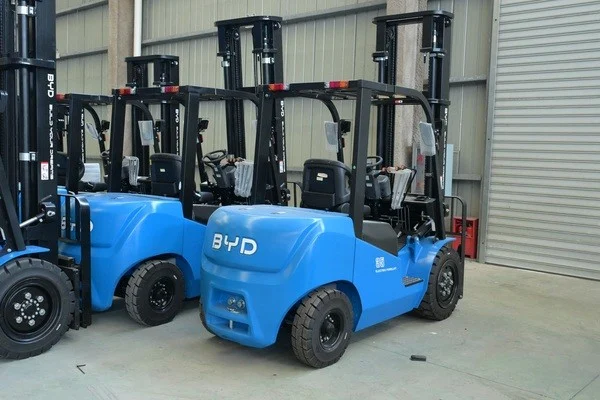
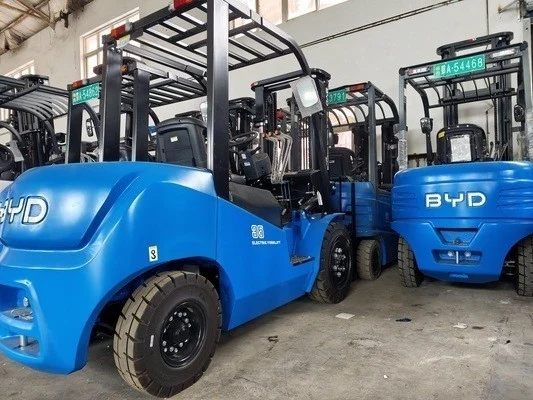
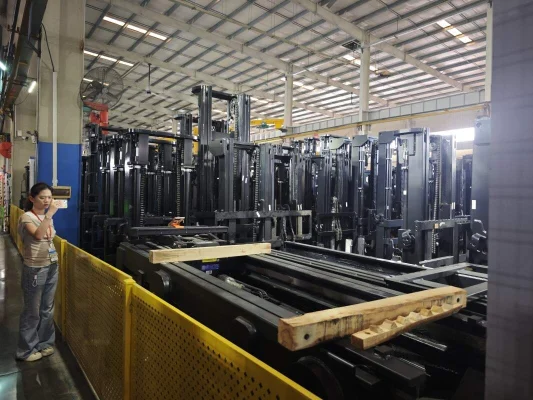
Suspension Tuning Impacts 3.5 ton electric forklift Traction And Load Control On Uneven Paved Surfaces
News 15/10/2026
Automotive manufacturing facilities often move heavy engine blocks, chassis assemblies and full vehicle frames across uneven paved plant yards, access roads between production bays and finished vehicle storage lots. A 3.5 ton electric forklift handles most of these medium-heavy transfer tasks, making suspension performance a critical component of safe, consistent operation.
Core Suspension Tuning Factors Relevant To Automotive Manufacturing Logistics
Spring Rate Adjustment
Stiffer spring rates keep the forklift body level when crossing small cracks or elevation changes common around loading dock lips and expansion joints in paved plant surfaces. This maintains consistent contact between drive tires and the ground, preserving traction. Procurement teams need to confirm whether spring rates align with typical operating load ranges your facility handles. During pre-delivery inspection, test the unit with a maximum rated load across a 10mm elevation change to check body roll. Lower spring rates improve ride quality but increase body sway under full load, so they work only if your facility moves mostly light, high-volume parts across uniformly paved surfaces.
Dampener Calibration
Dampeners control bounce after the forklift crosses uneven ground. Poor calibration leads to repeated tire lift-off, which breaks traction and can cause load shift. Even small load shifts threaten heavy chassis components carried on flatbed forks, creating major safety risks. When reviewing supplier specifications, ask how dampeners are calibrated from the factory, and whether field adjustment is available.
Key Configuration Checks & Comparison
| Configuration | Automotive Logistics Risk | Required Supplier Confirmation | Standard/Optional |
|---|---|---|---|
| Fixed suspension tuning | Cannot adjust when operation requirements shift between light parts and heavy assembly transport | Factory-tuned load range matching your facility’s average daily load | Standard on most base models |
| Adjustable suspension tuning | Requires trained operator to adjust settings correctly; incorrect adjustment causes premature wear | Clear adjustment procedure and training materials | Optional |
| Wide-base tire pairing with tuned suspension | Wider tires increase contact patch, but may not fit narrow aisles between storage racks inside production bays | Clearance dimensions matching your facility’s narrowest operating aisle | Optional |
After reviewing the table, procurement teams need to complete three core checks before accepting delivery:
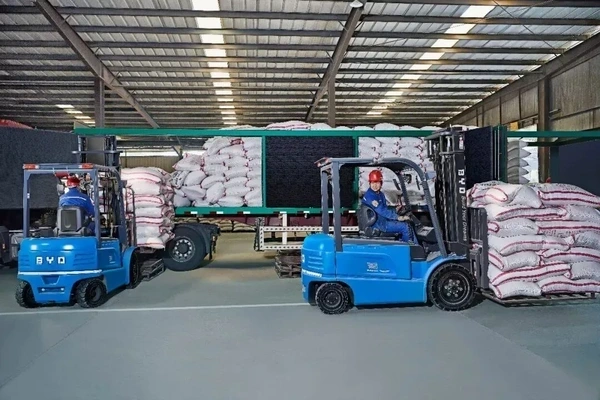
- Measure the maximum elevation change across the worst section of your operating area, share this measurement with your supplier to confirm suspension tuning matches this condition.
- Test the 3.5 ton electric forklift with your heaviest typical load across the uneven section, check tire lift-off during slow acceleration and braking.
- Confirm whether suspension components carry their own warranty separate from the main forklift chassis.
Uneven paved surfaces within automotive manufacturing plants often develop over time as heavy traffic wears road surfaces, so even new facilities need to account for existing ground irregularities when selecting suspension configuration. Fixed tuning works well if your facility’s load profile and ground conditions stay consistent long term. Adjustable tuning adds flexibility if your operation handles a wide range of load weights across varying ground conditions, but requires additional operator training to avoid incorrect settings.
Frequently Asked Questions
Can worn suspension on a 3.5 ton electric forklift be adjusted to improve traction?
Worn suspension components such as broken dampeners or sagging springs cannot deliver consistent performance even after adjustment. You need to replace worn components before any tuning adjustment works. Always replace components matching original factory specifications to maintain structural integrity.
Does suspension tuning affect battery life on a 3.5 ton electric forklift?
Poor suspension tuning leads to repeated loss of traction, which causes the drive motor to work harder to maintain speed. This increases overall energy consumption, which reduces operating time per full charge. The impact varies based on how uneven your operating surfaces are, so you need to test this under your own facility conditions to measure actual changes.
What changes should I make after adding a new attachment to my 3.5 ton electric forklift?
New attachments change the forklift’s overall weight distribution and center of gravity. If your suspension has adjustable tuning, you can adjust spring preload to match the new weight distribution. Fixed suspension models require you contact your supplier to confirm whether your existing tuning works with the new attachment weight and dimensions.
In automotive manufacturing and parts logistics, consistent traction and load control prevent damage to high-value components, reduce safety incidents and keep production schedules on track. Suspension tuning directly impacts these outcomes, so you need to align configuration with your facility’s specific ground conditions and typical load profile before completing purchase. Many procurement teams overlook this setting when focusing on battery capacity or lift height, but its impact on daily operation makes it a critical verification step.