What Types of Forklifts Are There and How Core Design Attributes Dictate Their Ideal Industrial Deployment
News 09/10/2026
When planning material handling operations, understanding different forklift designs helps teams match equipment to their specific work environment. Each forklift type includes unique design attributes that directly impact performance, safety, and suitability across different job sites.
Core Forklift Categories by Power Source
Internal Combustion (IC) Cushion Tire Forklifts
IC cushion tire forklifts use solid rubber tires mounted to steel wheels. Their compact frame and low center of gravity work best on smooth, paved indoor surfaces like concrete warehouse floors or manufacturing plant floors. Core design attributes include stronger lifting capacities compared to many electric models, and quick refueling capabilities that support multi-shift operations.
Key limitations: They emit exhaust fumes, so they require well-ventilated spaces. Their solid tires do not absorb shock well, so they damage uneven outdoor surfaces and cause operator discomfort over rough terrain. Common deployment includes indoor manufacturing lines, loading docks inside enclosed facilities, and cross-docking operations handling finished goods.
Internal Combustion Pneumatic Tire Forklifts
Pneumatic tire forklifts feature air-filled tires with deep treads, designed to handle uneven, rough outdoor terrain. Their reinforced frames support heavier lifting capacities, ranging from 3,000 up to 50,000 pounds depending on model size. Common deployment includes construction sites, lumber yards, shipping ports, and outdoor storage yards.
Key limitations: Their larger footprint makes them unsuitable across narrow indoor aisles common to many modern warehouses. They also require more frequent maintenance than electric models, and produce exhaust that prevents use in unventilated indoor spaces.
Counterbalance Electric Forklifts
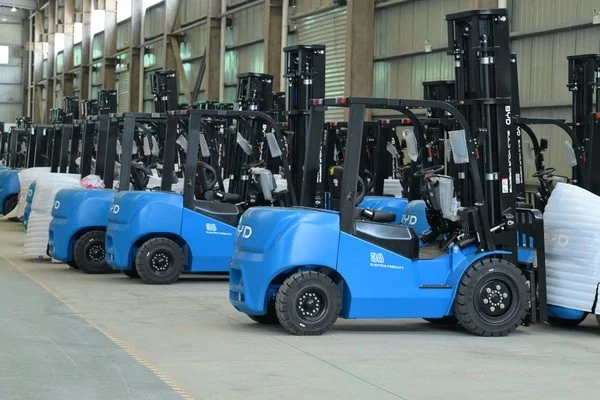
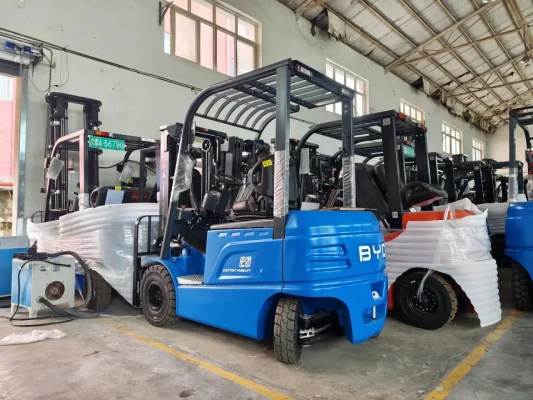
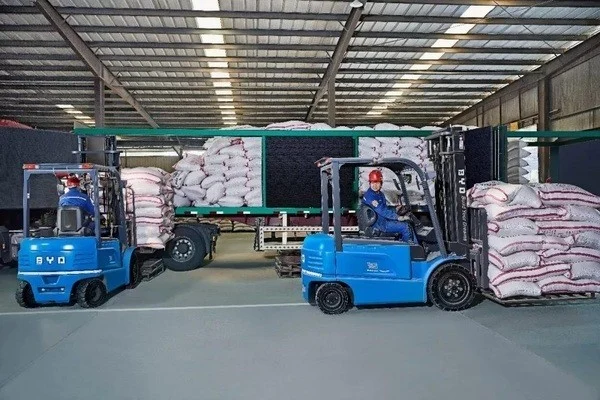
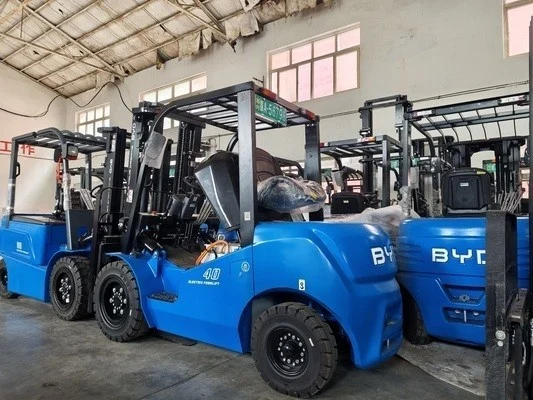
Counterbalance electric forklifts use battery power, eliminating all exhaust emissions. Their design places heavy counterweight at the rear to offset load weight at the front, eliminating protruding outriggers common to reach trucks. This design lets them maneuver directly into loads and work in tighter spaces than IC models.
Ideal deployment includes indoor warehouses, distribution centers, and cold storage facilities, since they produce no harmful emissions. Newer lithium-ion models support fast opportunity charging, making them suitable across multi-shift operations.
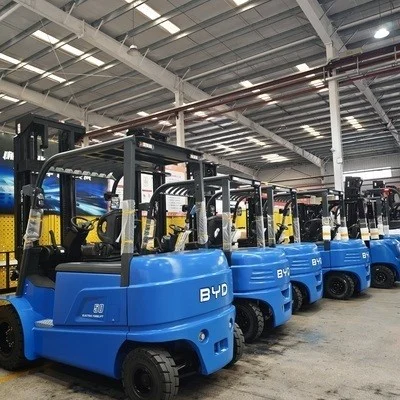
Key limitations: Lead-acid battery models require 8+ hours charging time after an 8-hour shift, which adds extra equipment cost to operations running multiple shifts. They also perform poorly on uneven outdoor terrain, as their tires and frame are not built to handle rough ground.
Specialized Forklift Types Serving Niche Applications
Reach Trucks
Reach trucks are built specifically to serve narrow aisle warehouse storage operations. Their extendable mast lets forks reach higher rack levels than standard counterbalance forklifts, with most models reaching heights up to 30 feet. The outrigger design stabilizes loads when extended, increasing safety across high-level storage.
Limitations: They require smooth, flat concrete floors, and cannot lift the extremely heavy loads common to construction or lumber operations.
Order Pickers
Order pickers lift both the load and the operator up to picking positions, letting workers collect items directly from rack shelves. This design aligns with e-commerce fulfillment centers and warehouses managing high volume small-order picking.
Limitations: They have lower overall load capacities, usually under 3,000 pounds, so they cannot handle full pallets of large bulk goods.
Rough Terrain Forklifts
Rough terrain forklifts feature high ground clearance, four-wheel drive, and heavy-duty pneumatic tires built to handle mud, gravel, slopes, and uneven ground common to construction sites. Most run on diesel power, with lifting capacities up to 30,000 pounds.
Ideal deployment includes residential construction sites, remote logging operations, and large-scale agricultural storage projects.
Limitations: Their large size and heavy weight make them unsuitable across indoor spaces with weight limits on floors.
How Core Design Attributes Determine Ideal Deployment
Three core design elements drive forklift suitability across different work environments:
- Tire type: Solid cushion tires work best across smooth indoor surfaces, while pneumatic tires (either air-filled or solid pneumatic) handle rough outdoor ground. Tire choice directly impacts traction, operator comfort, and floor damage risk.
- Power source: Electric power enables indoor use, zero emissions, and lower operating noise. Internal combustion power delivers higher torque, faster refueling, and better performance across extreme temperatures or wet outdoor conditions.
- Frame and mast design: Compact frames and extended masts fit narrow warehouse aisles, while reinforced heavy-duty frames support large loads in outdoor construction or bulk storage.
When selecting a forklift, start by mapping your primary work environment: what is the average load weight you move? What aisle width do you work within? Do operations run indoors, outdoors, or both? These questions narrow viable options quickly.
Frequently Asked Questions
Which forklift type works best across indoor warehouse use?
Counterbalance electric forklifts or narrow aisle reach trucks are most common across indoor warehouses. Electric models produce no emissions, and their compact design fits most standard and narrow aisles. Reach trucks offer added lifting height across high rack storage.
Can I use an indoor forklift outside?
Most indoor electric cushion tire forklifts do not support consistent outdoor use. Their low ground clearance and solid tires cannot handle uneven ground, and most electric models do not include weather sealing protection against rain or extreme moisture.
What separates a reach truck from a standard counterbalance forklift?
Reach trucks include extendable masts and stabilizing outriggers, built to reach high rack levels in narrow aisles. Standard counterbalance forklifts use a rear counterweight instead of outriggers, which lets them pick up loads without pre-positioning equipment, making them more versatile when loading and unloading trailers.
Do electric forklifts perform well across multi-shift operations?
Newer lithium-ion battery electric models support fast opportunity charging during breaks, so they can operate across multiple daily shifts without long downtime. Older lead-acid models require overnight charging, so most operations need an extra battery pack per forklift to cover multiple shifts.
Conclusion
Choosing the right forklift starts with clear understanding of your work environment, load requirements, and operational constraints. Each design attribute directly impacts performance, safety, and total ownership cost, so matching design to your specific use case avoids unnecessary expenses and safety risks. Always test equipment within your facility before final purchase or rental to confirm it fits your aisles and meets your daily operational needs.