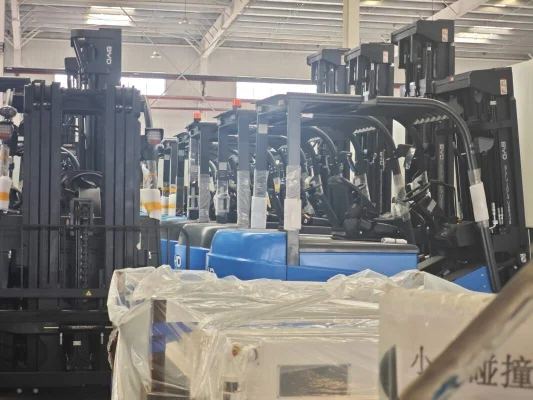
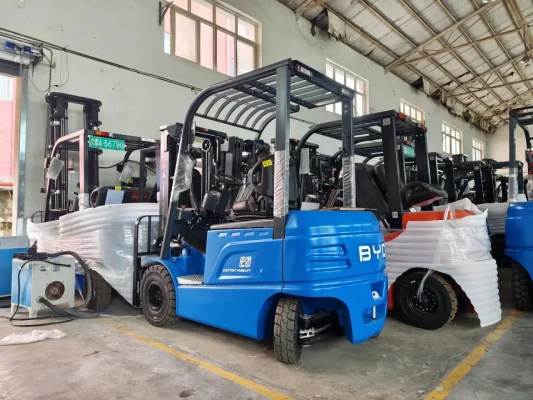
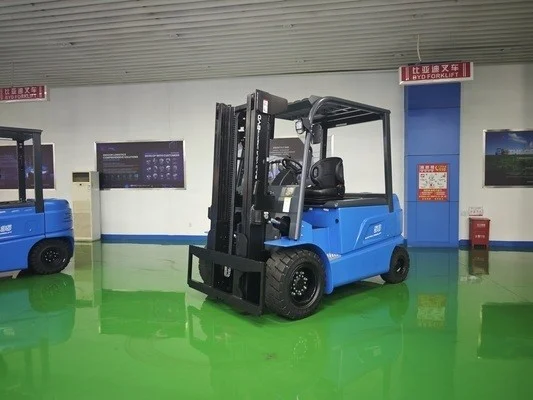
1.5 ton electric forklift: What Buyers Should Verify About Battery Voltage, Charger Compatibility, and Charging Time Before Ordering a Four-Wheel Counterbalance Truck
News 31/10/2026
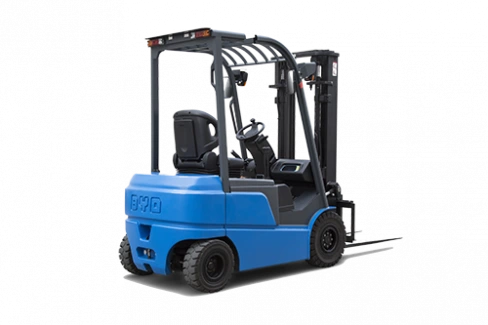
A 1.5 ton electric forklift is a modest-capacity four-wheel counterbalance truck, and the battery system is where most order mistakes begin. Voltage, charger matching, and charging time are not interchangeable across brands, and a truck that looks identical on a quotation can arrive with a battery, connector, and charger that do not work together. Before you commit, confirm these items in writing: nominal battery voltage, battery chemistry and capacity, connector type and wiring, charger input and output specifications, and the charging routine your shift pattern allows.
This guide lists what to verify and which documents to request. It does not assume any specific voltage or charge time, because those values must come from the manufacturer’s technical data your supplier provides.
Start With the Battery Specification, Not the Price
A 1.5 ton rating describes lifting capacity at a defined load center, not the energy system behind it. Ask your supplier to state the following on the quotation or data sheet:
- Nominal voltage and battery chemistry (lithium or lead-acid)
- Rated capacity in ampere-hours and the rated voltage at which that capacity is declared
- Battery weight and its effect on truck stability and residual capacity
- Battery dimensions and compartment fit
- Battery management or monitoring features, if the chemistry includes them
Do not accept a voltage figure copied from a brochure without confirming it applies to the exact model and battery option you are ordering. If the supplier cannot provide a data sheet, treat the voltage as unconfirmed and do not finalize the order.
Charger Compatibility: Match the Whole Chain
The charger must match the battery, not just the truck. Verify these points together:
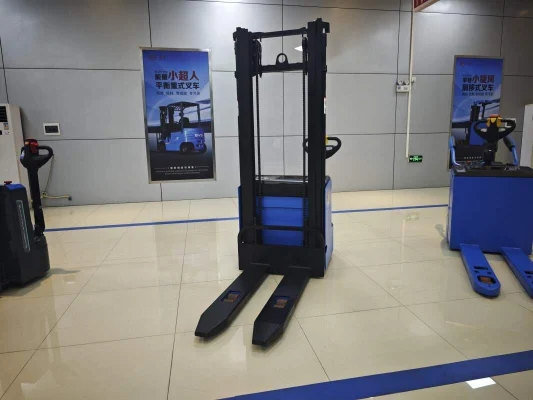
Voltage and Charge Profile
The charger output voltage range must suit the battery’s nominal voltage and chemistry. Lithium and lead-acid batteries use different charging profiles, so a charger built for one chemistry should not be assumed suitable for the other. Ask the supplier to confirm the charger is configured for the battery you are buying.
Connector and Cabling
Connector type, contact arrangement, and cable length are common mismatch points. Confirm the battery connector, the charger connector, and the truck’s charging receptacle are the same standard and rated for the current involved. A connector that fits physically may still be wired differently.
Power Supply at Your Site
Check the charger’s input voltage, phase, and current draw against your available supply. Confirm whether the installation needs a dedicated circuit, and whether your electrical contractor must review the connection. These are site questions your supplier cannot answer alone.
Charging Time Depends on More Than the Battery
Charging time is a system result, not a single number. It depends on battery capacity, charger output, the battery’s state of charge when charging begins, temperature, and the charging profile. A supplier who quotes a charge time should also state the conditions behind it. Ask:

- Is the stated time a full charge from empty, or a partial opportunity charge?
- What charger output and ambient temperature does the figure assume?
- Does the charging routine require a cool-down period or a specific ventilation condition?
- Can the truck be charged during breaks without disrupting the shift?
Compare the answer with your actual shift pattern. A truck that needs a long uninterrupted charge may not suit multi-shift work unless a second battery or a different charging arrangement is planned. This is a planning decision, not a product defect.
Documents and Acceptance Checks Before You Order
Use the following checklist as a procurement record. Each item should be confirmed in the supplier’s written documentation, not only in conversation.
| Item to verify | What to request |
|---|---|
| Battery voltage and chemistry | Model-specific data sheet showing nominal voltage and capacity |
| Charger compatibility | Written confirmation that the charger is configured for the ordered battery |
| Connector standard | Connector type, rating, and wiring details |
| Charging time | Stated charge time with the conditions it assumes |
| Site power requirements | Input voltage, phase, current, and installation notes |
| Delivery configuration | Whether battery and charger ship together and pre-configured |
On delivery, check that the battery label, charger label, and order documents agree. Record the serial numbers. If any item differs from the confirmed specification, raise it before the truck enters service.
Frequently Asked Questions
Can I use my existing charger with a new 1.5 ton electric forklift?
Only if the charger output matches the new battery’s voltage, chemistry, and charging profile, and the connector is compatible. Confirm this with the supplier in writing rather than assuming compatibility from the connector shape.
Does a higher battery voltage mean a better truck?
Not necessarily. Voltage is one part of the system design. Capacity, duty cycle, charger matching, and site power all affect whether a configuration suits your work. Treat voltage as a specification to confirm, not a ranking.
How long does charging take?
There is no universal figure. Charge time depends on battery capacity, charger output, starting state of charge, and temperature. Ask the supplier to state the conditions behind any quoted time and compare them with your shift pattern.
What should I include in a request to the supplier?
Provide your load weight, required lift height, load center, aisle width, floor and ramp conditions, shift pattern, and available charging time and power supply. These details let the supplier propose a four-wheel counterbalance electric forklift configuration and confirm the battery and charger combination that fits.