Hydraulic System and Lift Circuit Checks When Specifying a 2 Ton Electric Forklift
News 03/11/2026
Choosing a 2 ton electric forklift involves far more than confirming the rated load. The hydraulic system and lift circuit determine how smoothly the mast raises, how precisely the forks position a pallet, how the machine behaves when a load is held at height, and how much maintenance attention the truck will demand. During specification, buyers should treat the hydraulic circuit as a set of verifiable checkpoints: pump and motor type, valve configuration, cylinder sealing, hose routing, filtration, oil condition, and the way the system interacts with the battery and controller. This article explains what to examine, which questions to ask suppliers, and where the limits of a four-wheel counterbalance electric forklift lie.
Why the Lift Circuit Deserves Attention During Specification
The hydraulic circuit converts electrical energy into controlled lifting and tilting force. On a 2 ton electric forklift, the pump motor draws current from the traction battery, pressurises oil, and directs it through valves to the lift and tilt cylinders. Small mismatches between the circuit and the intended duty cycle show up later as slow lift speeds, overheating oil, leaking fittings, or jerky lowering.
General hydraulic principles are well established: contamination accelerates wear, air in the system causes spongy response, and excessive heat degrades oil. What cannot be assumed is how any specific machine implements these principles. Pump displacement, relief valve settings, filtration ratings, and cylinder dimensions must come from the manufacturer’s technical documentation, not from general expectations. Ask the supplier to confirm these values in writing before comparing quotations.
This article assumes a general industrial handling context: palletised goods moved between storage racks, trailers, and production areas. The same checks apply to warehouses, workshops, and distribution centres, but the priorities shift with load height, shift length, and floor conditions.
Key Components and What to Verify
Pump, Motor, and Control Valve
Ask whether the lift pump is gear, piston, or another type, and confirm the pump motor rating and duty classification. The control valve arrangement matters: single or multiple spool, proportional or on/off actuation, and whether lowering speed is regulated. Request the relief valve setting and confirm it matches the rated load and any planned attachment. A relief valve set too low limits lifting capacity; set too high, it may stress components. Only the manufacturer’s specification is authoritative here.
Cylinders, Seals, and Hoses
Lift and tilt cylinders should be checked for rod diameter, stroke, and seal material compatibility with the intended environment. Hoses need adequate pressure rating, abrasion protection, and routing that avoids sharp edges and hot surfaces. Ask how hose and fitting standards are documented and whether spare seal kits are available. In dusty or outdoor settings, wiper seals and rod protection deserve specific questions.
Filtration and Oil Condition
Confirm filter location, micron rating, and replacement interval from the maintenance schedule. Ask which hydraulic oil viscosity grade the manufacturer specifies and whether the recommendation changes with ambient temperature. Do not accept a generic oil recommendation without a documented basis; incorrect viscosity affects response and wear.
Battery and Controller Interaction
The lift circuit shares its energy source with traction. Ask how the controller manages simultaneous travel and lift demands, whether lift speed is reduced at low state of charge, and what diagnostic codes the system reports. These details affect realistic cycle times and operator expectations.
Matching the Circuit to the Duty Cycle
Specification should start with the task, not the component list. Record the actual load weight including pallet and attachment, the maximum lift height, the load centre distance, and the number of lift cycles per hour. A 2 ton rating applies at a stated load centre; a load held further from the fork heel reduces the usable capacity, and an attachment can reduce it further. Ask the supplier to confirm residual capacity at your actual load centre and height.
Then consider the environment. Dust, moisture, washdown, cold storage, and sloping floors each change what the hydraulic system must tolerate. A cold-store application may require specific oil, seal, and heating provisions that must be confirmed with the manufacturer; do not assume a standard truck will perform there. Narrow aisles raise questions about the truck’s turning radius and mast dimensions, and if the aisle is too tight, a four-wheel counterbalance model may not be the right choice at all.
Finally, examine maintenance access. Filter location, dipstick or sight glass, and hose routing affect how quickly routine checks can be completed. A circuit that is easy to inspect is more likely to be inspected.
Specification Checklist and Supplier Questions
The table below summarises what to confirm. Treat every entry as a question to the supplier rather than an assumed feature; standard and optional configurations vary by model.
| Checkpoint | Why It Matters | What to Request | Configuration Note |
|---|---|---|---|
| Rated capacity at load centre | Determines safe usable load | Capacity chart at actual load centre and height | Attachments may reduce capacity |
| Pump and motor specification | Affects lift speed and heat | Type, rating, duty class | Confirm against cycle profile |
| Relief valve setting | Protects circuit and limits force | Documented setting | Verify with planned attachment |
| Filtration | Controls contamination wear | Micron rating, interval | Confirm service access |
| Oil specification | Affects response and wear | Viscosity grade and temperature guidance | Ask about cold or hot environments |
| Hose and seal materials | Durability in dust, moisture, cold | Material and pressure rating | Spare kit availability |
| Diagnostics | Faster fault finding | Codes and access method | Operator and technician training |
Before ordering, request the maintenance schedule, the capacity chart, and any documentation covering hydraulic oil and filter replacement. Ask who provides service support and which spare parts are recommended to hold on site. If your site has cold storage, washdown, or explosive-risk zones, raise these early; the supplier must confirm whether the model can be configured appropriately rather than assuming it can.
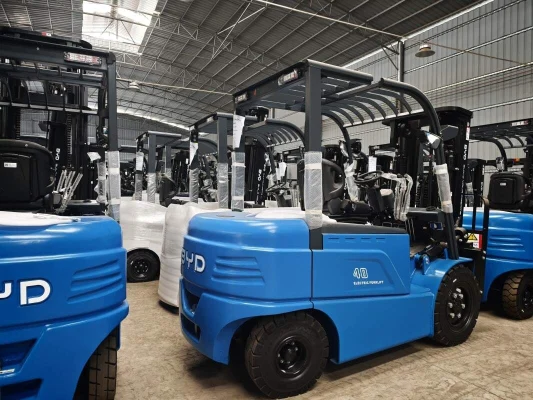
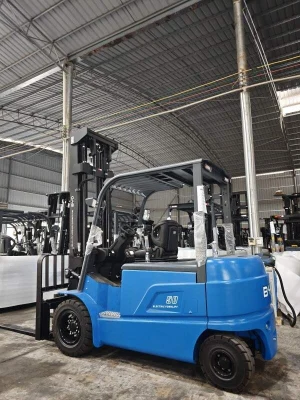
If you are evaluating a BYD four-wheel counterbalance electric forklift, share your load weight, lift height, aisle width, floor conditions, and shift pattern so the selection and configuration can be matched to the hydraulic and lift requirements. Confirm every performance figure against the manufacturer’s technical data before purchase.
Frequently Asked Questions
Does a higher lift capacity rating mean the hydraulic system is stronger?
Not necessarily. Capacity is tied to load centre and height, and the hydraulic circuit is designed around those limits. A truck rated at 2 tons at a given load centre may carry less when the load is offset or raised high. Always use the capacity chart and confirm the relief valve setting and cylinder design with the supplier.
How can I tell whether the lift circuit suits a cold-store application?
Ask the manufacturer to confirm the approved operating temperature range, the hydraulic oil grade, seal materials, and any battery or charging limitations. Standard machines are not automatically suitable, and modifications must be documented. If the supplier cannot provide this information, treat the application as unconfirmed.
What maintenance checks should be planned from day one?
Plan oil level and condition checks, filter replacement at the documented interval, hose and fitting inspection, and cylinder seal monitoring. Record lift performance so gradual changes become visible. The exact intervals come from the maintenance schedule, not from general assumptions.
Can I add an attachment without changing the hydraulic specification?
Attachments can change load centre, require additional hydraulic circuits, and reduce residual capacity. Ask the supplier to confirm compatibility, required valve and hose changes, and the revised capacity chart before fitting anything.