Indoor Electric Forklift Configuration Guide: Narrow Aisle Warehouse Operations
News 05/10/2026
Narrow aisle warehouse operations demand specific configurations to maximize storage density and keep work moving safely. Most standard material handling equipment cannot navigate tight gaps between racking, so indoor electric forklift configuration requires careful planning aligned with your space and operational needs. This guide breaks down core specs, selection criteria and limits you need to consider before making a purchase.
Core Configuration Requirements Narrow Aisle Operations
Narrow aisles typically measure between 6 and 10 feet wide, compared to 12+ foot wide aisles supporting standard counterbalanced forklifts. Every dimension of your indoor electric forklift must align with this tight space to avoid collisions and maintain operational efficiency.
Chassis and Overall Width
The most critical measurement of your forklift configuration is overall chassis width. A general rule: add 12 to 18 inches of clearance beyond your forklift width to your measured aisle width. This extra space accounts for load overhang, operator error and sudden movements. Most 8 to 9 foot aisles work best with chassis widths between 40 and 60 inches.
Mast Lift Height and Free Retraction
Most narrow aisle warehouses use high-bay racking to maximize vertical storage, so your mast must match your maximum lift height requirement. Free lift capability lets you raise loads without extending the mast top, which supports work within low ceiling entry points and mezzanine levels common in many older facilities. Always confirm free lift specs if your facility has multiple ceiling heights or overhead obstacles.
Turn Radius Specifications
Turn radius directly impacts how easily your operator can maneuver into and out of racking positions. Articulated and reach-type indoor electric forklifts feature much smaller turn radii than standard counterbalanced models. Counterbalanced models generally require aisles at least 10 feet wide to complete full turns without hitting racking, so they only fit larger narrow aisle layouts.
Key Power and Safety Configurations Indoor Use
Indoor operations have unique requirements beyond size. Power and safety configurations directly impact productivity, worker health and facility maintenance.
Battery Type and Charging Capability
Two main battery options dominate indoor electric forklift markets: lead-acid and lithium-ion. Lead-acid batteries have lower upfront cost, but require dedicated, ventilated charging space to manage fume release. Lithium-ion batteries support opportunity charging during worker breaks, which benefits multi-shift operations without extra battery units. They also produce no fumes, so they work safely within occupied warehouse space.
Indoor-Specific Safety and Maintenance Features
Several safety features add critical protection in crowded indoor narrow aisles. Blue spot pedestrian warning systems project a visible blue light on the floor ahead of moving forklifts, alerting workers you cannot see around racking. Automatic speed reduction engages when turning, lowering collision risk with pedestrians and stored goods. Non-marking, low-tread tires prevent scuff marks on polished concrete and epoxy warehouse floors, reducing long-term facility cleaning and repair work.
Actionable Selection Criteria Matching Your Warehouse
Follow these steps to confirm your configuration matches your actual facility needs:
Measure Clear Aisle Width Correctly
Always measure clear aisle width between upright racking supports, not just the gap between stored pallets. Pallets often extend a few inches beyond racking, which reduces usable clearance. Add 12 to 18 inches extra clearance to your final measurement before selecting your forklift width.
Confirm Load Capacity At Maximum Lift Height
Forklift load capacity decreases as mast lift height increases. Don’t rely on base capacity ratings listed at the lowest lift height. Check the manufacturer load chart to confirm your forklift can handle your maximum expected load weight at your highest required lift height.
Account For Your Floor Condition
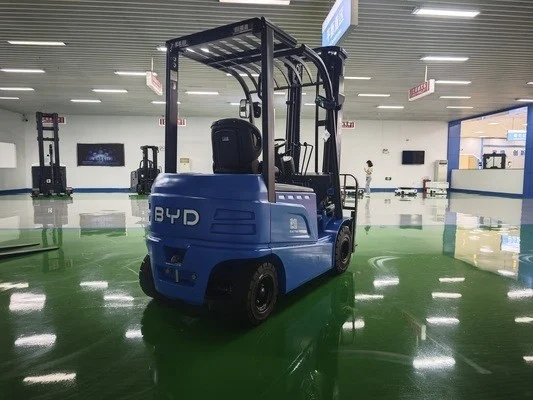
Minor unevenness, cracks or slope in indoor concrete floors affects forklift stability. Three-wheel indoor electric forklifts deliver greater maneuverability over imperfect floors, while four-wheel models offer greater stability at maximum lift heights. Factor this tradeoff into your selection based on your facility age and floor condition.
Common Operational Limits and Mitigations
Even correctly configured indoor electric forklifts have operational limits you need to plan around:
- Aisles narrower than 6 feet require specialized very narrow aisle (VNA) turret trucks, which include guidance systems to navigate extremely tight spaces. Standard reach models cannot operate safely in these aisles.
- Indoor cold storage facilities require special cold-rated batteries and sealed electrical components. Standard batteries lose run time rapidly at temperatures below freezing, so this configuration is non-negotiable.
- High-humidity indoor areas, such as produce storage facilities, need corrosion-resistant sealed electrical components to extend service life.
Frequently Asked Questions
What indoor electric forklift types work best in narrow aisles?
Reach forklifts and articulated electric forklifts are top choices. Most standard counterbalanced models require wider turning clearance, so they work only in aisles wider than 10 feet. VNA (very narrow aisle) turret trucks handle aisles as narrow as 6 feet supporting high-bay storage applications.
Do non-marking tires add unnecessary cost to my configuration?
Non-marking tires prevent permanent scuff marks on polished concrete or epoxy warehouse floors, which preserves facility value and reduces cleaning work. They remain required by most modern indoor warehouses, even with higher upfront cost.
Can I operate an indoor electric forklift outdoors?
Most indoor models have sealed components rated only for dry, controlled environments. Short trips over paved outdoor areas are acceptable in dry conditions, but prolonged exposure to rain or extreme temperatures can damage electrical systems and reduce service life.
What battery configuration fits multi-shift narrow aisle operations?
Lithium-ion batteries support opportunity charging during breaks, which eliminates need of full battery swaps between shifts. If you use lead-acid batteries, plan extra batteries and dedicated swap space to keep operations running across multiple shifts.
Final Configuration Recommendations
Before finalizing your purchase, test any candidate indoor electric forklift within your actual warehouse aisles to confirm maneuverability. Start your configuration process by measuring your aisle widths and confirming your maximum load and lift requirements. Prioritize chassis width, turn radius and tire type first, then select power and safety options matching your operational schedule and facility conditions. This approach helps you avoid costly mistakes and select a unit that delivers reliable performance long-term.