Choosing a 3.5 ton electric forklift: Four-Wheel Counterbalance Configuration Checks Buyers Often Overlook
News 07/11/2026
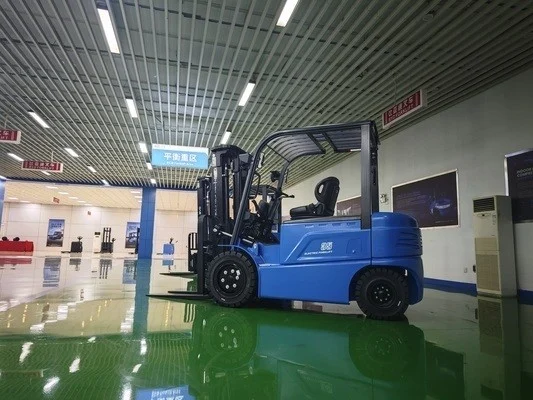
A 3.5 ton electric forklift sits in a busy middle band of warehouse and production work: heavy enough to move loaded pallets and still compact enough to work indoors. Most buyers compare rated capacity and price first, then discover during commissioning that the truck does not match the aisle, the ramp, the attachment, or the charging routine. The overlooked items are rarely exotic. They are configuration details that shift the real load centre, daily energy demand, and the information a supplier needs before quoting. This guide walks through those checks in the order they affect a purchase decision.
Start With the Real Load, Not the Nominal Rating
A 3.5 ton rating applies under stated test conditions, usually a defined load centre and lift height. Change either and the safe capacity changes with it.
Load centre and attachment effects
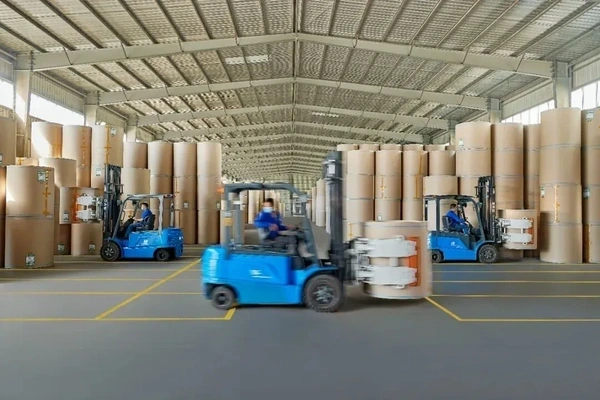
Load centre is the horizontal distance from the fork face to the centre of gravity of the load. A compact, dense pallet may sit well inside the nominal figure; a long carton or an oversized load can push the centre outward. Adding a sideshifter, clamp, or other attachment moves the load forward and adds attachment weight, both of which reduce usable capacity. Ask the supplier to confirm capacity at your actual load centre and lift height, and state any attachment in the inquiry. If the answer is only the headline rating, request the derated figure.
Loads that are not uniform
Pallets with overhang, drums, and irregular bundles concentrate weight unevenly. Describe the heaviest realistic load, its dimensions, and how it sits on the forks. A truck that handles average loads comfortably can still be marginal on the heaviest shift of the week.
Check the Site Before the Specification Sheet
Configuration choices make sense only against the building and the route. Walk the actual paths with a tape measure and note the constraints.
- Aisle width: measure the narrowest point, including doorways, racking end frames, and turning areas. Required aisle width depends on truck dimensions and the steering geometry of a four-wheel counterbalance electric forklift, so give the supplier the measured figure rather than a rough estimate.
- Lift height and overhead obstructions: record the highest shelf plus the clearance needed to enter and withdraw a pallet. Sprinklers, beams, and door headers limit mast choice.
- Floor condition and thresholds: joints, drains, dock levellers, and expansion strips affect ride, load stability, and tyre choice.
- Ramps and slopes: state gradient and length. Gradients change the load moment and braking demands, and the supplier should confirm suitability rather than assume it.
- Indoor and outdoor mix: if the truck leaves the building, note weather exposure and surface type, because these influence enclosure and tyre specification.
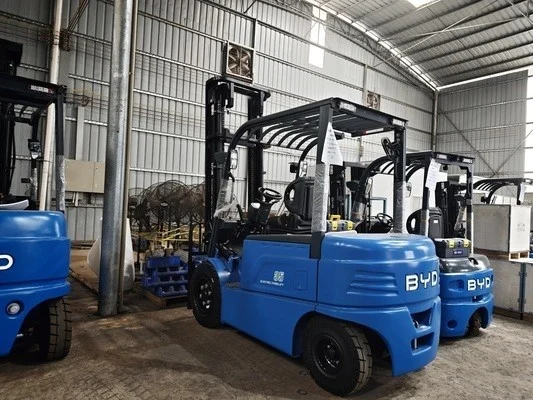
These measurements also determine whether a four-wheel counterbalance electric forklift is the right general choice at all. It is a common workhorse in loading, transfer, and storage tasks, but very narrow aisles or pure horizontal transport may point to a different discussion. Raise that early instead of forcing a truck into an unsuitable route.
Battery, Charging, and Shift Patterns
Energy configuration is where many quotes diverge and where daily operations are won or lost. A lithium battery changes charging behaviour compared with lead-acid, but the right choice still depends on your schedule.
Questions that shape the energy decision
- How many hours does the truck actually run per shift, and how many shifts per day?
- Are there natural breaks when opportunity charging is practical?
- What is the available charging power at the parking position, and who controls that electrical capacity?
- Is a spare battery swap part of the plan, or does the operation depend on charging in place?
- What temperature range does the charging area see?
Ask the supplier to match battery capacity and charger specification to your shift pattern, and to state the assumptions behind the recommendation. Do not accept a runtime figure without knowing the duty cycle it assumes. If the supplier cannot provide verified data, treat the number as indicative and plan a trial or a staged introduction.
Charging location details
Confirm ventilation, fire protection requirements, cable routing, and whether charging competes with other equipment on the same circuit. These are site and compliance questions, and local rules apply; the supplier can describe the equipment, but the site owner confirms the installation conditions.
What to Put in the Inquiry and What to Verify on Delivery
A clear inquiry shortens the quotation cycle and reduces the chance of a mismatched truck. Include the following in writing:
- Heaviest and typical load weights, pallet dimensions, and load centre
- Required lift height and any attachment
- Measured aisle widths, doorway clearances, and ramp gradients
- Floor type, indoor and outdoor use, and any harsh conditions
- Shift pattern, charging power available, and preferred charging approach
- Operator training needs and site access restrictions
Ask for the proposed configuration with the capacity derating at your load centre and lift height, the battery and charger specification, and the documents that will accompany delivery. Confirm warranty terms, spare parts availability, and service response arrangements in the same conversation.
Acceptance checks
On delivery, verify the model and serial number against the order, the battery and charger match the agreed specification, the mast and attachment are as ordered, and the load plate reflects the configuration. Test the truck on your own routes with representative loads before signing off, and record any deviations.
Frequently Asked Questions
Does a 3.5 ton rating mean the truck can lift 3.5 tons at any height?
No. Rated capacity is tied to a stated load centre and lift height. Capacity typically decreases as the load centre moves outward or the load is raised, and attachments reduce it further. Ask the supplier to confirm capacity at your actual conditions.
Can a four-wheel counterbalance electric forklift work in a narrow aisle?
It can work in aisles that match its dimensions and turning requirements. Measure the narrowest point and provide that figure to the supplier. If the aisle is genuinely tight, discuss the constraint openly rather than assuming a standard truck will fit.
How do I know whether a lithium battery suits my operation?
It depends on shift length, break patterns, available charging power, and how the truck is used. Describe the duty cycle and ask for the assumptions behind any runtime recommendation. Where verified data is unavailable, plan a trial or phased rollout.
What should I check when the forklift is delivered?
Match the model, serial number, battery, charger, mast, and attachment to the order, confirm the load plate reflects the configuration, and test the truck on your own routes with representative loads before acceptance.
If you are evaluating a 3.5 ton electric forklift, share your load details, lift height, aisle measurements, and shift pattern, and we can discuss the right four-wheel counterbalance electric forklift configuration within our range.