5 Ton Electric Forklift: Steering and Rear Axle Checks That Affect Tight-Turn Control in Four-Wheel Counterbalance Trucks
News 06/11/2026
Tight-turn control in a 5 ton electric forklift depends heavily on the condition of its steering system and rear axle. Unlike a car, a four-wheel counterbalance electric forklift steers with its rear wheels, and the rear axle carries both the steering pivot and a significant share of the load. When either component wears or is misadjusted, the truck may feel vague, wander, or resist tight turns—especially in narrow aisles or when spotting loads at height. This article explains what to inspect, how to interpret findings, and when to involve a technician. It focuses on four-wheel counterbalance electric trucks; other forklift types are not covered here.
Why Rear-Wheel Steering Changes the Inspection Focus
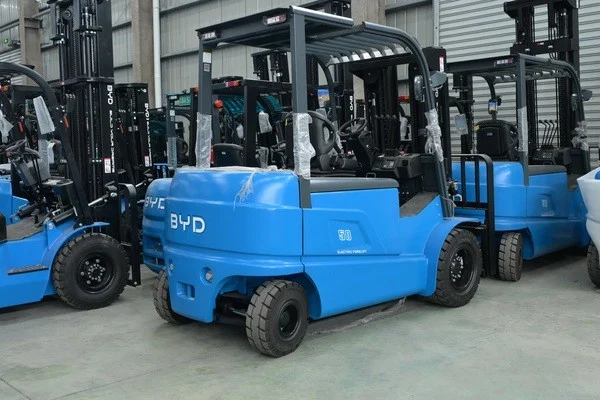
In a four-wheel counterbalance electric forklift, the rear wheels do the steering while the front wheels drive and carry the main load. That arrangement gives excellent maneuverability, but it also means the rear axle assembly is a high-wear area. The steering axle typically includes a central pivot, kingpins or steering knuckles, tie rods, and a steering cylinder or gearbox. Wear in any of these parts can introduce play that the operator feels as a delay or vagueness when turning the wheel.
Because the rear axle also supports the counterweight and battery, its mounting bushes and pivot bearings endure constant load. A worn pivot bush may allow the axle to shift slightly under load, changing the steering geometry and making tight turns feel unpredictable. The inspection therefore covers both the steering linkage and the axle’s structural mounts and bearings.
Steering System Checks: Play, Effort, and Return
Begin with the steering wheel free play. With the truck parked and wheels straight ahead, gently turn the steering wheel until you feel resistance. Excessive free play—more than the manufacturer’s specification—suggests wear in the steering column, universal joints, steering gear, or linkage. Do not guess a numerical limit; consult the service manual for your specific model.
Next, check steering effort through the full range. Turn the wheel from lock to lock with the truck stationary (or at very low speed, following safe procedures). The effort should be smooth and consistent. A stiff spot, a grinding noise, or a sudden light spot can indicate a failing steering motor, low fluid (if hydraulic), or a binding kingpin. On electric power steering systems, abnormal noise or intermittent assist may point to sensor or motor issues.
Finally, observe the return-to-center behavior. After a turn, the steering wheel should return smoothly as the truck moves forward. Poor return can result from incorrect toe-in, a binding kingpin, or a misaligned steering angle sensor. These symptoms often appear as the truck “fighting” the operator during tight turns.
Linkage and Tie Rod Inspection
With the front wheels chocked and the parking brake applied, inspect the tie rods and drag link. Look for bent rods, damaged boots, and loose clamps. Grasp each tie rod and try to rotate or push it; any noticeable play means the ball joint or rod end is worn and should be replaced. Also check the steering cylinder rod (if equipped) for scoring or leaks. Worn tie rod ends can cause uneven steering and excessive tire scrub during tight turns.
Rear Axle Checks: Pivot, Mounts, and Wheel Bearings
The rear axle pivot is the heart of tight-turn control. Raise the rear of the truck safely (using appropriate jacking points and stands) so the rear wheels are off the ground. Grasp each rear wheel at the top and bottom and try to rock it; movement indicates a worn wheel bearing or kingpin. Then check the axle pivot: with the wheels off the ground, try to lift the axle vertically or rock it side to side. Any movement beyond the manufacturer’s allowance suggests worn pivot bushes or a loose mounting bolt.
Inspect the axle mounting bolts and brackets for cracks, elongation, or rust streaks that could indicate movement. Tighten to the specified torque if loose, but replace any damaged hardware. Also examine the steering knuckles and kingpins for excessive play; a worn kingpin can cause the rear wheels to toe in or out dynamically, making the truck wander or resist turning.
Wheel Bearing and Tire Considerations
Wheel bearings that are loose or noisy affect steering precision. With the wheel off the ground, spin it and listen for roughness or rumble. Check for vertical play as described above. Tire condition also matters: uneven wear, incorrect pressure, or mismatched tire types can alter steering feel and tight-turn behavior. Always maintain the pressures recommended in the operator manual, and replace tires in pairs on the same axle when possible.
Putting Findings into Context: When to Adjust, Repair, or Escalate
Not every bit of play requires immediate repair. Use the service manual’s wear limits as your guide. Minor free play may be acceptable; excessive play that affects control should be addressed promptly. If you find a loose mounting bolt, tighten it to specification and recheck. If you find worn tie rod ends, replace them and have the steering alignment checked. For internal steering gear or motor faults, or for axle cracks, stop operation and contact a qualified technician.
Keep in mind that tight-turn control also depends on tire type, floor surface, and load distribution. A 5 ton electric forklift with a load centered near the rated load center will steer more predictably than one with an offset load. Before adjusting the machine, confirm that the load is within the capacity chart and properly positioned.
If you are evaluating a truck purchase or specifying a unit, share your aisle width, load weight, lift height, and floor conditions with the supplier. These details help determine the appropriate steering configuration and options. For current models, request the manufacturer’s technical documentation and confirm specifications directly.
Frequently Asked Questions
How much steering wheel free play is normal on a 5 ton electric forklift?
Normal free play varies by model and steering system. Check the service manual for your specific truck; typical limits are often expressed as a small angle at the steering wheel rim. Any value beyond the manual’s specification indicates wear that should be investigated.
Can a worn rear axle pivot cause the truck to wander?
Yes. The rear axle pivot carries steering and load forces. Excessive play can allow the axle to shift, changing steering geometry and causing vague or wandering steering, especially at low speeds and during tight turns.
What are common signs of tie rod wear?
Look for loose or damaged boots, bent rods, and noticeable play when you try to rotate or push the tie rod. The operator may report uneven steering or excessive tire scrub during turns.
Is it safe to operate with a small amount of steering play?
Minor play within the manufacturer’s limits may be acceptable, but any play that affects control or exceeds specifications should be repaired. When in doubt, have a qualified technician assess the steering and rear axle.