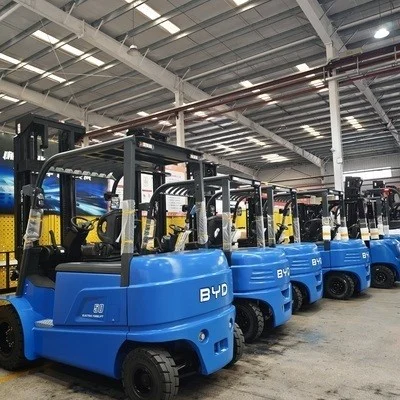
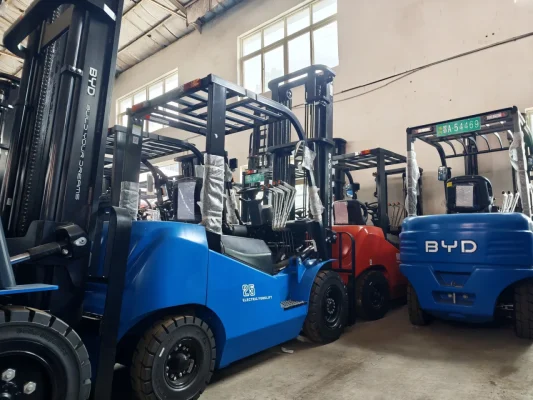
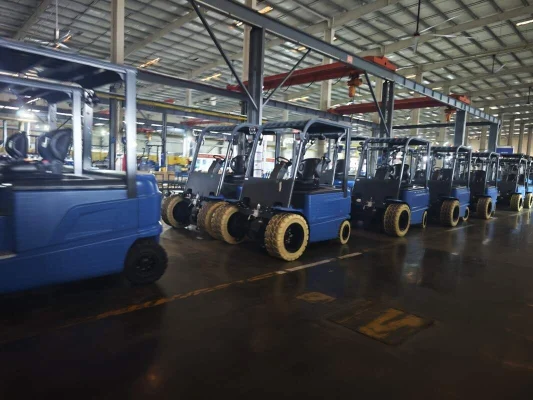
How to Match 3.5 ton electric forklift Hydraulic and Electrical Options to Your Duty Cycle
News 01/11/2026
A 3.5 ton electric forklift can be configured in many ways, but the right hydraulic and electrical options depend on how you actually use the truck. Duty cycle—the mix of load weight, lift height, travel distance, shift length, and ambient conditions—determines whether a standard configuration will suffice or whether you need upgraded hydraulics, a larger battery, or specific safety features. This article explains how to evaluate your duty cycle and align hydraulic and electrical choices with it, focusing on four-wheel counterbalance electric forklifts available from BYD. All recommendations are general selection guidance; confirm final specifications with the manufacturer’s technical data and a site assessment.
Start with a Clear Duty Cycle Profile
Before considering options, document the following parameters. These form the basis of every hydraulic and electrical decision.
- Load weight and attachment use: Rated capacity is typically defined at a specific load center (often 500 mm or 600 mm). If you use clamps, rotators, or other attachments, the effective capacity decreases, and hydraulic flow and pressure requirements change.
- Lift height and mast type: Higher lifts require more hydraulic oil volume and may affect stability. The mast type (duplex, triplex, full-free lift) influences both hydraulic demand and overhead clearance.
- Travel distance and speed: Long runs between pick-up and drop-off points increase energy consumption and affect motor and controller thermal load.
- Shift length and charging window: Hours per shift, breaks, and available charging time determine battery capacity and whether opportunity charging is needed.
- Environment: Ambient temperature, dust, moisture, and floor conditions affect component protection ratings and hydraulic oil selection.
- Ramp and floor gradients: Slopes increase power demand and affect braking and hydraulic performance.
Write these down as a simple table. This profile will guide the choices below.
Hydraulic Options: Matching Flow, Pressure, and Features
Hydraulic systems on electric forklifts typically include a pump driven by an electric motor, valves, cylinders, and a reservoir. The goal is to provide adequate lift and tilt speed without excessive energy draw or heat.
Lift and tilt speed requirements
High-throughput operations (e.g., loading docks with frequent pallet handling) may benefit from higher hydraulic flow to speed up lift and tilt. However, higher flow requires more motor power and can increase battery drain. Standard flow is often sufficient for moderate cycles. Estimate the number of lift cycles per hour and the average lift height; if the truck will operate near its maximum lift height frequently, confirm that the hydraulic system can sustain the required cycle time without overheating.
Attachment compatibility
If you plan to use attachments, the hydraulic system must provide the correct number of auxiliary circuits and adequate flow and pressure. For example, a sideshifter requires one auxiliary circuit; a clamp may require two. Check the attachment manufacturer’s requirements and ensure the forklift’s hydraulic system can meet them. Also note that attachments reduce rated capacity—consult the load chart.
Oil and filtration
Hydraulic oil viscosity affects performance in cold or hot environments. In cold storage, consider low-temperature oil and preheating options if available. Filtration quality affects component life; follow the manufacturer’s service intervals. These are general considerations; specific recommendations depend on your climate and duty cycle.
Electrical Options: Battery, Charging, and Controls
The electrical system includes the battery, charger, motor controllers, and any telematics or safety devices. Matching these to your duty cycle ensures uptime and avoids premature wear.
Battery capacity and chemistry
Battery capacity (kWh) should cover your energy consumption per shift plus a margin. Energy use depends on load, lift height, travel distance, and hydraulic work. Without measured data, you can estimate by comparing similar operations, but the most reliable approach is to request a duty-cycle assessment from the manufacturer. Lithium-ion batteries, such as those used in BYD electric forklifts, generally allow opportunity charging and may not require battery changes, but confirm this with the supplier. Lead-acid batteries typically need full charge cycles and cooling periods.
Charging infrastructure
Consider available charging time, charger power, and whether charging can occur during breaks. Fast charging may be possible with lithium-ion, but it requires a compatible charger and may affect battery life. Ensure the electrical supply at your site can handle the charger’s demand.
Motor and controller ratings
Controller and motor thermal ratings should suit your duty cycle. Continuous heavy loads or frequent ramps may require higher-rated components. Ask the manufacturer about duty ratings and any derating factors.
Safety and assistance systems
Options such as speed limiting, blue spot lights, and operator presence systems can be specified based on site rules. These are electrical additions that draw minimal power but improve safety.
Putting It Together: A Selection Workflow
Use this step-by-step approach to align options with your duty cycle.
- Document the duty cycle using the profile above.
- Identify hydraulic demands: list required lift height, attachment use, and desired cycle times. Compare with standard and optional hydraulic configurations.
- Estimate energy needs: calculate approximate kWh per shift based on load, lift, and travel. If uncertain, request a duty-cycle analysis from the manufacturer.
- Select battery and charging: choose capacity and chemistry that fit your charging window and infrastructure. Consider lithium-ion if opportunity charging is needed.
- Verify component ratings: ensure motors, controllers, and hydraulic components are rated for your environment and load profile.
- Review safety and site requirements: add options as needed.
- Confirm with a site assessment: have the supplier review your profile and recommend a configuration. Request a written quotation with specifications.
This workflow helps avoid over- or under-specifying. Remember that no configuration is universally best; the goal is fit to your operation.
Frequently Asked Questions
Can I add hydraulic attachments to a standard 3.5 ton electric forklift?
Many four-wheel counterbalance electric forklifts can be equipped with auxiliary hydraulic circuits to power attachments. However, the base hydraulic system may need upgrades (additional valves, higher flow) and the rated capacity will be reduced. Always check the attachment requirements and the forklift’s load chart.
How do I know if I need a larger battery?
If your current battery cannot complete a full shift without excessive discharge, or if charging time is insufficient between shifts, a larger capacity battery may be needed. The most accurate method is to measure energy consumption over a representative period, or ask the manufacturer to perform a duty-cycle assessment.
What electrical options improve safety in a busy warehouse?
Common options include speed limiting, warning lights, and operator presence sensing. The specific requirements depend on your site’s risk assessment and local regulations. Consult your safety officer and the forklift supplier.
Is lithium-ion always the best choice for a 3.5 ton electric forklift?
Lithium-ion offers advantages such as opportunity charging and maintenance-free operation, but it may not suit every budget or infrastructure. Lead-acid remains a viable option if charging time and space are available. Evaluate total cost of ownership and operational needs.
To discuss your specific duty cycle and explore BYD four-wheel counterbalance electric forklift configurations, contact our team with your load, lift height, and shift details.