3 Ton Electric Forklift Lift Height and Overhead Clearance: Matching Mast Specs to Your Rack Profile
News 03/11/2026
A 3 ton electric forklift can only work safely under a rack profile when its mast provides enough free lift, extended height, and overhead guard clearance. Matching mast specifications to your racking is a dimensional exercise: you compare the truck’s published mast data against the beam heights and clearances in your warehouse. This article explains the measurements that matter, how to read a mast specification sheet, and which questions to settle before you request a quote on a four-wheel counterbalance electric forklift.
Key Measurements That Link a Mast to Your Rack Profile
Three dimensions decide whether a truck can enter and lift inside a rack bay. Each one appears on the manufacturer’s mast drawing, and each must be checked against your rack layout rather than against a single “lift height” figure.
Rated lift height versus actual lift height
Rated lift height is the maximum height at which the mast can place a load while keeping its rated capacity. Capacity falls as the load center moves forward and as lift height increases, so a truck rated at 3,000 kg at a given load center may carry less at full height. The mast drawing should state the capacity at the rated height and the load center used. Do not assume the 3 ton rating applies at every lift height.
Free lift and the overhead guard
Free lift is the distance the forks can rise before the mast stages begin to extend. It matters when a load must be raised under a low obstruction, such as a mezzanine edge or a rack beam, before the truck enters the bay. The overhead guard height is the vertical clearance above the operator compartment. A mast with high free lift can raise the carriage without increasing overall truck height much; a mast with low free lift may force the operator to raise the load later, which can be unsafe near beams.
Extended height and lowered height
Extended height is the overall height with the mast fully raised. It determines the minimum ceiling, sprinkler, and light-fixture clearance in the aisle where lifting occurs. Lowered height is the overall height with the mast collapsed; it governs doorways, trailer entries, and any travel path with overhead restrictions. Both figures come from the mast specification, not from the rack height alone.
Reading a Mast Specification Sheet Against Beam Heights
A mast sheet lists several heights that are easy to confuse. Use the following comparison as a checklist, then confirm each value on the current manufacturer datasheet supplied with the quote.
| Specification | What it measures | Rack feature to compare |
|---|---|---|
| Rated lift height | Maximum load-handling height at rated capacity | Highest beam level where loads are stored |
| Free lift | Fork rise before mast stages extend | Clearance under the first beam or mezzanine edge |
| Extended height | Overall height with mast fully raised | Ceiling, sprinkler, and light-fixture clearance |
| Lowered height | Overall height with mast collapsed | Doorways, trailer openings, and travel paths |
| Overhead guard height | Clearance above the operator compartment | Any low beam or duct the operator passes under |
Two practical checks follow from this table. First, the rated lift height should exceed the highest beam level by the amount needed to lift a pallet clear of the beam and place it, not merely reach it. Second, extended height must leave room under the highest obstruction in the lifting aisle. If either check fails, a different mast stage configuration may be required, and the manufacturer’s data should confirm the alternative.
Applying the Numbers: Load Center, Capacity, and Aisle Conditions
Height alone does not make a mast suitable. Capacity at height, load center, and the aisle environment all interact. The following points help you decide whether a given mast matches the rack profile and the way the truck will be used.
Load center and capacity at height
Load center is the horizontal distance from the fork face to the load’s center of gravity. A pallet whose load sits farther forward reduces the capacity available at any height. The mast sheet should state the capacity at the rated lift height and the load center assumed. Compare that figure with the heaviest pallet you intend to store at the top beam level. If the pallet’s load center is greater than the stated value, ask the supplier to confirm capacity at your actual load center and height.
Aisle width, floor, and slope
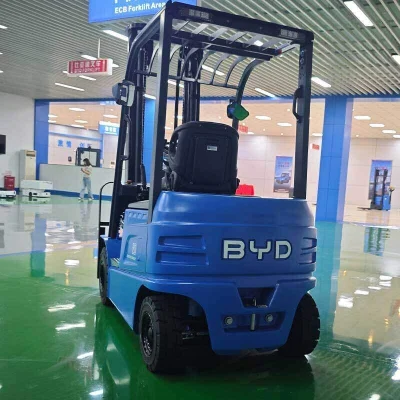
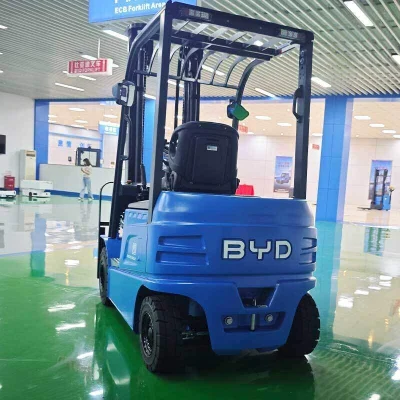
Mast choice does not change aisle width, but the truck’s dimensions and the way it lifts do affect safe operation. A four-wheel counterbalance electric forklift is a common general-purpose choice in factories, loading areas, and warehouse transfers. Whether it suits a specific aisle depends on the truck’s turning radius, the aisle width, floor condition, and any ramp or slope on the route. Confirm these values with the supplier rather than inferring them from the mast height alone.
Charging and shift pattern
Battery type and charging arrangements influence how much uptime the truck provides across a shift. The mast specification does not capture this, but it affects whether a 3 ton electric forklift can sustain the lift cycles your rack profile demands. Ask the supplier to confirm the battery and charger configuration available with the model you are considering, and state your shift pattern and charging window when requesting a quote.
Frequently Asked Questions
Can I raise the rated lift height after purchase?
Mast height is a structural specification, not an adjustable setting. Changing it typically requires a different mast or a manufacturer-approved modification, and the capacity rating would need to be re-established. Treat the rated lift height as fixed when you select the truck, and confirm it against your highest beam level before ordering.
Does a higher free lift always improve rack access?
Not necessarily. Free lift helps when a load must rise under a low obstruction before entering a bay, but the right amount depends on the beam height and the truck’s overall height in that position. Too little free lift can force lifting close to beams; an unnecessarily high free-lift mast may add cost and reduce visibility. Match free lift to the specific obstruction, using the mast drawing.
What if my ceiling clearance is lower than the extended height?
Then the truck cannot safely raise the mast to that height in that location. Options include selecting a mast with a lower extended height, restricting lifting to areas with adequate clearance, or revising the rack layout. Do not rely on operator caution alone; the dimensional conflict should be resolved in the specification.
How do I confirm the mast data before ordering?
Request the current mast specification sheet and capacity chart from the supplier, and compare them with your rack drawing. State your heaviest pallet, its load center, the highest beam level, the lowest overhead obstruction, and the aisle and floor conditions. The supplier can then confirm which mast configuration matches those inputs and which parameters still need verification.