5 Ton Electric Forklift: Battery Thermal Behavior During Multi-Shift Heavy Load Handling
News 07/11/2026
A 5 ton electric forklift working several shifts with heavy loads places sustained thermal stress on its battery pack. The practical question is not whether the pack warms up, but whether heat generation and heat removal stay balanced across the working day and during charging between shifts. This article explains the mechanisms, the operating variables that shift the balance, and the checks a buyer or fleet manager should make before committing a four-wheel counterbalance electric forklift to multi-shift duty.
How Heat Builds in a Heavy-Duty Battery Pack
Every battery converts some energy into heat. Two sources dominate in a counterbalance truck lifting heavy loads.
Internal resistance during discharge and charge
Current flowing through the cells meets internal resistance, and that resistance rises as cell temperature moves away from its comfortable band. High load currents, such as lifting a rated load or climbing a ramp, increase the heat generated per unit of time. Charging produces heat as well, and fast charging concentrates it into a shorter window.
Chemistry and pack construction
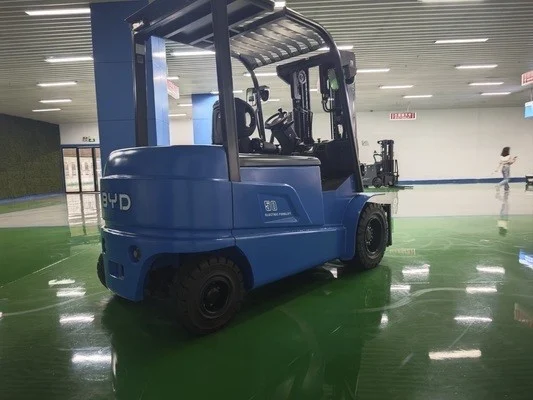
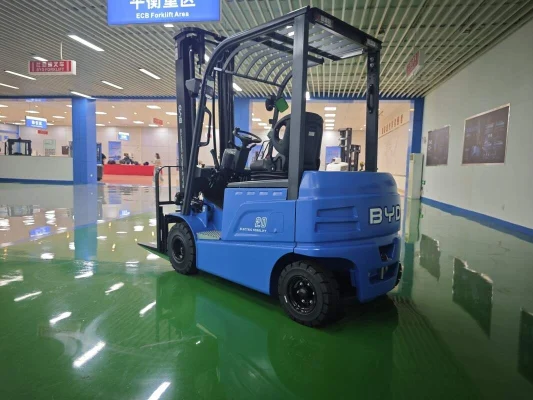
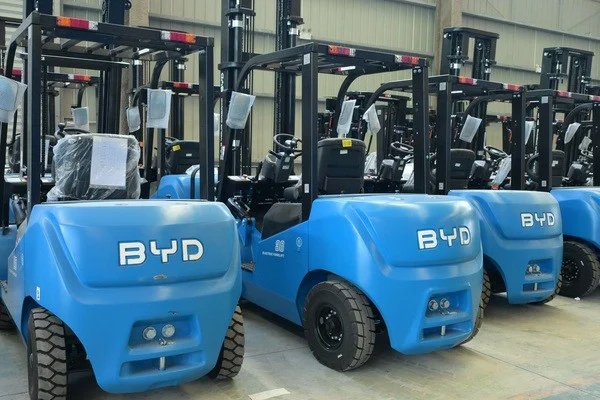
The thermal picture differs by chemistry. Lithium iron phosphate packs, the type commonly fitted to BYD electric forklifts, have a characteristic thermal profile that differs from lead-acid. Pack-level design matters just as much: cell spacing, heat spreaders, ventilation paths, and the placement of temperature sensors all influence how evenly heat is distributed and how quickly it leaves the pack.
Duty cycle as the deciding variable
Continuous lifting, long travel distances with a load, frequent ramp climbs, and short rest periods all raise the average current draw. A truck that handles a few heavy lifts per hour behaves very differently from one running near-continuous heavy cycles. The same 5 ton rating can therefore produce very different thermal outcomes depending on the work pattern.
What Multi-Shift Operation Changes
Multi-shift work removes the long overnight recovery period that single-shift operations rely on. Three factors matter most.
Limited cooling windows
Between shifts, the pack has only a short interval to shed heat before the next operator takes over. If the pack has not returned to a moderate temperature, the next shift starts from a higher baseline, and heat accumulates over the day.
Charging strategy
Opportunity charging during breaks can keep the state of charge adequate, but each charging event adds heat. Whether that trade-off is acceptable depends on the charger, the pack’s thermal management, and how much cooling time remains before the next shift. Manufacturer charging guidance should be followed rather than improvised.
Ambient conditions
Hot warehouses, poorly ventilated charging areas, and direct sun on parked trucks reduce the temperature difference driving heat away from the pack. Cold environments raise separate questions about charging limits and available capacity, which the manufacturer’s data should address.
Operating and Specification Checks Before Purchase
Thermal behavior cannot be judged from the tonnage rating alone. The following checks turn a vague concern into specific questions a supplier can answer.
| Check | What to establish |
|---|---|
| Duty cycle | Average and peak lifts per hour, travel distance, ramp frequency, and rest periods |
| Load and geometry | Actual load weight, load center, lift height, and attachments that shift the center of gravity |
| Battery specification | Chemistry, capacity, voltage, and any documented thermal management features |
| Charging plan | Charger type, charging windows, and location ventilation |
| Environment | Ambient temperature range, floor conditions, aisle width, and ramp gradients |
| Monitoring | How the truck reports temperature, warnings, and derating behavior |
Two points deserve emphasis. First, the load center marked on the data plate defines the rated capacity; a load whose center sits further out reduces the safe capacity, and the truck works harder than the nominal figure suggests. Second, if the supplier cannot provide documented thermal specifications or charging guidance, treat that as a gap to resolve before purchase rather than an assumption to make.
Questions worth putting in writing
- What temperature range does the pack tolerate during discharge and during charging?
- Does the truck reduce performance automatically when the pack reaches a threshold, and how is that signaled to the operator?
- What charging profile does the manufacturer recommend between shifts?
- Which parameters must the site confirm so the configuration matches the actual duty cycle?
In a hypothetical three-shift warehouse handling dense palletized goods, the useful planning step is to map the heaviest portion of the day and check whether charging windows overlap with it. If they do, the site may need to adjust break timing or charging power rather than assume the pack will cope. These are general planning considerations, not measured results from a specific installation.
Common mistakes
- Choosing capacity from tonnage alone without matching the duty cycle.
- Charging in unventilated corners where heat cannot disperse.
- Ignoring load center and attachment effects on effective capacity.
- Assuming a higher nominal capacity removes the need to plan cooling and charging windows.
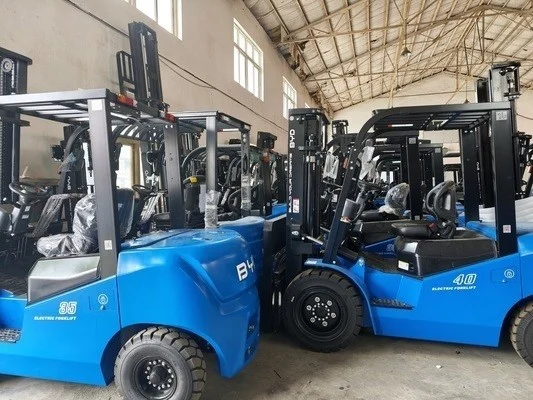
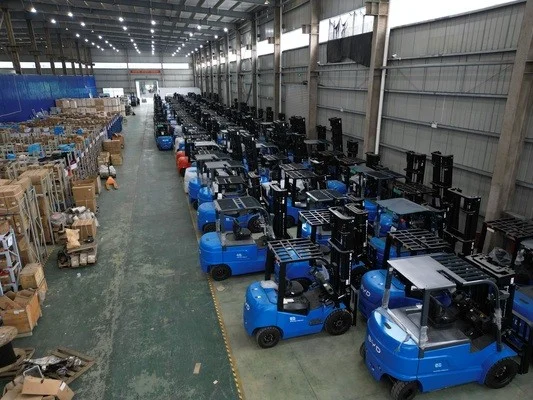
BYD four-wheel counterbalance electric forklifts with lithium batteries are the models this site supplies. Selection and configuration depend on the site data above; sharing actual loads, lift heights, shift patterns, floor and ramp conditions, and charging arrangements allows a configuration discussion grounded in real requirements rather than general claims.
Frequently Asked Questions
Does a 5 ton electric forklift overheat during multi-shift work?
Not automatically. Whether the pack stays within its intended temperature range depends on the duty cycle, ambient conditions, charging plan, and the pack’s thermal design. Continuous heavy cycling with short recovery windows is the most demanding pattern, and it should be described to the supplier when configuring the truck.
Is fast charging between shifts a problem?
It can add heat, and the effect depends on the charger, the pack, and how much cooling time remains before the next shift. Follow the manufacturer’s charging guidance and confirm the charging area has adequate ventilation rather than assuming any charging pattern is safe.
How can an operator tell the battery is getting too warm?
Modern trucks typically provide temperature warnings and may limit performance when thresholds are reached. The exact behavior, thresholds, and indicators are model-specific, so ask the supplier to document them and include them in operator training.
Does lithium battery chemistry remove thermal concerns?
No. Lithium iron phosphate packs have their own thermal characteristics, but heat generation and removal still depend on current, duty cycle, pack design, and ambient conditions. Chemistry changes the profile; it does not eliminate the need to plan the work and charging pattern.