Four-Wheel Counterbalance Electric Forklift Procurement: Matching Battery Voltage and Charger Output to Your Shift Schedule
News 30/10/2026
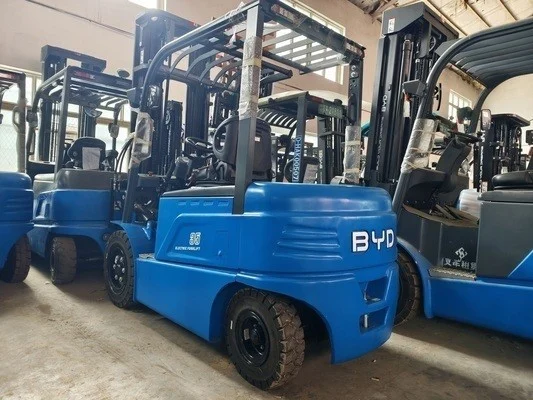
When specifying a four-wheel counterbalance electric forklift, battery voltage and charger output are often treated as afterthoughts. In practice, they determine whether the truck completes a full shift without a mid-shift charge and whether the charger can replenish the battery during breaks. This procurement guide explains how to align these parameters with your operating schedule, what data to request from suppliers, and which points to verify before placing an order.
Why Voltage and Charger Output Belong in the Specification
Battery voltage affects the forklift’s electrical system, motor performance, and compatible charger families. Charger output current and voltage must match the battery’s requirements. If the charger is undersized, recharge time may exceed available breaks; if oversized, it may exceed the battery manufacturer’s recommended charge rate. Neither outcome is desirable.
Shift schedules vary widely: single-shift operations may recharge overnight, while multi-shift operations need opportunity charging or battery exchange. The procurement question is not simply “what voltage?” but “what voltage and charger output keep the truck productive across my actual schedule?”
Mapping Your Shift Schedule to Charging Needs
Start by documenting the operating pattern. The table below lists common schedules and the charging questions they raise. These are general categories; actual needs depend on duty cycle, load weight, and site conditions.
| Schedule | Typical charging window | Key procurement question |
|---|---|---|
| Single shift, 8 hours | Overnight, 8–12 hours | Can the charger fully recharge the battery within the off-shift window? |
| Two shifts, 16 hours | Between shifts, plus breaks | Is opportunity charging needed, and does the charger support it? |
| Three shifts or continuous | Short breaks, battery exchange | Is battery exchange practical, or is a high-output charger required? |
For each schedule, note the actual hours the truck is available to charge. Deduct time for parking, connecting, and any cool-down period the battery manufacturer specifies. The remaining window is your real constraint.
Battery Voltage: System Compatibility and Site Conditions
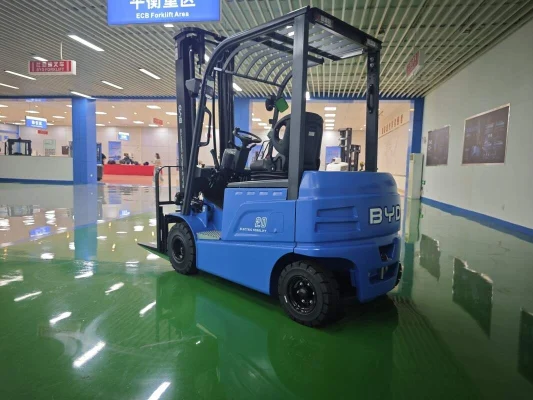
Four-wheel counterbalance electric forklifts commonly use battery voltages such as 48 V, 80 V, or higher, depending on model and capacity. Voltage is not a standalone choice; it must match the forklift’s design and the charger’s output. When reviewing a supplier’s proposal, confirm that the quoted battery voltage aligns with the truck’s electrical system and that the charger is rated for that voltage range.
Site conditions also matter. Ambient temperature affects battery charging acceptance, and some lithium battery systems have specific temperature limits. Ask the supplier how the recommended battery and charger perform in your climate and whether any temperature-related derating applies. Without verified data, treat these as items to confirm rather than assume.
If your operation involves multiple trucks, standardizing voltage can simplify charger inventory and operator training. However, standardization should not override the duty cycle requirements of each application.
Charger Output: Sizing to the Recharge Window
Charger output is typically expressed in voltage and current (amperes). The battery manufacturer specifies a maximum charge rate and a recommended charging profile. The charger must be compatible with that profile. To size the charger, you need the battery capacity (in ampere-hours) and the acceptable recharge time.
A simplified relationship: required charger current is roughly battery capacity divided by the recharge time, adjusted by the battery’s charge acceptance and charger efficiency. This is a planning estimate, not a substitute for the manufacturer’s specifications. For example, a 600 Ah battery recharged in 8 hours would theoretically need about 75 A, but actual requirements may be higher due to efficiency losses and the charging profile.
Do not select a charger solely by its maximum output. Confirm that it can deliver the required current at the battery’s voltage and that it follows the correct charging curve. For lithium batteries, the charger must be designed for lithium chemistry; lead-acid chargers are not interchangeable.
If your schedule includes opportunity charging during breaks, ask whether the charger and battery support partial charging without reducing battery life. This is a common procurement question, and the answer depends on the specific battery management system.
Information to Request and Verify Before Ordering
Use the following checklist during the inquiry stage. Request written confirmation from the supplier, and keep the documents with the purchase order.
- Battery specification: voltage, capacity (Ah), chemistry (e.g., lithium), and manufacturer’s recommended charge rate.
- Charger specification: input voltage, output voltage range, maximum output current, charging profile, and compatibility with the battery chemistry.
- Recharge time: estimated time to full charge under your site’s ambient conditions, based on the supplier’s data.
- Opportunity charging capability: whether partial charging is permitted and any conditions.
- Temperature limits: operating and charging temperature ranges, and any derating.
- Electrical supply: charger input requirements and whether your facility’s power supply meets them.
- Documentation: datasheets, manuals, and warranty terms that cover battery and charger.
Also confirm the physical interface: connector type, cable length, and charger placement. These details affect daily usability and safety.
This guide provides general procurement considerations. It does not include model-specific data. To discuss a four-wheel counterbalance electric forklift configuration that fits your shift schedule, share your operating hours, load weight, lift height, and site conditions with our team.
Frequently Asked Questions
Can I use the same charger for different battery voltages?
Only if the charger is explicitly rated for those voltage ranges and charging profiles. Using a charger outside its rated voltage may damage the battery or create a safety hazard. Always match the charger to the battery manufacturer’s specifications.
How do I know if my shift schedule requires opportunity charging?
If the truck cannot be taken out of service long enough for a full recharge between shifts, opportunity charging during breaks may be necessary. Calculate the available charging time and compare it with the supplier’s stated recharge time. If the window is insufficient, discuss battery exchange or a different charging strategy.
Does battery voltage affect forklift performance?
Voltage is one factor in the truck’s electrical system design. Higher voltage systems can deliver power with lower current, but the actual performance depends on the motor, controller, and overall design. Do not assume that a higher voltage automatically means better performance; review the complete specification.
What should I include in a charger inquiry?
Provide the battery voltage and capacity, the required recharge time, the available charging window, ambient temperature range, and your facility’s electrical supply details. This information helps suppliers recommend a compatible charger and identify any site-specific considerations.