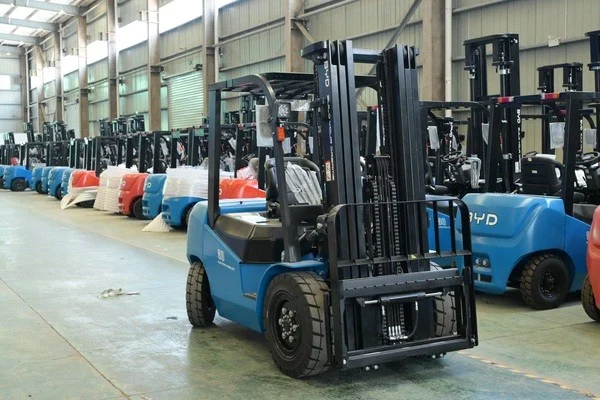
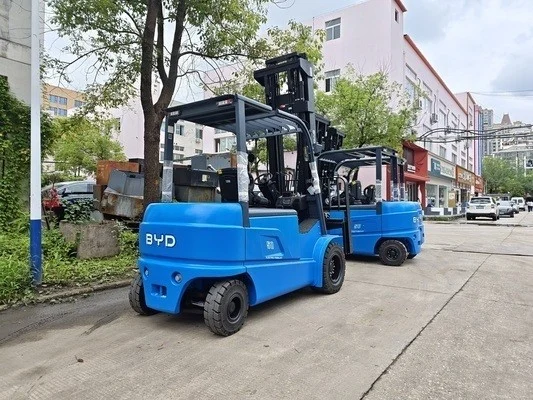
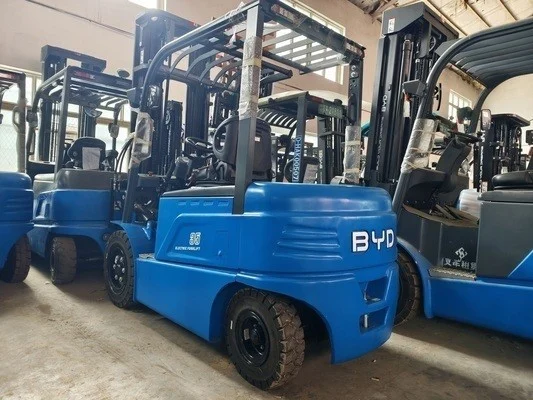
5 Ton Electric Forklift: Duty Cycle Data Buyers Should Collect Before Locking a Four-Wheel Counterbalance Specification
News 02/11/2026
A 5 ton electric forklift is a major capital commitment, and the specification you sign off on determines whether the truck keeps pace with your operation or becomes a bottleneck. The most common procurement mistake is choosing a model from a load chart alone. A four-wheel counterbalance electric forklift rated at 5,000 kg is only as capable as the duty cycle it must survive. Before you lock a configuration, collect real operating data: how heavy the loads actually are, how high and how often they lift, how far they travel, how long each shift runs, and how the battery will be charged. This guide lists the figures worth gathering and explains how each one changes the specification conversation.
Start With Load Data, Not the Rated Capacity
Rated capacity is measured at a defined load center, usually 500 mm or 600 mm depending on the model. If your loads sit farther from the fork face, the usable capacity falls. Record the following before requesting a quote:
- Typical and maximum load weight, including pallets, packaging, and any attachments.
- Load dimensions and center of gravity, so the load center can be confirmed against the manufacturer’s capacity chart.
- Attachment weight, if clamps, rotators, or other devices will be fitted, since these reduce net capacity.
- Lift height at which the heaviest loads are handled, because capacity ratings are not constant through the full mast range.
State these as ranges, not single numbers. A buyer who reports only the average load often ends up with a truck that is marginal on the heaviest pallet of the week.
Quantify Lift Height, Travel, and Cycle Frequency
Duty cycle is a combination of height, distance, and repetition. Two operations moving the same tonnage can place very different demands on a truck. Collect:
- Maximum and normal lift heights, and the mast type currently used.
- Average and maximum travel distance per trip, loaded and empty.
- Number of lifts and trips per hour at peak, not just per shift.
- Whether the truck also loads and unloads road vehicles, which adds ramp and dock work.
These figures help confirm mast specification, hydraulic performance expectations, and whether the truck’s rated capacity remains valid at your working height. They also reveal peak demand periods that an average figure would hide.
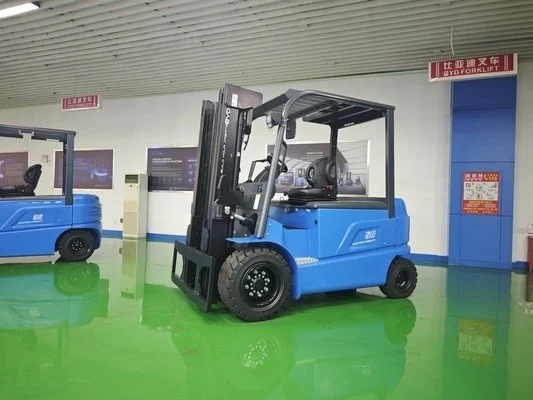
Measure the Site: Aisles, Floors, Ramps, and Doors
Site geometry often decides whether a four-wheel counterbalance truck is workable at all. Walk the route and record:
- Minimum aisle width, including any pinch points near racking or doors.
- Floor condition and surface type, since uneven or damaged floors affect stability and tyre choice.
- Ramp and slope gradients, plus the direction of travel when loaded.
- Overhead clearances, doorway widths, and floor loading limits on upper levels.
Four-wheel counterbalance trucks generally need more turning space than three-wheel or reach designs, so a tight aisle layout may call the whole concept into question. If your aisles are narrow, confirm the actual dimensions with the supplier rather than assuming the truck will fit.
Shift Patterns, Charging, and Uptime Expectations
Battery and charging arrangements should follow from your shift pattern, not the other way around. Gather:
- Number of shifts per day and hours of actual operation per shift.
- Available charging windows, including breaks and between shifts.
- Charging location, ventilation, and electrical supply capacity.
- Whether opportunity charging is acceptable, and who manages battery changes if needed.
For lithium battery models, confirm the manufacturer’s stated charging profile and operating temperature range from the technical documentation. Do not assume a charging strategy from another site will transfer. If your operation runs multiple shifts with short breaks, say so early; it changes the battery and charger discussion.
Prepare a Duty Cycle Brief and Verify It Before Signing
Turn your data into a short written brief and attach it to the enquiry. A practical brief includes: load weight range and load center, maximum lift height, aisle and door dimensions, floor and ramp conditions, shifts and hours, charging constraints, and any attachment requirements. Ask the supplier to confirm which capacity chart applies, at what load center and height, and which parameters still need verification.
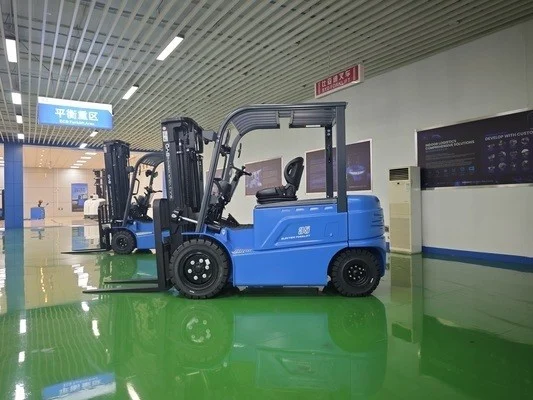
Before locking the specification, check that the quoted model matches the brief rather than a generic catalogue entry. Confirm the mast, tyres, battery, and charger against your site data, and ask what information the supplier still needs. This step is where most mismatches are caught. If you would like to discuss a configuration, share your load, lift height, aisle, and shift details, and the selection can be matched to a four-wheel counterbalance electric forklift rather than guessed.
Frequently Asked Questions
Is a 5 ton rating the same as the maximum weight I can lift?
No. Rated capacity applies at a specified load center and often at a specified height. Loads with a farther center of gravity, or lifts near maximum height, can reduce usable capacity. Confirm the capacity chart that applies to your load dimensions and lift height.
What aisle width should I measure?
Measure the narrowest point along the actual travel route, including turns, doorways, and areas near racking. The required aisle depends on the truck’s dimensions and turning geometry, so provide the measured figure rather than an estimate.
How many hours of data do I need before requesting a quote?
A representative week is usually enough to capture peak loads and busy periods. Record both typical and maximum figures, and note any seasonal peaks, so the specification is not built around an unusually quiet day.
Can I specify a lithium battery without knowing my charging windows?
It is better to define the charging windows first. Charging time, available breaks, and electrical supply all affect the battery and charger choice. Confirm the manufacturer’s documented charging requirements against your schedule before committing.