Planning a 5 Ton Electric Forklift Lift Height Specification: Mast Stages, Free Lift, and Overhead Clearance Checks
News 01/11/2026
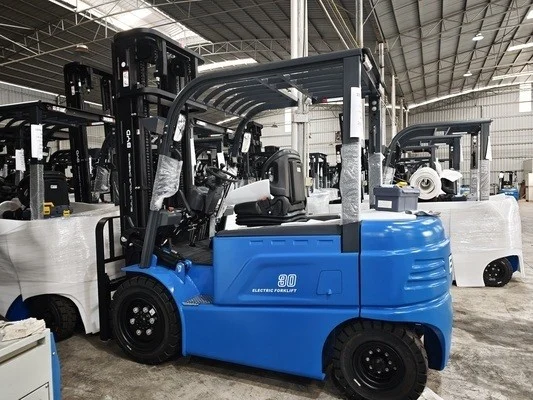
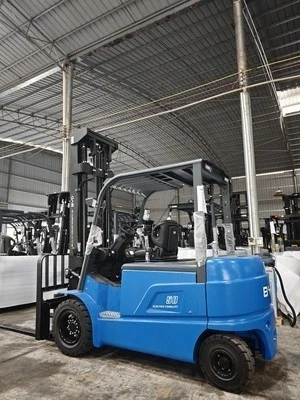
A 5 ton electric forklift lift height specification is not a single number you copy from a brochure. It is a set of linked dimensions: mast stages, free lift, collapsed height, extended height, and overhead clearance. Get any one of them wrong and the truck may not fit through a doorway, may not enter a container, or may not reach the top beam of your racking safely. This guide walks through the checks in the order they usually cause problems, with attention to four-wheel counterbalance electric forklifts, the configuration this site supplies.
Mast Stages and What Each One Changes
Mast stages describe how many nested rail sections extend to reach a given lift height. The common configurations are two-stage (duplex), three-stage (triplex), and, less often, four-stage masts. Each adds reach but also changes the collapsed height and the free lift available.
A two-stage mast is the simplest arrangement. It typically offers limited free lift and a taller collapsed profile relative to its maximum lift. A three-stage mast adds a section so the truck can reach higher while keeping the collapsed height lower, which matters when you must pass under a door header or into a trailer. Free lift is the amount the forks can rise before the mast itself begins to extend. Full free lift keeps the overall height unchanged until the carriage passes the top of the mast, which is why it is often specified when working inside containers or low-clearance buildings.
Do not assume a higher stage count is always better. More stages mean more wear points, more seals, and a taller extended height that may conflict with sprinkler heads, lights, or roof trusses. The right choice depends on your racking, your doorways, and your load handling routine.
Why the 5 Ton Class Deserves Extra Care
At around 5 tonnes capacity, the mast, carriage, and fork assembly are heavy, and the truck’s overall dimensions grow accordingly. A specification that works on a 2 tonne truck may not transfer. Heavier loads also mean the load centre matters more: rated capacity is normally stated at a specific load centre, and moving the load centre outward reduces the safe capacity. Always confirm the rated capacity at your actual load centre and with any attachment fitted, using the manufacturer’s data plate and technical documentation rather than a general rule.
Overhead Clearance, Doorways, and Racking Checks
Overhead clearance problems usually appear in three places: building doorways, container or trailer entries, and the top of the racking. Each requires a different measurement.
- Doorway and header height: measure the lowest obstruction, not the nominal door height. Include door tracks, roller shutters, and any protective beams.
- Container and trailer entry: the limiting dimension is the collapsed height plus free lift. If the mast extends before the forks clear the roof, the truck will not enter safely.
- Racking top beam: you need enough lift to place the pallet on the beam plus a practical clearance to withdraw the forks. Confirm the required lift height with your racking layout, not just the beam level.
- Building services: sprinklers, lighting, heating ducts, and roof steel can sit lower than expected. A site survey that records these obstructions is more reliable than a single ceiling height figure.
Also check the extended height against any structure the mast could contact while raised. Operators sometimes raise a mast near a doorway or mezzanine edge, so the clearance check should cover the whole travel path, not only the storage aisle.
Ground, Aisle, and Load Centre Interactions
Lift height does not stand alone. Aisle width, turning radius, floor condition, and gradients all affect whether a four-wheel counterbalance electric forklift suits the site. A 5 tonne truck needs a wider operating envelope than a smaller model, and uneven or sloped floors can change how loads behave at height. Provide your aisle widths, floor surface, ramp gradients, and typical load dimensions when asking a supplier to confirm a configuration. If the aisle or lift requirement falls outside what a counterbalance truck can handle safely, say so honestly rather than forcing the application.
Specification Checklist and Supplier Questions
The table below summarises the parameters that most often decide whether a 5 tonne electric truck fits a site. Treat every value as something to confirm against the manufacturer’s technical data and your own measurements.
| Parameter | Why it matters | What to confirm |
|---|---|---|
| Rated capacity and load centre | Determines safe load at your actual handling position | Capacity at the stated load centre, and any reduction with attachments |
| Mast stages | Sets reach, collapsed height, and free lift | Stage configuration offered with the required lift height |
| Free lift | Controls whether the truck can enter low-clearance spaces | Free lift value and whether full free lift is available |
| Collapsed and extended height | Must clear doorways and building services | Both dimensions at the specified mast |
| Required lift height | Must reach the top beam with practical clearance | Racking drawing and pallet height |
| Aisle and turning data | Affects safe manoeuvring at height | Aisle width and turning radius from the supplier |
| Battery and charging arrangement | Affects shift availability and charging space | Charging method, space, and shift pattern |
When you approach a supplier, bring measured doorway heights, racking drawings, pallet sizes, typical load weights, aisle widths, floor gradients, and your shift and charging pattern. Ask which mast configuration is being quoted, what the free lift is, and what the collapsed and extended heights are at that configuration. Confirm whether any attachment changes the rating, and ask which documents support the figures. If a number is not yet confirmed, keep it as an open item rather than assuming a typical value.
Frequently Asked Questions
Does a higher lift height always mean a taller truck?
Not necessarily. A three-stage mast can reach higher while keeping a lower collapsed height than some two-stage designs, but the extended height and free lift still need checking. The relationship depends on the specific mast, so compare the actual dimensions rather than the stage count alone.
Can a 5 tonne electric forklift work inside a container?
Entry depends on collapsed height, free lift, and the container’s internal height, as well as the truck’s width and the load. Many counterbalance trucks are too large or too tall for comfortable container work. Measure the opening and confirm the mast dimensions before assuming it will fit.
What clearance should I allow above the racking beam?
There is no universal figure. Allow enough room to place the pallet and withdraw the forks without contact, and confirm the requirement with your racking layout and supplier. Record the beam height, pallet height, and any building services above the racking.
Is free lift important if my building has high ceilings?
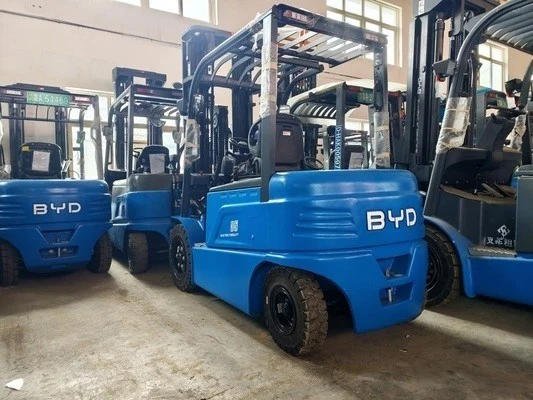
It can still matter. Free lift affects entry into trailers, containers, and low doorways, not only the main warehouse ceiling. If any part of the travel path has a low obstruction, check free lift alongside collapsed height.
Which documents should confirm the lift height specification?
Ask for the manufacturer’s technical data for the exact mast and configuration quoted, plus the data plate information. Compare those figures with your own site measurements. Do not rely on a generic model description, and treat unconfirmed values as items to verify before purchase.
If you are planning a purchase, share your measured clearances, load weights, load centre, racking heights, and charging arrangements, and ask this site to confirm which four-wheel counterbalance electric forklift configuration matches those conditions.