5 Ton Electric Forklift: Operator Training Points That Protect Load Charts and Stability
News 04/11/2026
A 5 ton electric forklift only stays within its rated capacity when the operator understands the load chart, the stability triangle, and the way battery weight and lift height change the margin. Training should focus on the decisions an operator makes before and during a lift: reading the data plate, estimating load centre, checking the mast and fork position, and recognising when a task falls outside the machine’s limits. The same discipline applies to a four-wheel counterbalance electric forklift used in warehousing, manufacturing, or loading bays, where the operator is the last control before a tip-over or structural overload.
Why the Load Chart Is a Training Document, Not a Sticker
The load chart on a counterbalance truck links rated capacity to load centre and lift height. A nominal 5 ton rating usually applies to a specific load centre and a specific mast configuration. Move the load centre outward, raise the forks, or fit an attachment, and the safe capacity falls. Operators who treat the number on the data plate as a fixed limit can overload the truck without realising it.
Training should teach operators to locate the data plate, read the capacity line that matches the fitted mast and attachment, and compare it with the actual load. They should also know that the rated capacity is a maximum under defined conditions, not a target. When the load is unknown, the correct action is to stop and verify weight, not to estimate by eye.
- Show where the data plate sits and how to read capacity at the stated load centre.
- Explain that lift height and attachment type change the allowable load.
- Require a weight check when the load is unknown or near the limit.
- Record any derating that applies to the truck’s current configuration.
Stability Basics Every Operator Should Be Able to Explain
Counterbalance stability depends on the combined centre of gravity of the truck and load staying inside the stability triangle. Steering, braking, turning on a slope, and raising the load all shift that centre. Training should connect each operating habit to that principle rather than presenting rules as arbitrary.
Load centre and fork position
Loads whose centre sits farther from the fork heel reduce safe capacity. Operators should place loads against the backrest, keep the mast tilted back during travel, and avoid carrying loads with the forks raised higher than necessary. A long or irregular load may need a different handling plan, and the load chart should be checked before the lift begins.
Travel, turning, and gradients
Travel with the load low, keep the truck under control on turns, and follow site rules on gradients. A loaded counterbalance truck behaves differently from an empty one, and operators should be trained to reduce speed before a turn rather than during it. Where ramps or dock edges exist, the site should define travel direction and exclusion zones.
Battery weight and configuration
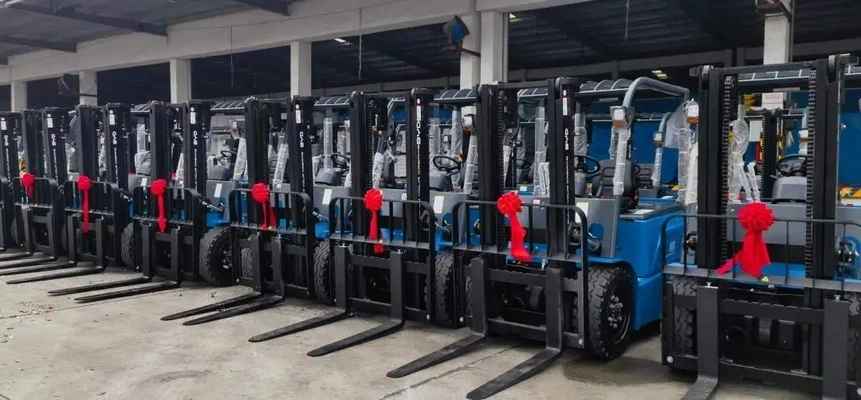
On electric trucks, the battery contributes to counterweight. Operators should understand that the approved battery configuration matters and that unauthorised changes can affect stability. Any battery replacement or attachment change should be confirmed with the supplier against the truck’s data plate and manual.
Matching Training to Real Warehouse Conditions
A training programme should reflect the aisles, floor surfaces, racking, and dock areas the operator actually uses. A hypothetical application illustrates the point: a distribution centre handling palletised goods with a 5 ton electric forklift may have narrow aisles, damaged floor joints, and a loading dock exposed to weather. Each condition changes what the operator must check before moving a load.
| Condition | Training focus | What to verify before operation |
|---|---|---|
| Aisle width and turning space | Planning turns, keeping clearances | Measured aisle dimensions and truck turning radius from the supplier |
| Floor surface and joints | Speed control, load security | Site inspection and housekeeping routine |
| Racking and lift height | Reading capacity at height | Mast specification and capacity at the required lift height |
| Dock and ramp areas | Gradient travel and exclusion zones | Site traffic plan and surface condition |
| Attachment use | Derated capacity | Attachment capacity plate and supplier confirmation |
Operators should also be trained on pre-shift checks: tyres, brakes, horn, lights, hydraulic leaks, fork condition, and battery state. A fault found before the shift is a maintenance task; a fault ignored during the shift is a stability risk.
Common Operator Errors That Undermine the Load Chart
Most overload incidents are not deliberate. They come from small assumptions that compound. Training should name these errors and give operators a simple way to challenge them.
- Assuming the rated capacity applies at every lift height and load centre.
- Carrying a load with the forks raised to improve visibility.
- Turning while the mast is raised or the load is unstable.
- Using an attachment without checking the revised capacity.
- Estimating load weight from pallet size or previous experience.
- Allowing pedestrians or other vehicles into the operating area during a lift.
A useful training exercise is to have operators read a load chart and decide whether a described load is acceptable, then explain their reasoning. This tests understanding rather than memory. It also gives supervisors a way to identify gaps before they appear on the floor.
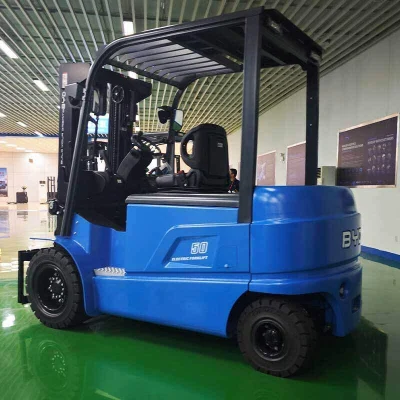
Where a task involves loads near the rated limit, the site should define a verification step, such as checking weight against shipping documents or using a floor scale. The truck’s own capacity should never be used as a weighing device.
Frequently Asked Questions
Does a 5 ton rating mean the truck can lift 5 tons at any height?
No. The rating applies under the load centre and configuration stated on the data plate. Raising the load or moving its centre outward reduces the allowable capacity. Operators should check the capacity line that matches the mast and attachment in use.
How often should operators be retrained on load charts and stability?
Retraining frequency depends on local rules, site policy, and changes in equipment or layout. Refresher training is sensible after an attachment change, a new aisle layout, an incident, or a long period away from the truck. The supplier’s manual and site procedures should guide the final schedule.
Can an operator judge load weight by looking at the pallet?
Not reliably. Pallet size and appearance do not confirm weight. When the weight is unknown or close to the limit, the operator should stop and verify it through documents or a scale before lifting.
What should an operator do if the load chart is missing or unreadable?
The truck should be taken out of service until the correct capacity information is restored. Operating without a readable data plate removes the basis for a safe lift decision.
How can a buyer confirm the right configuration before purchase?
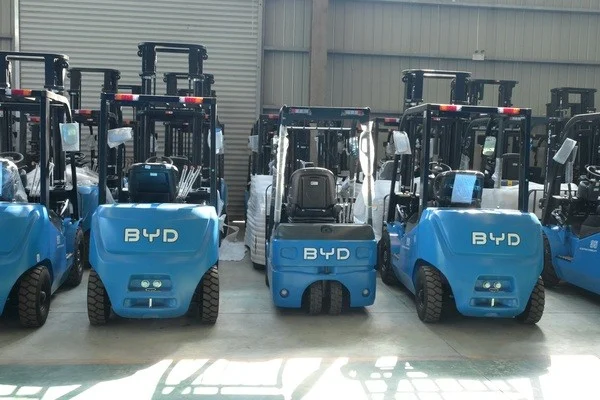
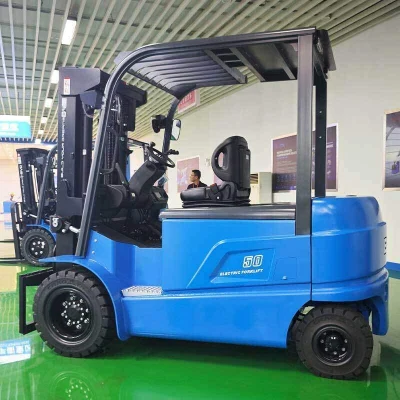
Provide the supplier with actual load weights, load centres, required lift heights, aisle dimensions, floor and gradient conditions, and shift patterns. Ask which mast, attachment, and battery configuration suits those conditions, and request the capacity information that applies to that configuration. This site supplies BYD four-wheel counterbalance electric forklifts, including lithium battery models; final specifications should be confirmed against the supplier’s technical documentation.
What to Prepare Before Training or Purchase
Training protects the load chart only when it is built on accurate site data. Before a programme is finalised, gather the loads handled, their weights and centres, the lift heights required, aisle and door dimensions, floor condition, gradients, and the number of shifts. Confirm the mast, attachment, and battery configuration fitted to each truck, and check that the data plate matches that configuration.
For a four-wheel counterbalance electric forklift, the purchasing conversation should include the actual duty cycle, charging arrangements, and any site restrictions. Ask the supplier which capacity applies at the required lift height and load centre, what derating applies with any attachment, and what operator familiarisation material is provided. Keep the manual and capacity information accessible to operators, and review the training whenever equipment or layout changes. The goal is not a one-off session but a habit of checking the chart before the lift.