Analyzing BYD forklift Safety Features and Design Elements Supporting High-Risk Industrial Material Handling Workflows
News 10/10/2026
High-risk industrial material handling workflows, such as those found in chemical storage, cold storage, explosive material processing and dense port operations, demand strict safety standards from material handling equipment. This analysis examines core safety features and design elements built into BYD forklift lines, compares performance against conventional forklift options, and outlines clear suitability guidance aligned common operational needs.
Core Safety Features Integrated Into BYD Forklift Design
BYD builds all electric forklift lines around its in-house developed lithium iron phosphate (LFP) battery technology, which delivers inherent safety advantages over other battery chemistries and traditional fuel systems.
LFP Battery Safety Architecture
Unlike lead-acid batteries and internal combustion fuel tanks, BYD’s LFP battery packs resist thermal runaway even under puncture, crush or overcharge conditions. This design eliminates risk of fuel leaks or explosive combustion, a critical benefit in sites with flammable materials. The battery system includes built-in thermal monitoring and automatic power cutoffs that trigger when abnormal operating conditions are detected. That reduces hazard related to unrecognized battery faults during continuous operation.
Operator Visibility Enhancement Systems
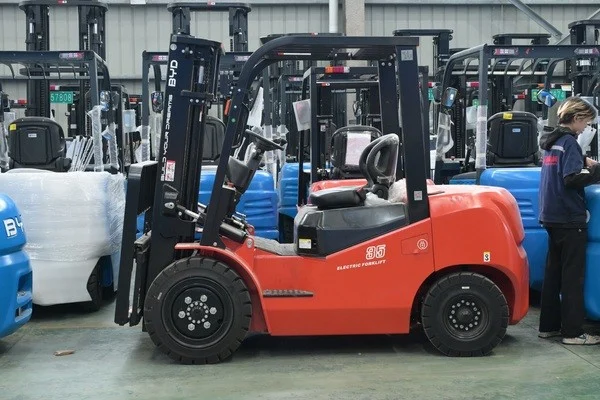
Poor visibility ranks among top causes of forklift accidents in high-traffic, high-risk work sites. BYD integrates narrow mast designs and panoramic cabin frames into most forklift models, reducing blind spots around the vehicle during load lifting and maneuvering. Clear roof guards, designed to protect operators from falling objects without blocking forward or upward vision, further improve situational awareness during complex loading tasks.
Design Elements Addressing High-Risk Workflow Hazards
Beyond core battery and cabin design, BYD integrates multiple mechanical and electronic design choices that target common hazards found in high-risk material handling.
Low Center Of Gravity Chassis Layout
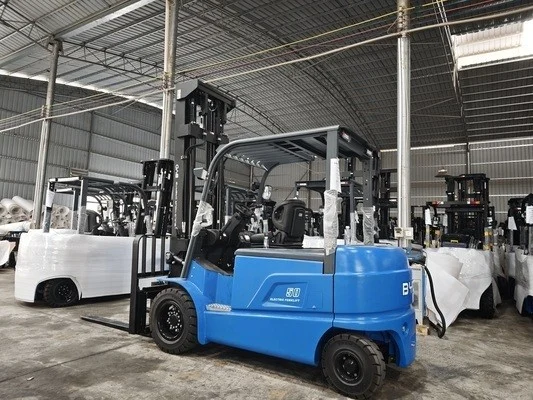
BYD places its heavy battery pack low within the chassis, creating a far lower center of gravity than comparable internal combustion forklifts or lead-acid battery electric models. This design improves vehicle stability when lifting heavy loads at maximum height, or when operating on uneven ground common to construction yards and outdoor storage sites. Lower center of gravity reduces risk of tip-over accidents, one of the deadliest forklift hazards in daily operations.
Collision and Overspeed Mitigation Systems
Most BYD forklift models come standard with proximity sensors that detect obstacles, including personnel, around the vehicle. The system automatically reduces travel speed when obstacles enter a set proximity range, and triggers full emergency stop if collision becomes imminent. Additional features include automatic parking brake engagement when the operator leaves the cabin, preventing unintended vehicle movement on sloped surfaces common to many industrial sites.
Performance Comparison Against Conventional Forklifts In High-Risk Settings
To understand BYD forklift value in high-risk workflows, compare core safety and operational attributes against conventional internal combustion (IC) and lead-acid electric forklifts:
- Emission and combustion risk: BYD’s fully electric design produces zero tailpipe emissions, making it safe in enclosed or semi-enclosed high-risk sites, such as underground storage warehouses or indoor chemical processing areas. Conventional IC forklifts produce carbon monoxide and other toxic fumes that require constant ventilation, adding operational cost and hazard in enclosed spaces.
- Temperature performance: BYD LFP batteries maintain stable performance across a wider temperature range than traditional lead-acid batteries, making them suited to cold storage high-risk workflows where temperature extremes degrade conventional battery output. LFP batteries also resist performance loss in high ambient temperatures common to manufacturing plants in warm climates.
- Noise reduction: BYD electric forklifts operate at far lower noise levels than IC forklifts, improving operator communication and situational awareness in high-traffic sites without adding occupational hearing hazard over long term use.
One key tradeoff: BYD forklifts carry higher initial procurement cost than conventional IC forklifts of similar load capacity. Total cost of ownership typically evens out over the asset lifespan due to lower fuel and maintenance cost, but this initial cost can create barriers to smaller operations.
Suitability and Limitations Across High-Risk Workflows
BYD forklift safety design fits specific high-risk use cases, but has clear limitations buyers must consider:
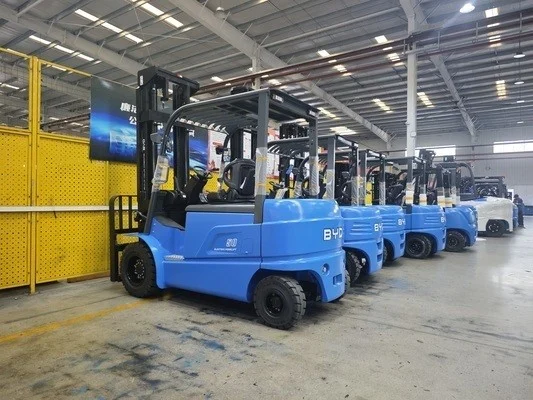
Ideal applications: BYD forklifts deliver maximum safety value in enclosed sites with flammable materials, cold storage operations, dense high-traffic retail distribution centers, and indoor manufacturing workflows.
Limitations: Standard BYD forklift models do not include factory built-in explosion protection matching Class 1 Division 1 hazard site requirements, so operations with extreme explosive hazard need purpose-built certified models. High altitude operations above 3000 meters may require modified battery management system configurations to maintain safe performance. BYD also requires battery maintenance and repair completed by technicians trained on BYD electric systems, which may require additional training investment for in-house maintenance teams.
Practical Selection Guidance: When evaluating BYD forklifts for your high-risk site, first confirm your site hazard classification, then verify that the selected BYD model carries required safety certification matching your site classification. Test operation under your site’s typical ground and load conditions to assess stability and visibility before full deployment.
Frequently Asked Questions
Do BYD forklifts meet leading global industrial safety standards?
Most BYD forklift models carry certification aligned with OSHA, CE and other leading global industrial safety frameworks. Buyers must always check specific model certification prior to deployment any high-risk site, to ensure alignment with local regulatory requirements.
Can BYD forklifts work in cold storage high-risk environments?
BYD offers cold storage configured forklift models that maintain safe operation down to -25 degrees Celsius. Standard base models may experience reduced battery performance in extreme sub-zero temperatures, so operators must select the correct configuration matching their site temperature range.
How often do safety systems on BYD forklifts require inspection?
BYD recommends daily pre-shift inspections by operators covering brake function, alert systems and battery condition. Full professional inspections of collision sensors, battery management systems and mechanical safety components occur every 200 operating hours, aligned with BYD’s official maintenance guidance.
Are BYD forklifts more reliable than conventional forklifts in high-risk settings?
Reliability depends on proper maintenance, correct configuration and alignment with site conditions. BYD’s LFP battery has longer lifespan than lead-acid batteries, reducing scheduled replacement related safety risks. Without proper configuration matching site hazard levels, reliability and safety do not outperform conventional options.
Overall, BYD forklift safety features and design elements address many common hazards found in high-risk industrial material handling workflows. Their inherent LFP battery safety, stability focused chassis design and standard collision mitigation systems deliver clear advantages over conventional forklift options in many use cases. Buyers must match model configuration to their site specific hazard requirements to fully realize these safety benefits.