Choosing a BYD Counterbalance Forklift: Load Chart Interpretation and Capacity Verification Before Purchase
News 01/11/2026
A load chart is the only document that tells you what a specific BYD counterbalance forklift can safely lift at a given load center and lift height. Before you approve a purchase, read that chart against your real loads and confirm the rated capacity on the data plate matches the configuration you intend to buy. Capacity at the standard load center is not the same as capacity at your actual load center, and a machine that looks adequate on paper can fall short once attachments, tall lifts, or off-center loads enter the picture.
This guide explains how to read a load chart, how to verify capacity against your duty cycle, and which documents and questions to settle before you issue a purchase order.
What a Load Chart Actually Tells You
A load chart plots rated capacity against load center distance and, on many models, against lift height. The rated capacity printed on the data plate usually assumes a standard load center, commonly 24 inches (600 mm). Move the center of gravity farther out, and the safe capacity drops.
Three variables drive the number you can actually use:
- Load center: the horizontal distance from the vertical face of the forks to the center of gravity of the load. A long or irregular load shifts this distance outward.
- Lift height: higher lifts can reduce capacity on models where the chart specifies height-dependent ratings.
- Attachment: side shifters, clamps, or other attachments add weight and move the load forward, and their effect must appear on the chart or in the attachment documentation.
If the chart supplied with the machine does not address your lift height or attachment, treat the capacity as unconfirmed until the manufacturer confirms it in writing.
Reading the Chart Step by Step
1. Measure your real load center
Do not assume the standard value. Measure the distance from the fork face to the load’s center of gravity. Pallets with overhang, drums, and bundled material often exceed the standard load center. Record the worst case in your fleet, not the average.
2. Note your maximum lift height
Record the height at which the load must be handled, not just the height of the rack beam. Add clearance needed to enter and withdraw the pallet.
3. Locate the intersection on the chart
Find your load center on the horizontal axis and your lift height on the vertical axis where the chart provides it. The capacity at that intersection is the ceiling your load must stay under, including the weight of any attachment or pallet that the chart accounts for.
4. Compare against the heaviest real load
Use the heaviest load the truck will handle at that combination of load center and height. A truck rated at a higher figure at a shorter load center does not carry that rating into your application.
Verifying Capacity Before You Commit
Chart reading is the first check. Verification is the second. Before purchase, confirm the following with the supplier in writing:
- The exact model designation and the load chart that applies to it, including any derating that applies to the configuration you are buying.
- The data plate rating and whether it reflects the battery, counterweight, and attachment combination on the quoted machine.
- Attachment weight and its effect on residual capacity, stated by the manufacturer rather than estimated by the sales contact.
- Whether capacity changes at your required lift height, and the specific figures at that height.
- Any site conditions that affect safe handling, such as floor strength, aisle width, and ramp gradients, which the supplier should review against the machine’s specifications.
Ask the supplier to confirm these points against the manufacturer’s technical documentation. A verbal assurance that the truck “will handle it” is not a substitute. If the documentation is unavailable, the capacity remains unverified.
Common Mistakes That Lead to Overload
Most capacity problems trace back to assumptions made during planning rather than to the machine itself.
- Using the headline rating: quoting the standard-load-center figure while handling loads at a longer load center.
- Ignoring attachment weight: adding a side shifter or clamp without recalculating residual capacity.
- Planning to average loads: sizing the truck to typical loads while occasional heavier pallets exceed the chart.
- Skipping lift height: assuming capacity is constant at all heights on models where it is not.
- Relying on a similar model: applying one machine’s chart to another configuration.
In a hypothetical warehouse scenario, a buyer planning around 24-inch load centers might select a truck that meets the requirement, then discover that incoming pallets with overhang push the load center outward and reduce usable capacity below the heaviest load. The fix is to measure the worst case before ordering, not after delivery.
Frequently Asked Questions
Is the rated capacity the same at every lift height?
Not necessarily. Some load charts specify capacity that changes with lift height, while others state a single rating at a defined load center. Check the chart that applies to your exact model and configuration.
How does an attachment change capacity?
An attachment adds weight ahead of the carriage and moves the load forward, both of which reduce residual capacity. The manufacturer should state the derated capacity with the attachment fitted.
Can I verify capacity without a load test?
You can verify the rated capacity from the manufacturer’s load chart and data plate. Confirming that your real loads fall within that rating is a planning exercise based on measured load centers and lift heights, not a guess.
What should I send the supplier before requesting a quote?
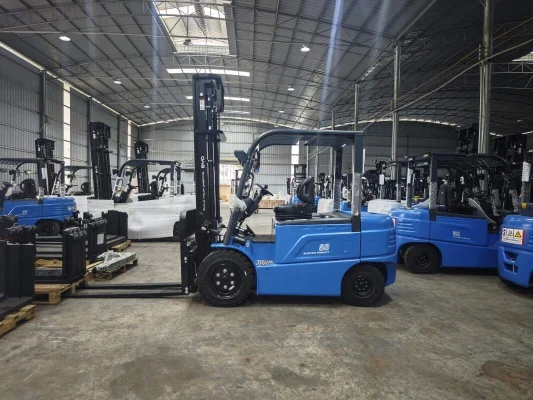
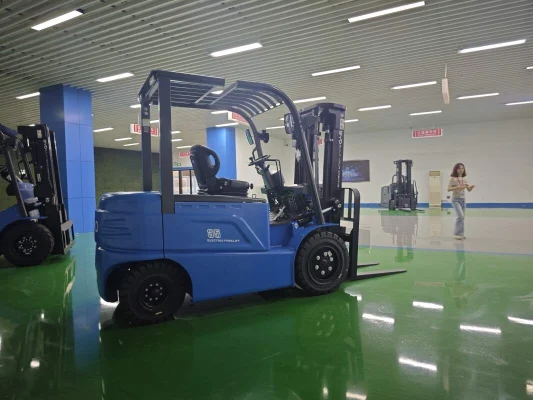
Provide your heaviest load, its measured load center, required lift height, aisle width, floor and ramp conditions, and shift pattern. These details let the supplier match a four-wheel counterbalance electric forklift configuration to your operation and confirm the applicable capacity figures.
Next Steps Before You Order
Collect the load chart and data plate specification the supplier quotes, then compare them against your measured worst-case load, load center, and lift height. Where any figure depends on an attachment or a non-standard configuration, request written confirmation from the manufacturer. If your operation involves long loads, high racks, or attachments, share those details when you request a BYD four-wheel counterbalance electric forklift selection and configuration review, so the capacity discussion starts from your actual conditions rather than a headline number.