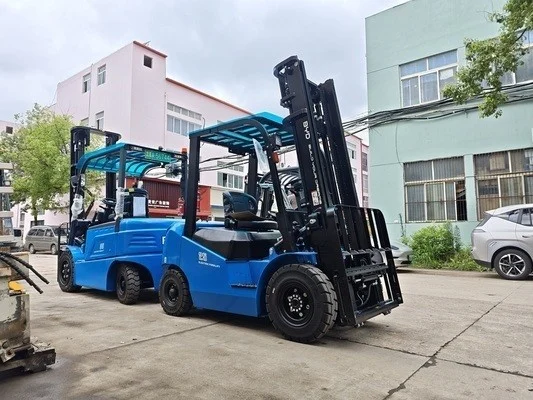
How to Specify a 3.5 ton electric forklift When Duty Cycle, Lift Height, and Floor Conditions Vary
News 06/11/2026
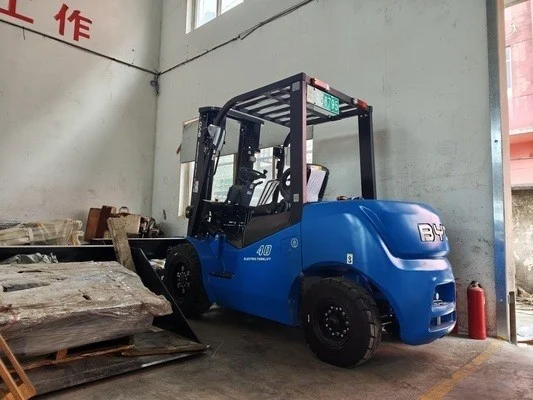
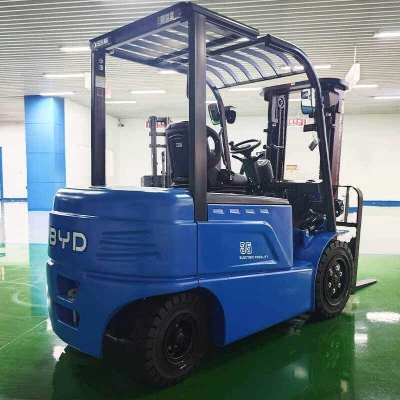
A 3.5 ton electric forklift is a specification, not a single machine. Two buyers can request the same nominal capacity and end up with very different trucks: one suited to a single-shift warehouse with smooth concrete and 4 m lifts, the other configured to handle heavier attachments, longer shifts, or rougher yard surfaces. This article walks through the three variables that most often change the answer — duty cycle, lift height, and floor conditions — and shows how each one feeds into the configuration you finally order. It focuses on four-wheel counterbalance electric forklifts, the type most commonly used in general factory, loading, and warehouse transfer work, and the type we supply. Where a figure depends on the manufacturer’s data sheet, we say so rather than guess.
Start With the Job, Not the Capacity Label
Rated capacity is measured under defined conditions, usually with a standard fork position and a stated load center. Change the load center, add an attachment, or raise the load higher, and the capacity that can be handled safely at height falls. That is why a 3.5 ton rating is a starting point, not a guarantee that every 3,500 kg load can be lifted to every height.
Before comparing models, collect these facts about the actual job:
- Heaviest load, including pallet and packaging, and how often that maximum occurs.
- Load dimensions and where the center of gravity sits relative to the fork face.
- Required lift height at the rack or stack, plus the free-lift needed to enter low openings.
- Any attachment — clamp, rotator, side-shifter — and its weight and added load center.
- Shift length, number of shifts, and how the truck is parked between them.
- Floor type, condition, gradients, and the narrowest aisle the truck must work in.
Each of these interacts with the others. A long shift on a rough floor with frequent lifting to height is a different duty profile from occasional loading on smooth concrete. Treat the list as the input to every decision that follows.
Matching Duty Cycle, Lift Height, and Floor Conditions
Duty cycle: how hard the truck actually works
Duty cycle is usually described in terms of hours per shift, lifts per hour, travel distance, and the proportion of time spent lifting versus driving. These factors determine how much heat the motor and controller generate and how quickly the battery is drawn down. A truck that is adequate on a light single shift may need a larger battery, a different charging arrangement, or a higher-duty hydraulic system when the same work runs across two or three shifts.
What to confirm with the supplier: the recommended duty rating of the model, the battery capacity offered, and the charging method (opportunity charging versus a full charge between shifts). Ask how the quoted configuration was assessed against your lift count and shift pattern. Do not accept a simple “it will be fine” — ask which parameters were used. If your operation runs continuous shifts, raise this early, because it can change the battery and charger selection rather than just the truck model.
Lift height: rated capacity at the height you use
Lift height affects both the mast specification and the safe load. A three-stage or full-free-lift mast may be needed to reach high racks inside a building with limited overhead clearance, while a two-stage mast may be sufficient for lower stacking. The higher the lift, the more the remaining capacity depends on the load center and the mast chosen.
What to confirm: the residual capacity at your actual lift height and load center, taken from the manufacturer’s capacity chart, not from the headline rating. Also confirm the collapsed mast height against doorways and rack openings, and the extended height against ceiling structures and sprinklers. If an attachment is fitted, ask for the derated capacity with that attachment installed. These are the numbers that determine whether a 3.5 ton truck can safely place your heaviest pallet on your top beam.
Floor conditions: surface, slope, and aisle width
Floor condition influences tire choice, ground clearance, braking, and the practical aisle width. Smooth internal concrete favors standard cushion or pneumatic tires depending on the model; cracked surfaces, expansion joints, ramps, or outdoor aprons may call for a more robust tire specification. Slopes affect both traction and the ability to stop a loaded truck safely, and wet or contaminated floors change braking distances.
What to confirm: the floor loading capacity where the truck travels and turns, the gradient of any ramp, and the measured aisle width at the tightest point. Provide these to the supplier so they can check the turning radius and recommended aisle against the actual layout. Where the aisle is too narrow or the lift requirement too high for a four-wheel counterbalance truck, say so honestly — a different truck type may be the correct answer, and it is better to establish that before ordering than after delivery.
Comparison table: what to check and why
| Variable | Why it matters | Information to request | Typical configuration choice |
|---|---|---|---|
| Duty cycle | Affects battery size, charging plan, and hydraulic cooling | Lifts per hour, shift pattern, charging window | Battery capacity and charger matched to shift length; confirm as standard or optional |
| Lift height | Changes mast type and residual capacity | Capacity chart at your height and load center | Two-stage or three-stage mast; free-lift where overhead clearance is limited |
| Load center and attachment | Reduces usable capacity | Derated capacity with the attachment fitted | Side-shifter or clamp only if the task requires it |
| Floor and aisle | Affects tire choice, braking, and maneuverability | Surface condition, gradient, measured aisle width | Tire specification and turning radius checked against the layout |
Treat the right-hand column as a direction to investigate, not a promise that every model offers every option. Some items are standard, some are optional, and some depend on the specific model and must be confirmed with the manufacturer.
Turning Requirements Into a Purchase Checklist
Once the three variables are documented, the specification becomes a set of questions rather than a wish list. A practical sequence:
- Write down the heaviest load, its dimensions, and the highest point it must reach. Note the load center.
- Record the shift pattern, lifts per hour, and available charging time and location.
- Measure the narrowest aisle, the steepest ramp, and describe the floor surface and its condition.
- Ask the supplier to confirm residual capacity at your lift height and load center, with any attachment fitted.
- Ask which battery and charging arrangement suits your shift pattern, and whether that is standard or optional.
- Check mast collapsed and extended heights against the building.
- Confirm tire specification and turning radius against the measured aisle.
- Request the maintenance schedule and the local service arrangement in writing.
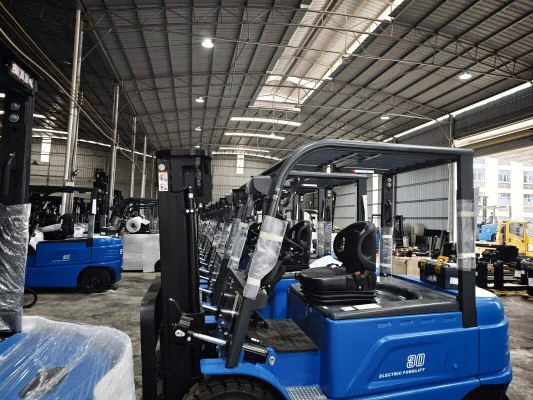
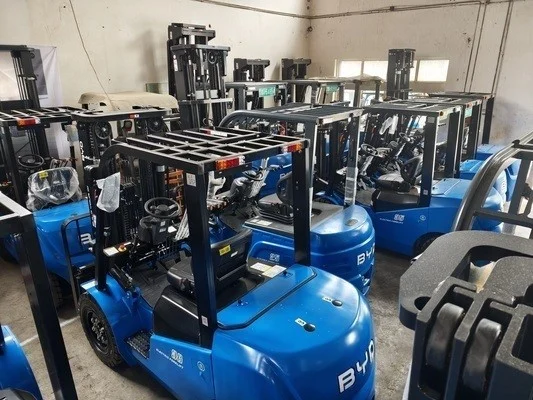
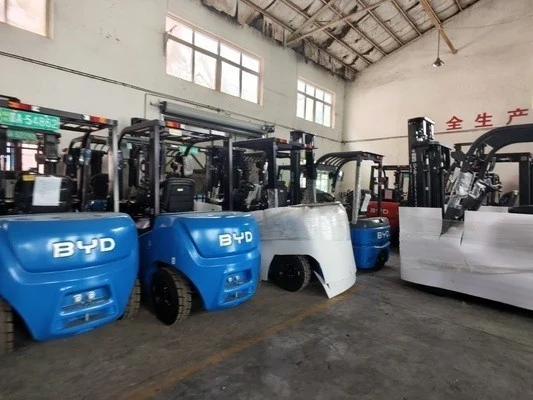
For a four-wheel counterbalance electric forklift purchase, it also helps to ask whether the truck is supplied with a lithium battery option, since charging behavior and usable capacity differ from lead-acid configurations. We supply BYD four-wheel counterbalance electric forklifts, including lithium models, and can discuss configuration against your documented duty cycle, lift height, and floor conditions. We will not quote a capacity, runtime, or price until the job details are clear, because those numbers depend on the model and the manufacturer’s data sheet.
Frequently Asked Questions
Is a 3.5 ton rating enough if my loads are exactly 3,500 kg?
Not automatically. The rating applies at a defined load center and height. If your pallet places the load further from the fork face, or you lift to significant height, the safe capacity may be lower. Check the capacity chart at your actual load center and lift height before committing.
How do I know whether my duty cycle needs a larger battery?
Compare your lifts per hour, shift length, and charging window with the supplier’s recommended duty rating. If the truck must work through multiple shifts with little charging time, discuss battery capacity and charging method early. The correct answer depends on the model and the charger, so ask for the basis of the recommendation.
Can a four-wheel counterbalance truck work in a narrow aisle?
It depends on the measured aisle width and the truck’s turning radius. Provide the tightest aisle dimension to the supplier and ask them to check it against the model. If the aisle is too narrow, a different truck type may suit the layout better, and that should be established before purchase.
What floor information should I collect before ordering?
Note the surface type and condition, any cracks or joints, the gradient of ramps, whether the floor is wet or contaminated, and the floor loading capacity. These details affect tire choice, braking, and safe operation, and they let the supplier confirm whether the proposed configuration suits the site.