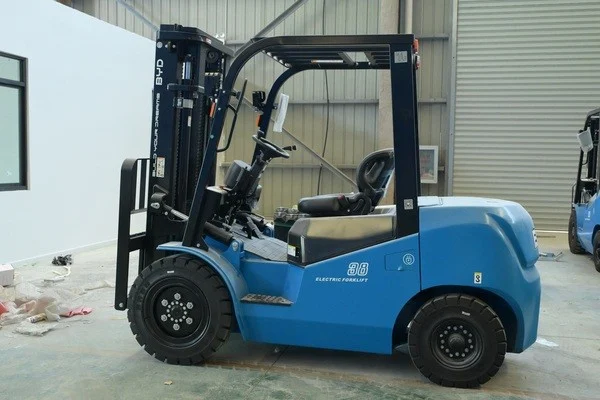
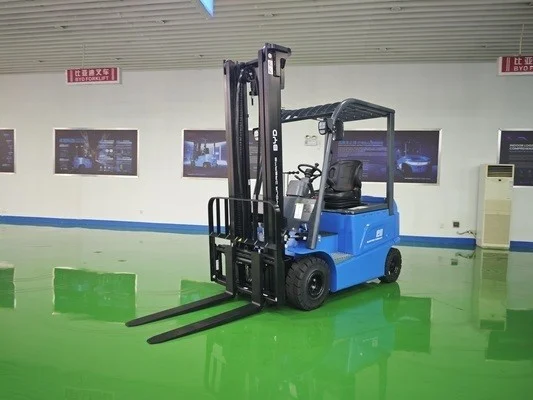
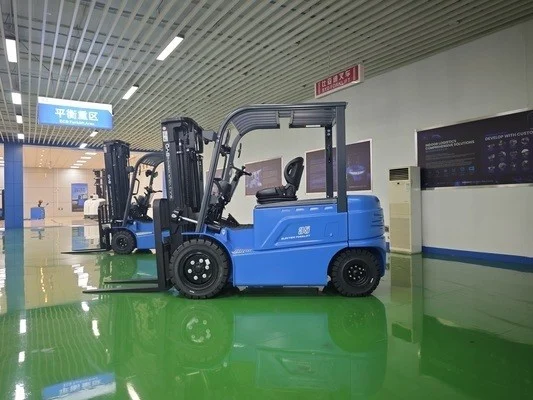
BYD Electric Forklift Site Readiness Checklist: Floor Loading, Aisle Width and Charging Bay Planning Before Delivery
News 03/11/2026
A BYD electric forklift can arrive on a signed delivery date and still sit idle because the building is not ready. Site readiness comes down to three physical questions: can the floor carry the truck and its load, can the truck turn and stack inside the aisles you actually have, and does the charging area have the electrical capacity, ventilation and access the battery and charger require. This checklist walks through those questions in the order they should be answered, with the data you need to collect and the points to confirm with the supplier before the truck ships.
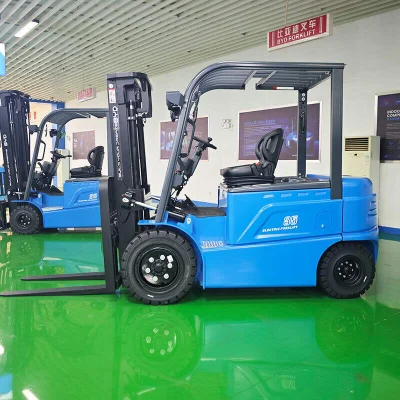
The scope here is the four-wheel counterbalance electric forklift, including lithium battery models. That is the truck type this site sells and the type the checklist assumes. If your racking, aisle or lift-height requirements point to a different truck class, that is a finding worth acting on before delivery, not after.
Start with the load path, not the truck
Most site problems appear on the route the truck will travel, not at the dock door. Walk the full path a loaded truck will take, from trailer to racking to staging, and record conditions at each segment. A truck that is comfortable in the main aisle can still be wrong at a blind corner, a dock leveller, a ramp or a doorway.
Floor loading and surface condition
A counterbalance truck carries most of the load on the front wheels, so the floor sees a concentrated point load that is higher than the simple sum of truck weight plus load. The figure that matters is the maximum wheel load, and it depends on the truck’s own weight, the rated capacity, the load centre, any attachment, and the lift height at which the load is carried. Ask the supplier to confirm the maximum wheel load and the ground pressure the configuration produces, and compare those figures with your floor’s structural capacity. A structural engineer or the building owner should confirm the slab or suspended floor capacity; a visual inspection is not enough.
Surface condition matters as much as strength. Record joints, cracks, expansion strips, drains, painted line build-up and any slope. Small wheel diameters and hard tyres transmit surface irregularities into the mast and the load, and a joint that a pedestrian ignores can shake a high stack. Note any area where water, oil or wash-down makes the surface slippery, because traction and braking behaviour change there.
Ramps, dock levellers and thresholds
List every gradient on the route, including dock levellers, yard ramps and floor transitions. Provide the supplier with the percentage grade and the length, and ask how the rated capacity changes on a slope. Gradeability and residual capacity on an incline are configuration-dependent, so they need to be confirmed against the specific truck, not assumed from a brochure headline.
Aisle width, turning and lift height
Aisle planning is where optimistic measurements cause the most expensive surprises. Measure the narrowest clear width on the route, not the widest, and measure between the real obstructions: rack uprights, pallet overhang, columns, door frames, safety barriers and stored goods that encroach on the line. Then compare that number with the truck’s actual working requirement.
The dimensions to collect
- Rated capacity and load centre: confirm the capacity at the load centre you will actually use, not the headline rating at a shorter centre.
- Lift height and free lift: the highest shelf you will serve, plus clearance to the rack beam and any overhead obstructions such as sprinklers, lights or door tracks.
- Mast and overhead guard height: the collapsed height must clear every doorway and opening on the route.
- Turning radius and right-angle stacking aisle: the aisle width needed to turn 90 degrees into a rack bay with your pallet size.
- Attachments: any side shift, clamp or other attachment changes dimensions, capacity and the load centre. Confirm the derated capacity with the attachment fitted.
Ask the supplier to state the right-angle stacking aisle and the intersecting aisle width the proposed configuration needs, and to say which pallet size and load length those figures assume. Then add a working margin that reflects your operators and the condition of the floor. A number that fits exactly on paper leaves no room for a pallet that overhangs or a driver who approaches at an angle.
Where a counterbalance truck stops being the right answer
If the measured aisle is narrower than the stacking aisle the truck needs, the honest conclusion is that a four-wheel counterbalance truck does not fit that aisle. Very narrow aisles and very high racking can push a site toward other truck classes, and those classes have their own trade-offs in throughput, floor condition and operator training. Say so during planning rather than accepting a truck that will damage racking or slow every put-away.
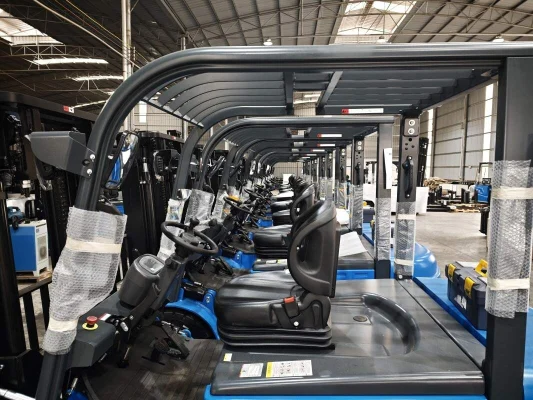
Charging bay planning
Charging is an electrical and safety project, not a parking space. Lithium battery models still need a planned charging location with the right power supply, protection and access. The supplier’s technical documentation should be the source for charger input requirements, charging temperature limits and ventilation needs; do not size the electrical supply from general assumptions.
What to confirm with the supplier
- Charger input: voltage, phase, current draw and the recommended circuit protection, taken from the charger datasheet.
- Charging profile and time: how long a full or opportunity charge takes, and what that means for your shift pattern and fleet size.
- Temperature limits: the permitted charging and storage temperature range for the battery, and whether the site’s charging area stays inside it year-round.
- Ventilation and fire precautions: the manufacturer’s requirements and any local code requirements that apply to your building.
- Access and layout: space to park, plug in and walk around the truck, plus clearance from combustible storage and from traffic routes.
- Housekeeping: cable management, a designated parking position and a procedure for who connects and disconnects the charger.
If the charging area is remote from the work area, factor the travel time into the shift plan. If it is shared with other equipment, check whether the electrical capacity and the parking space are genuinely available at peak times.
Planning table
| Item | Why it matters | Data to collect | Confirm with supplier |
|---|---|---|---|
| Floor capacity | Point loads can exceed the simple truck-plus-load total | Slab or suspended floor capacity from building owner or engineer | Maximum wheel load and ground pressure the configuration produces |
| Aisle width | Determines whether the truck can turn and stack | Narrowest clear width, pallet size, rack layout | Right-angle stacking aisle and intersecting aisle the configuration needs |
| Lift height | Drives mast choice and overhead clearance | Highest shelf, beam height, overhead obstructions | Mast height, free lift, capacity at your load centre |
| Ramps and grades | Changes traction and residual capacity | Grade percentage and length of each slope | Rated capacity and gradeability on the slope |
| Charging area | Electrical safety and shift planning | Available supply, space, ventilation, temperature | Charger input, charging time, temperature limits, ventilation requirements |
| Attachments | Alters dimensions and capacity | Attachment type and load length | Derated capacity and new dimensions with the attachment fitted |
Frequently asked questions
Can I use the truck’s rated capacity as the safe load on every lift?
No. Rated capacity applies at a stated load centre and often at a stated lift height. A longer load, an attachment or a higher lift can reduce the safe load. Confirm the residual capacity your actual loads and lift heights allow.
How wide does my aisle need to be?
There is no single figure. It depends on the truck’s turning radius, the pallet size and the rack layout. Measure the narrowest clear width and ask the supplier for the right-angle stacking aisle the proposed configuration requires, then keep a working margin.
Can I charge the truck anywhere with a power socket?
No. Charging needs the correct supply, protection and ventilation, and the charging area must stay within the battery’s permitted temperature range. Use the charger documentation and local electrical requirements to plan the bay.
What should I send the supplier before ordering?
Send the narrowest aisle, highest lift height, heaviest load and load length, ramp grades, floor capacity information, shift pattern and the proposed charging location’s power supply. That set lets the supplier propose a configuration and state its limits honestly.
What if my aisle is too narrow once measured?
That is a planning result, not a delivery problem. A four-wheel counterbalance electric forklift may not suit very narrow aisles, and the site should review the rack layout or the truck class before committing.