Electric Counterbalance Forklift Tire and Wheel Configuration: Matching Floor Surfaces and Outdoor Yards to a Four-Wheel Model
News 05/11/2026
Tires and wheels decide how a four-wheel counterbalance electric forklift behaves on the ground it actually crosses. A cushion tire that feels stable on a smooth warehouse slab can become a liability on a wet loading dock, and a pneumatic tire that floats over gravel can waste energy and reduce load stability on a tight indoor aisle. This article explains how to match tire and wheel configuration to floor surfaces and outdoor yards when the machine is a four-wheel counterbalance electric forklift, and which details to confirm with the supplier before ordering.
How Floor Surfaces and Yard Conditions Change Tire Choice
Tire selection starts with the surface, not the model name. The same electric counterbalance forklift can be ordered with different wheel assemblies, and each assembly changes traction, ground clearance, turning behavior, and the vibration passed to the mast and load.
Indoor floors: smooth, flat, and often clean
Sealed concrete, epoxy, and polished warehouse floors reward a smooth, low-profile tire. The priorities are low rolling resistance, precise steering response, and a low risk of marking the floor. A hard, smooth tire also keeps the truck’s overall height and center of gravity predictable, which matters when the mast must pass under rack beams.
Limits exist. Dust, spilled oil, or a damp patch can reduce grip on a hard tire, especially during braking or a tight turn. If the floor is smooth but frequently wet, discuss tread pattern and compound with the supplier rather than assuming any smooth tire will do.
Outdoor yards: uneven, sloped, and weather-exposed
Paved yards, gravel, packed dirt, and concrete aprons with expansion joints all load the tires differently. A four-wheel counterbalance electric forklift used outdoors needs enough tire volume and tread depth to absorb small obstacles, spread load, and maintain traction on slopes. Ground clearance and the tire’s outer diameter also affect whether the truck can cross drains, curbs, and rough patches without scraping the chassis.
Outdoor use brings weather into the decision. Rain, mud, and loose grit change the friction available at the drive wheels. Tire compound, tread pattern, and the condition of the yard surface all influence how confidently the truck starts, stops, and turns. None of these can be judged from a specification sheet alone; they need a site walk and a clear description of the worst conditions the truck will meet.
Mixed routes: the everyday compromise
Many operations move between a smooth indoor floor and a paved outdoor apron in the same shift. The truck must handle both without becoming unstable or uncomfortable. In this case, the tire choice is a compromise, and the supplier should know the proportion of time spent on each surface, the door thresholds and ramps crossed, and whether the truck will ever leave pavement.
Matching a Four-Wheel Counterbalance Electric Forklift to the Site
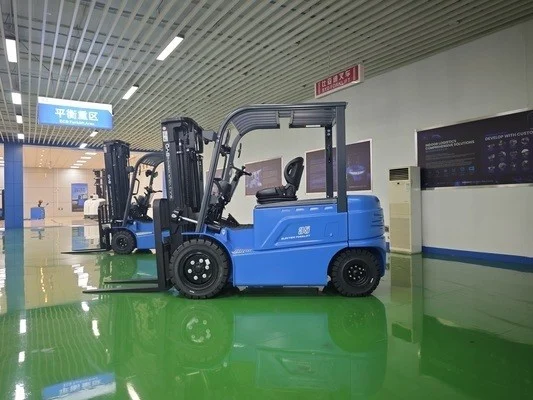
A four-wheel counterbalance electric forklift carries its load ahead of the drive axle, so tire behavior directly affects stability. The following parameters and configuration details are the ones that most often decide whether a tire and wheel setup suits a given site. Each item should be confirmed against the manufacturer’s technical data and the actual operating conditions.
Load, load center, and tire capacity
Tire load rating must cover the truck plus the rated load at the specified load center. Adding an attachment or handling a load whose center is farther forward reduces the remaining capacity, and the tires see that change too. Ask the supplier to confirm the tire load rating against the configured truck, not against a bare chassis. Do not assume that a higher-rated tire automatically increases the truck’s rated capacity; capacity is set by the truck design and stability limits.
Wheel type, rim, and mounting
Wheel assemblies differ in rim size, offset, and fixing method. A wheel that is not matched to the axle and brake package can create clearance problems or change the track width. Confirm the standard wheel type, the optional alternatives the factory supports, and whether any change affects fender clearance, turning radius, or the ability to fit chains or other traction aids. Only configurations the manufacturer lists as available should be treated as orderable.
Ground clearance and thresholds
Outdoor yards often include drainage channels, kerbs, and uneven joints. Tire diameter and profile affect ground clearance, and a low-profile indoor setup may not clear these obstacles. Measure the highest threshold and the deepest joint the truck must cross, then ask the supplier whether the proposed tire and wheel combination clears them with the truck loaded.
Traction, braking, and slope limits
Slope performance depends on tire grip, surface condition, load, and the truck’s braking system together. A tire that works on a dry ramp may behave differently on a wet one. Describe the steepest ramp, the surface material, and whether it is ever wet or contaminated. The supplier can then advise on tread and compound options and on any operating restrictions that apply.
Floor protection and marking
Some facilities, such as food handling, pharmaceutical, or clean assembly areas, treat tire marks and rubber deposits as a quality issue. Non-marking compounds are commonly offered, but their wear and traction characteristics can differ from standard compounds. Confirm availability and any trade-offs with the supplier rather than assuming a non-marking tire performs identically.
Noise, vibration, and operator comfort
Hard tires transmit more vibration over rough pavement and joints. Over a full shift, that affects operator fatigue and can loosen fittings if vibration is severe. If the route includes long outdoor runs, ask about tire options that absorb vibration and check whether the seat and mast mounting are appropriate to the duty.
Battery, charging, and duty cycle
Tire rolling resistance influences energy use, but the effect depends on surface, load, speed, and route. Rather than relying on a generic efficiency claim, describe the shift length, the number of trips, and the charging window. The supplier can then help judge whether the proposed configuration and battery capacity suit the duty cycle.
Comparison table: parameters, risks, and what to confirm
| Parameter or configuration | Why the site cares | What to confirm with the supplier | Typical status |
|---|---|---|---|
| Tire type and compound | Traction, floor marking, wear on the actual surface | Which compounds and treads the factory offers for this model; behavior on wet or contaminated floors | Standard and optional variants; confirm availability |
| Tire load rating | Safety margin with rated load and attachments | Rating at the configured load center; effect of any attachment | Must be verified against technical data |
| Wheel rim and offset | Clearance, track width, turning behavior | Supported wheel assemblies; effect on fenders and steering | Factory-defined; confirm before order |
| Ground clearance | Crossing drains, kerbs, and joints outdoors | Clearance with the chosen tire and wheel set, loaded | Confirm against site measurements |
| Slope and braking performance | Control on ramps and wet pavement | Ramp limits and any operating restrictions | Site-specific; confirm with supplier |
| Non-marking option | Floor appearance and product cleanliness | Availability, wear, and traction trade-offs | Optional; confirm availability |
| Duty cycle and charging | Energy use and uptime across a shift | Battery and charging configuration matched to route and shift | Configured per site data |
Procurement Checklist and Common Configuration Mistakes
Before requesting a quotation, collect the data that actually changes the tire and wheel recommendation. A short, accurate site description is more useful than a long list of preferences.
- Surface types along the full route, including door thresholds, ramps, drains, and any unpaved sections.
- Rated load, actual load, load center, and any attachment that shifts the center forward.
- Required lift height and the mast type, since mast height affects overhead clearance and stability.
- Steepest ramp, its surface, and whether it is ever wet, icy, or contaminated.
- Aisle width, turning points, and the truck’s turning radius with the proposed wheel set.
- Shift length, trips per shift, and the charging window available.
- Any floor-marking, cleanliness, or noise requirement specific to the facility.
Common mistakes include ordering an indoor tire setup and then using the truck on gravel, assuming a non-marking tire has the same grip as a standard one, and treating the tire load rating as if it raised the truck’s rated capacity. Another frequent error is ignoring thresholds and joints until the truck scrapes its chassis on the first outdoor trip. Each of these is avoidable with a site walk and a clear conversation with the supplier.

If your operation combines smooth indoor floors with an outdoor yard, share the route details, load data, and lift height with our team. We can discuss the four-wheel counterbalance electric forklift configurations available and which tire and wheel options suit the conditions you describe.
Frequently Asked Questions
Can one tire setup handle both a smooth warehouse floor and a paved outdoor yard?
Often a compromise setup is possible, but it depends on the surface mix, ramp conditions, and load. The supplier needs the proportion of indoor and outdoor travel and the worst surface the truck will meet. A single setup may not deliver the best traction outdoors and the lowest rolling resistance indoors at the same time, so the trade-off should be explicit.
Does a larger tire increase the forklift’s load capacity?
No. Load capacity is set by the truck design and stability limits, and the tire load rating must cover the configured load at the specified load center. A tire with a higher rating does not raise the rated capacity printed on the truck. Attachments and loads with a forward center reduce the remaining capacity.
Are non-marking tires suitable outdoors?
Non-marking compounds are usually chosen to protect indoor floors and product cleanliness. Their traction and wear behavior can differ from standard compounds, especially on wet or rough outdoor surfaces. Confirm the intended use with the supplier and check whether the compound is appropriate to the full route.
What information should I give the supplier before ordering?
Provide surface types and their condition, the steepest ramp, thresholds and joints, rated and actual loads, load center, lift height, aisle width, shift length, and charging arrangements. Also state any floor-marking or noise requirements. With that data, the supplier can confirm which tire and wheel configurations are available and any operating limits that apply.