BYD Electric Forklift Battery and Charger Matching: Questions Buyers Should Resolve Before Ordering a Four-Wheel Counterbalance Truck
News 07/11/2026
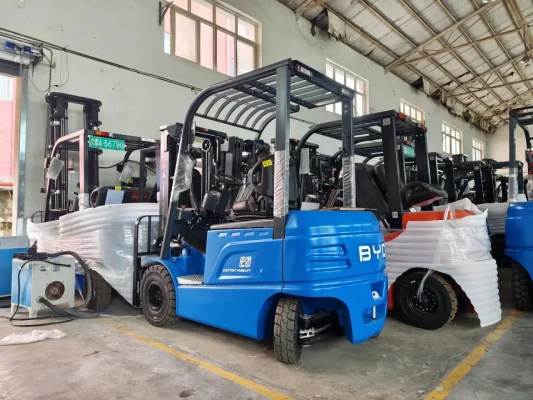
A BYD electric forklift order is not complete once the truck model is chosen. The battery and charger decision determines whether the four-wheel counterbalance electric forklift fits your shift pattern, your available charging time, and your electrical capacity. Buyers who leave these questions until after the quotation often face configuration changes, longer lead times, or a charger that cannot support the intended duty cycle. This guide lists the points to settle with your supplier before confirming an order.
Start With the Duty Cycle, Not the Battery Label
Battery and charger matching begins with how the truck will actually work. Before discussing pack size or charger output, document the following:
- Number of shifts per day and approximate operating hours per shift
- Typical load weight and how often the truck runs near its rated capacity
- Lift height and how much of each cycle involves lifting
- Ground conditions, ramps, and aisle width, which affect energy demand
- Idle periods and whether opportunity charging is possible during breaks
These inputs let the supplier propose a battery capacity and charging approach that match your operation rather than a generic package. A single-shift operation with long breaks has different charging needs from a multi-shift warehouse running continuous transfers.
Battery Questions to Confirm Before Ordering
Which battery configuration applies to the truck?
Ask the supplier to confirm the battery type, voltage, and capacity offered with the specific four-wheel counterbalance model you are considering. Request the manufacturer’s technical data sheet rather than relying on general statements. Battery voltage must match the truck’s electrical system, and the compartment dimensions must accept the pack.
How does the battery fit the truck’s structure?
Counterbalance trucks use the battery as part of the counterweight. Confirm that the proposed battery mass and dimensions are approved for the model, and ask whether any ballast or compartment changes are required. Do not assume a larger pack is automatically better; the supplier should verify compatibility.
What charging window does the operation allow?
State clearly when the truck is available to charge: overnight only, during scheduled breaks, or between shifts. Charging time depends on battery capacity, charger output, and the state of charge at the start. Without confirmed specifications, treat any charging-time figure as something to verify in writing.
What does the warranty cover?
Ask how the battery warranty treats capacity loss, cycle count, and operating conditions. Get the answer in the quotation or contract, since warranty terms vary and cannot be inferred from general marketing material.
Charger Questions That Affect Installation and Uptime
What electrical supply is available on site?
Charger selection depends on your facility’s voltage, phase, and available current. Confirm the site’s supply with an electrician and share it with the supplier. A charger that exceeds the available supply may require electrical upgrades, which affect both cost and installation time.
Where will the charger be installed?
Ventilation, distance from the charging area, cable routing, and floor space all matter. Ask whether the proposed charger suits the intended location and whether any site preparation is needed. Keep charging areas clear of traffic and follow the supplier’s installation instructions.
Does the charger match the battery’s charging profile?
The charger must be specified for the battery chemistry and voltage supplied with the truck. Ask the supplier to confirm the pairing in writing, including connector type and communication requirements between charger and truck, where applicable.
Information to Put in the Inquiry and the Order
A clear inquiry shortens the back-and-forth. Include the following in your request:
- Intended application and site description
- Required load capacity, lift height, and load center
- Shift pattern and charging windows
- Available electrical supply and planned charging location
- Any aisle, floor, or ramp constraints
Before signing, check that the quotation states the truck model, battery type and capacity, charger model and output, connector type, installation responsibilities, warranty terms, and delivery scope. Ask which items remain subject to site verification. Where the supplier has not provided confirmed specifications, record them as open items rather than assumptions.
If you are comparing configurations, request the manufacturer’s documentation alongside the commercial offer so the technical basis is visible to everyone reviewing the purchase.
Frequently Asked Questions
Can I use an existing charger with a new BYD electric forklift?
Only if the charger is confirmed compatible with the battery chemistry, voltage, and charging profile. Ask the supplier to verify the pairing before use; an incompatible charger can damage the battery or create safety risks.
Is opportunity charging during breaks acceptable?
It depends on the battery and charger specifications and the supplier’s guidance. Describe your break pattern and ask whether partial charging fits the recommended practice. Do not assume it is suitable without written confirmation.
What if my site’s electrical supply cannot support the proposed charger?
Discuss this early. Options may include a different charger configuration or an electrical upgrade, but the right answer depends on your site and the supplier’s technical data. Have an electrician confirm the available supply first.
Which documents should I keep after delivery?
Keep the order confirmation, battery and charger data sheets, installation instructions, warranty terms, and any commissioning records. These support maintenance planning and warranty claims.