BYD lithium forklift: Traction and Gradeability Performance Unpaved Outdoor Storage Yards
News 16/10/2026
Many operations store bulk materials and equipment on unpaved outdoor yards, and traction and gradeability rank high among critical performance metrics any lithium forklift must deliver. BYD lithium forklifts enter this space with design adjustments tailored to uneven, loose surface conditions. These design changes address common pain points operations face when moving loads across gravel, dirt, or other unimproved surfaces. Understanding how these machines perform in this environment helps operations make informed purchasing and deployment decisions.
Core Performance Requirements Unpaved Outdoor Storage Yards
Unpaved outdoor storage yards present unique challenges forklift traction and gradeability. Loose surfaces like gravel, damp dirt, or soft sand reduce friction between tires and ground. This reduced friction increases risk wheel spin, lost control, or getting stuck mid-climb. Many yards also include gentle slopes designed to support drainage, or unpaved ramps connecting lower storage areas to elevated loading docks.
To operate safely and efficiently, any forklift working in this space must generate enough consistent torque to maintain movement across low-friction surfaces. It must also climb rated inclines without straining or losing stability. These requirements shape how operations evaluate BYD lithium forklift performance before deployment.
Traction Characteristics BYD Lithium Forklifts
BYD lithium forklifts use fully integrated electric powertrains, which deliver instant torque directly to drive wheels. This differs from traditional internal combustion forklifts, which often experience delayed torque response when accelerating. Instant, controllable torque reduces sudden wheel spin, a common issue on loose unpaved surfaces.
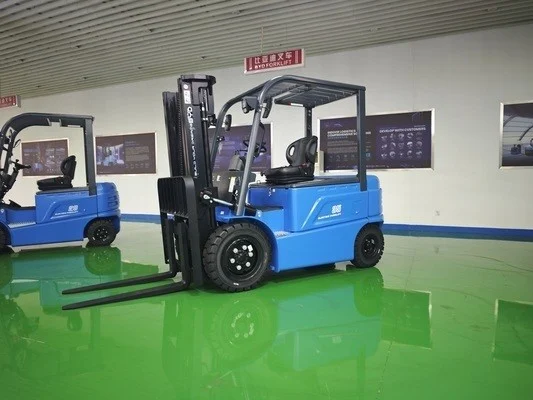
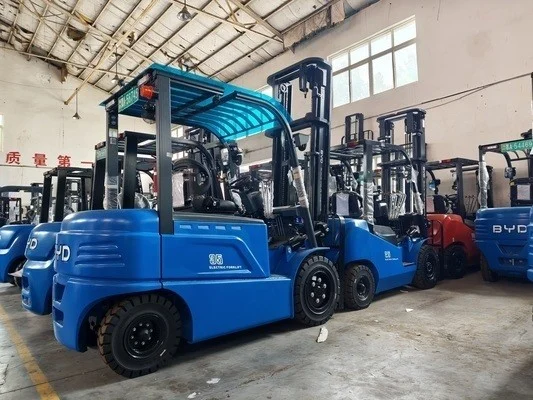
Most BYD lithium forklift models offer optional heavy-duty traction tires with deep, aggressive treads. These tires bite into loose material to improve friction, compared to standard smooth tires designed to use on paved indoor surfaces. Another key design advantage comes from lithium battery placement: battery packs mount lower within the vehicle frame, compared to bulkier lead-acid batteries. Lower center of gravity increases weight on drive wheels, improving tire contact with uneven ground and boosting overall traction.
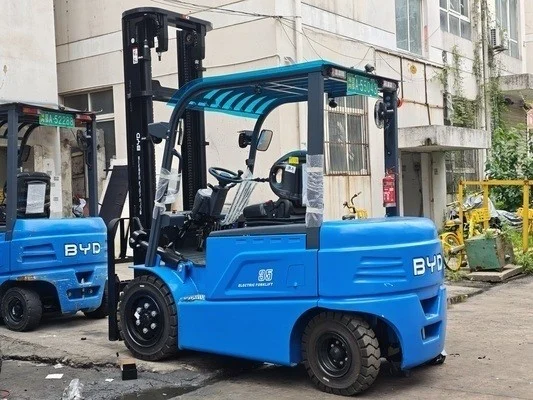
This lower center of gravity also improves side-slope stability, a critical safety benefit when working on uneven unpaved yards that lack perfectly level ground.
Gradeability Limits Common Unpaved Yard Conditions
Gradeability describes the maximum incline a forklift can climb while carrying a specified load. BYD publishes base gradeability ratings each of its lithium forklift models, but these base ratings almost always reflect testing on dry, paved surfaces. Unpaved surfaces reduce overall friction, which lowers the maximum safe incline any forklift can climb with a given load.
The actual gradeability your BYD lithium forklift achieves depends on three main factors: load weight, surface composition, and surface moisture. A half-load on dry packed gravel will deliver better climb performance than a full load on wet loose gravel. The instant torque from BYD’s electric powertrain helps maintain steady movement up inclines, but it cannot overcome extreme friction loss from overly soft or saturated ground.
Operations must account this performance reduction when planning routes and load limits on sloped unpaved yards. Failing to adjust load weights can lead to wheel spin, getting stuck, or increased safety risks.
Key Selection Considerations Your Unpaved Yard
When evaluating a BYD lithium forklift use in your unpaved yard, consider these key factors before finalizing your purchase:
- Maximum yard incline: Measure the steepest slope your forklift will travel regularly. Share this measurement with your BYD distributor to confirm the selected model delivers enough gradeability margin, factoring friction loss from unpaved surfaces.
- Surface composition: Deep loose gravel or sandy ground requires aggressive traction tires, while compacted clay or gravel works well with standard heavy-duty tires. Confirm you select the correct tire option matching your model.
- Typical load weight: If your operation regularly moves full-rated loads up inclines, prioritize models with higher torque reserves to maintain consistent performance.
- Weather exposure: If your yard sees frequent rain, snow, or ice, add an extra performance margin to offset additional traction loss during wet conditions.
Before full deployment, test the forklift with your maximum typical load on your yard steepest incline. This test confirms the machine meets your operation specific performance needs.
Frequently Asked Questions
Can BYD lithium forklifts operate on muddy unpaved yards?
Muddy saturated surfaces drastically reduce traction regardless powertrain type. BYD lithium forklifts fitted with deep-tread traction tires deliver better performance than models with standard tires, but operations should avoid steep inclines when ground is fully wet. Operators must also reduce load weights to match available friction on muddy ground.
How does BYD lithium forklift traction compare internal combustion forklifts on unpaved ground?
BYD lithium electric models deliver instant, adjustable torque, which reduces sudden wheel spin common when accelerating with internal combustion engines. This inherent design advantage improves traction on loose uneven surfaces. Actual performance still depends on tire choice, load weight, and surface condition, not just powertrain type.
Do I need extra maintenance my BYD lithium forklift after regular use on unpaved yards?
Unpaved yards generate more dust and debris than paved indoor areas. You should clean the undercarriage and tire treads more frequently to remove trapped gravel and dirt. Check tire pressure and tread wear monthly to catch damage early. All other maintenance follows the standard schedules BYD provides its lithium forklift models.