Cold Storage Electric Forklift: Matching Counterbalance Load Capacity and Lift Height to Racking Layouts
News 04/11/2026
Choosing an electric forklift for cold storage is less about finding the biggest model on a spec sheet and more about matching a four-wheel counterbalance electric forklift to the racking you actually operate. Load capacity, lift height, load center, mast type, and aisle dimensions interact, and the cold environment adds constraints that a standard warehouse truck does not face. This guide walks through the decision sequence: start with the racking and pallet, then size the truck, then confirm the cold-store configuration and charging plan with the supplier.
Why Racking Layout Drives the Specification
Racking determines three numbers that shape everything else: the height at which loads must be placed, the aisle width available to maneuver, and the load center of the pallet as it sits on the forks. A truck rated at a nominal capacity can handle that load only at a stated load center and mast configuration. As lift height increases or the load center moves forward, the safe residual capacity typically falls. Cold storage facilities often combine high racking with dense pallet loads, so the nominal rating alone is a poor guide.
Begin by mapping the storage block. Record beam levels, the highest pick height, pallet footprint and weight, and the clear aisle between rack uprights and any building columns. Then note whether the truck will work inside a cooler, inside a freezer, or move between temperature zones. Each of these conditions changes which specifications matter most.
Separate Cooler, Freezer, and Cross-Zone Work
A chilled room, a deep-freeze room, and a dock area that opens to ambient air place different demands on a truck. Continuous work inside a freezer stresses batteries, hydraulic fluid, seals, and operator comfort. Frequent crossings between temperature zones introduce condensation on cold metal surfaces, which affects visibility, controls, and traction. Before comparing models, decide which pattern describes your operation, because the cold-store package and charging strategy follow from it.
Sizing Load Capacity and Lift Height to the Rack
Work through the following sequence with the racking drawing and a sample pallet in hand.
- Confirm the heaviest unit load. Include the pallet, any slip sheet, and the actual product weight, not an average.
- Identify the highest pick and place height. Use the top beam level plus the clearance needed to enter and withdraw the pallet.
- Establish the load center. A standard pallet may sit close to the carriage, but deep or irregular loads shift the center forward and reduce usable capacity.
- Check the mast. A two-stage, three-stage, or four-stage mast changes both lift height and the collapsed height that must clear doorways and overhead structures. Free-height options matter where low openings exist.
- Account for attachments. Any clamp, push-pull, or special fork carriage adds weight and moves the load center, so the residual capacity must be recalculated.
Ask the supplier to show the capacity derating curve at your required lift height and load center, not just the headline rating. This is the single most useful document when matching a counterbalance truck to high racking.
Aisle Width, Turning Radius, and Truck Length
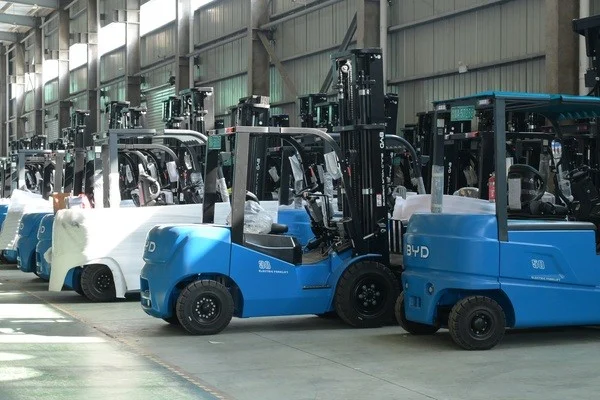
A four-wheel counterbalance truck needs a turning envelope that fits the aisle. Measure the narrowest aisle on the route and compare it with the truck’s turning radius and overall length, allowing space to square up to the rack. If the aisle is too tight, a counterbalance truck may not be the right choice, and the honest answer may be to reconsider the layout or the truck type rather than force a fit. Do not assume a compact model will solve a fundamentally narrow aisle.
Ground Conditions, Slopes, and Floor Finish
Cold-room floors can be smooth, wet, or slightly sloped at dock doors. Tire type, braking behavior, and traction on the actual surface affect safe operation. Share the floor finish, any ramps, and the expected presence of moisture or ice with the supplier so tire and brake options can be discussed.
Cold-Store Configuration and Charging Checks
Cold conditions affect the battery, the hydraulic system, seals, wiring, and the operator interface. The table below lists the items that deserve confirmation. It does not supply values, because the correct figures come from the manufacturer’s documentation for the specific model and configuration.
| Item to confirm | Why it matters in cold storage | What to request from the supplier |
|---|---|---|
| Operating and storage temperature range, truck and battery | Defines whether the truck suits a cooler, a freezer, or both | Written limits from the technical data sheet |
| Battery capacity at low temperature and BMS limits | Available energy and charge acceptance can change in cold conditions | Derating information and BMS temperature thresholds |
| Charging temperature window and any heating provision | Charging a cold battery may be restricted | Charging procedure and any battery heating option |
| Cold-store package: condensation protection, sealed harnesses, display and sensor treatment | Moisture and frost affect reliability and visibility | List of included and optional cold-store features |
| Hydraulic oil, lubricants, and seal compatibility | Standard fluids may not suit low temperatures | Approved fluid specification and service interval |
| Residual capacity at required lift height, load center, and attachment | Determines whether the rack can be served safely | Capacity chart with derating curve |
| Mast collapsed height, free lift, and overhead guard | Affects doorway clearance and low structures | Dimensional drawing |
| Tires, brakes, and traction on wet or smooth floors | Affects stopping and stability | Recommended tire and brake configuration |
| Cab visibility, defogging, and operator comfort | Cold and condensation reduce sight lines | Available cab and heating options |
Treat every row as a question, not an assumption. Some features are standard, some are options, and some depend on the specific model. The supplier should state clearly which category applies.
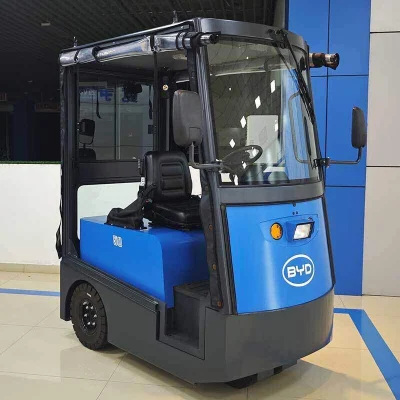
Plan Charging Around the Shift Pattern
Charging strategy follows from shift length, truck count, and whether the truck stays cold or returns to a warmer area. Ask where charging will take place, whether the battery can be charged in the cold room, and how opportunity charging fits the duty cycle. Without verified runtime data, plan a conservative number of trucks and confirm the real energy demand with the supplier using your measured duty cycle.
Hygiene and Corrosion in Food and Pharmaceutical Cold Chains
In food, seafood, meat, and pharmaceutical cold storage, cleaning routines and moisture exposure raise questions about surface finish, washdown tolerance, and pallet hygiene. Confirm which cleaning methods the truck is designed to withstand and whether any additional protection is available. Do not assume a standard truck tolerates high-pressure washdown.
Frequently Asked Questions
Can a four-wheel counterbalance electric forklift work inside a freezer?
It can be considered when the manufacturer’s documented operating temperature range covers the freezer, the cold-store package is specified, and the battery and charging plan suit the duty cycle. Confirm the temperature limits, battery behavior, and any heating provision in writing before committing.
How do I know the truck will still lift my loads at the top rack beam?
Use the capacity derating chart at your actual lift height, load center, and attachment weight. The nominal capacity applies only under the stated conditions. If the chart is not available, ask the supplier to provide it before purchase.
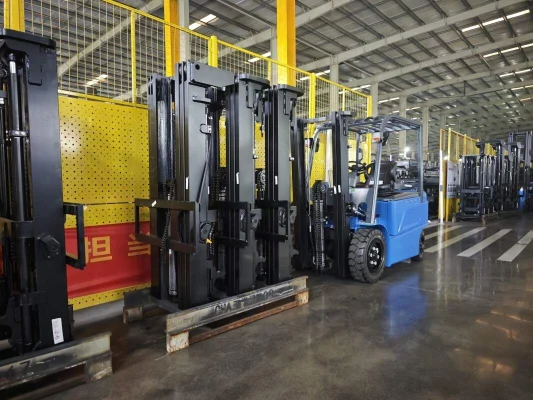
What if my aisles are too narrow for a counterbalance truck?
Measure the turning envelope against the narrowest aisle. If the truck cannot maneuver safely, the layout or truck type may need review. A counterbalance truck is a common general choice, but it is not suitable every aisle geometry, and the limitation should be stated honestly.
Should the battery be charged inside or outside the cold room?
This depends on the battery’s documented charging temperature window and the facility layout. Ask the supplier to confirm the permitted charging conditions and whether any battery heating is needed, then align the charging location with the shift pattern.
Data to Gather Before You Request a Quote
Bring the following to the conversation with the supplier so the configuration can be checked against real conditions:
- Racking drawing with beam levels and the highest pick height
- Heaviest and typical unit loads, including pallet weight and load center
- Narrowest aisle, doorway clearances, and any ramps or slopes
- Floor finish and expected moisture or ice
- Cooler, freezer, or cross-zone duty, and how often the truck crosses temperature boundaries
- Shift pattern, truck count, and proposed charging location
- Cleaning routine and any hygiene requirements
Questions to put to the supplier include: What are the documented operating and charging temperature limits? What residual capacity applies at my lift height and load center? Which cold-store features are standard and which are options? What hydraulic fluid and service intervals apply? Can you provide a dimensional drawing and the capacity chart? With these answers, you can compare configurations on equal terms and choose a four-wheel counterbalance electric forklift that fits both the racking and the cold environment.