5 Ton Forklift Tire and Floor Interface: Matching Four-Wheel Counterbalance Electric Models to Industrial Surfaces
News 31/10/2026
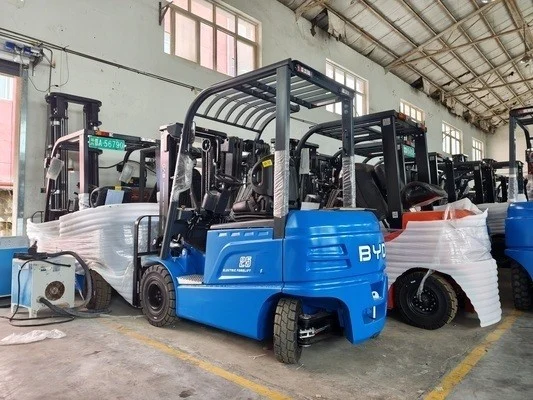
A 5 ton forklift carries a heavy load on a small contact patch, so the tire-to-floor interface decides much of the machine’s real behavior: traction, stopping distance, floor wear, and how confidently an operator can position a pallet. On a four-wheel counterbalance electric forklift, that interface is also shaped by battery weight, which sits low and adds stability but increases the load each tire presses into the surface. This article explains how to match a 5 ton electric counterbalance truck to concrete, asphalt, steel plates, and other industrial surfaces, which tire and chassis details to verify, and where the limits sit.
How Surface and Tire Choices Interact on a 5 Ton Electric Truck
Every tire choice is a trade. A harder, narrower tire rolls easily and reduces friction losses, but it concentrates pressure and can polish or crack weak floors. A softer, wider tire spreads load and grips better, but it increases rolling resistance, heat, and wear. On a 5 ton forklift, those effects are large enough that the wrong combination shows up quickly as rutting, flat spots, or slipping on ramps.
Treat the following as general material behavior, not as verified performance of any specific model. Actual results depend on tire compound, inflation or solid construction, axle load distribution, travel speed, and floor condition.
- Sealed concrete: Usually the most forgiving surface. Hard tires track well; the main risks are joint edges, surface dust, and oil films that reduce grip.
- Unsealed or worn concrete: Dust and aggregate loosen under scrubbing, so tire pressure and turning habits matter more than compound alone.
- Asphalt: Softer than concrete and prone to rutting under sustained point loads, especially in warm conditions.
- Steel plates and dock plates: Grip drops sharply when the surface is wet, oily, or frosted; plate edges create impact loads.
- Expansion joints and drains: Small-diameter wheels and hard tires transmit more shock into the chassis and load.
Because this site supplies four-wheel counterbalance electric forklifts, the discussion stays within that configuration. Three-wheel, reach, and pallet-moving equipment sit outside this scope and are not recommended here; where a task demands a much narrower aisle or a very different handling method, a counterbalance truck may not be the right answer at all.
Specifications to Verify Before Choosing Tires and Configurations
The goal is to match the truck to the floor, not to pick a tire in isolation. Work through each item below, record the answer, and ask the supplier to confirm it in writing.
Load, load center, and remaining capacity
A nominal 5 ton rating applies at a stated load center, commonly 500 mm or 600 mm depending on the model, and at a stated lift height. Attachments such as clamps or sideshifters move the load center forward and reduce remaining capacity. The supplier should provide a capacity chart showing how rating falls as load center and lift height increase. Do not assume the full 5 ton figure applies to every attachment or height.
Tire type, size, and floor pressure
Pneumatic, solid pneumatic, and press-on tires behave differently on the same floor. Ask which tire options the model supports, the resulting wheel diameter, and the recommended surface. Where floor loading is a concern, request the axle load figures and the contact area assumptions used, then compare them with the floor’s structural rating. A structural engineer, not the forklift supplier, should confirm whether a slab can take the point loads.
Turning radius and aisle width
Tire width and chassis dimensions both affect the space needed to turn. Measure the actual aisle, including clearance to racking and any columns, and compare it with the model’s turning radius plus load overhang. If the aisle is tight, verify the figure rather than relying on a general claim that counterbalance trucks fit most warehouses.
Floor condition, slopes, and transitions
Note joint spacing, cracks, potholes, dock levelers, ramps, and any wet or oily zones. Slope and surface friction together determine whether a loaded truck can start and stop safely. Ask the supplier what gradient and surface conditions the configuration is rated to handle, and confirm braking performance on wet steel separately from dry concrete.
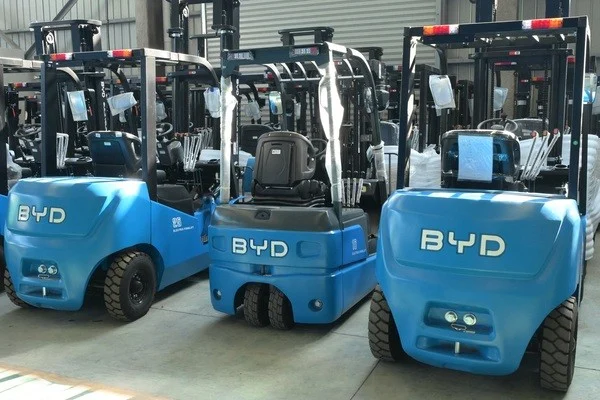
Battery, charging, and duty cycle
Battery weight contributes to stability and to floor load. Confirm the battery type and capacity offered with the model, the charging method, and the space and power available at the charging point. Shift length and opportunity charging affect how many trucks a given workload needs; these are site-specific calculations, so provide the supplier with real task data.
| Item | Why it matters | What to confirm with the supplier | Typical status |
|---|---|---|---|
| Tire type and size | Grip, floor pressure, wear | Supported options, wheel diameter, recommended surfaces | Model-dependent; confirm |
| Capacity chart | Remaining load at height and load center | Chart covering attachments and lift heights | Required document |
| Axle and wheel loads | Floor structural safety | Loaded and empty figures | Confirm with supplier and engineer |
| Turning radius | Aisle clearance | Figure with the chosen tire and attachment | Confirm per configuration |
| Braking on wet steel | Dock and plate safety | Rated surface and gradient conditions | Confirm; test on site |
| Battery and charging | Duty cycle, floor load, infrastructure | Battery type, charger requirements, charging space | Confirm with site data |
Optional items such as non-marking tires, different tread patterns, or mudguards should be listed as options only where the manufacturer offers them. Never assume a feature is standard across a model range.
FAQ: Practical Questions About 5 Ton Forklift Tires and Floors
Can I use the same tire type on concrete and asphalt?
Often yes, but the trade-offs differ. A tire that protects asphalt may wear faster on abrasive concrete, and a hard tire that suits smooth concrete can rut softer asphalt under sustained loads. Confirm the recommended surface with the supplier and inspect the floor after the first weeks of use.
How do I know whether my floor can take a loaded 5 ton truck?
You need the truck’s loaded axle and wheel loads plus the slab’s design information. Ask the supplier for the load figures and have a structural engineer compare them with the floor. Tire choice changes contact area but does not replace a structural assessment.
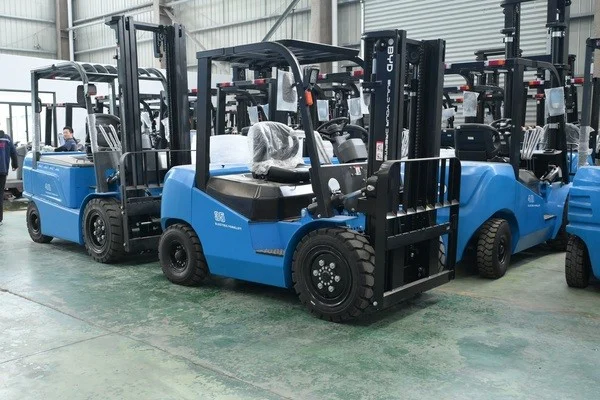
Do attachments change tire requirements?
Attachments shift the load center and reduce remaining capacity, and some add front-end weight. That can change the load each front tire carries, so ask whether the tire and capacity configuration still applies with the attachment fitted.
What should I measure before requesting a quote?
Record aisle widths, lift heights, typical load weight and load center, floor type and condition, slopes, dock transitions, shift pattern, and charging location. These details let the supplier propose a four-wheel counterbalance electric configuration that fits the actual duty rather than a generic specification.
To move from general guidance to a concrete proposal, share your surface type, load and load center, required lift height, aisle dimensions, and charging arrangements with this site. The team can then confirm which tires and configurations are available on the 5 ton four-wheel counterbalance electric models offered, and which operating conditions still need verification.