Electric Counterbalance Forklift Specifications: Questions to Ask About Load Center, Mast Derate, and Site Conditions
News 03/11/2026
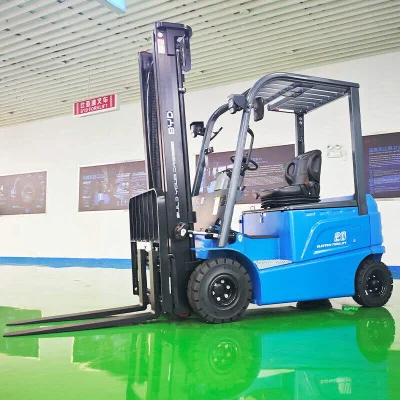
An electric counterbalance forklift’s nameplate capacity is a starting point, not a promise. The number printed on the data plate assumes a specific load center, a specific mast configuration, and a machine working on level ground in moderate conditions. Change any of those inputs and the safe capacity changes with them. Buyers who compare machines by headline tonnage alone often end up with a truck that cannot lift the loads they actually handle, or one that is oversized and awkward in their aisles. This guide covers the questions to put to a supplier about load center, mast derating, and site conditions, using a four-wheel counterbalance electric forklift as the reference machine.
Why the Rated Capacity on the Data Plate Is Conditional
Forklift capacity ratings follow a defined geometry. A manufacturer rates a truck at a stated rated load and a stated load center, usually measured from the vertical face of the forks to the center of gravity of the load. The mast, carriage, and any attachment add their own weight ahead of the drive axle, and that weight reduces what remains available to lift.
Three consequences follow, and each one deserves a direct question to the supplier:
- Load center shifts reduce capacity. A load whose center of gravity sits farther out than the rated load center lowers the permissible weight. Pallets with overhang, loose drums, or bulky cartons are common causes.
- Mast and attachment choices reduce capacity. A taller mast, a side shifter, a clamp, or a rotator all change the load moment. The rated capacity with the attachment fitted is the number that matters, not the bare-truck figure.
- Lift height and free lift interact with the mast stage. The capacity shown on the plate may apply to a particular mast stage and height, so the full derate curve needs to be on the table before purchase.
Ask the supplier to provide the capacity plate and the derate chart together, and to show the capacity at your real load center and your real lift height, with the exact mast and attachment specified. A single headline number is not enough to make a purchase decision.
Load Center: The Question Buyers Skip
The load center is the horizontal distance from the fork face to the center of gravity of the load. Standard ratings typically assume a 500 mm or 600 mm load center, depending on the market and the truck class, but your pallets may not match that assumption. The practical question is simple: what is the load center of the heaviest and bulkiest unit load you will lift, and does the truck’s capacity curve still cover it?
How to Measure What You Actually Handle
Measure the load, not the pallet. Stack the goods as they will be lifted, find the point where the load balances, and record the horizontal distance from the fork face to that point. Repeat this a few times with the awkward loads: the drum with a rim overhang, the carton stack that leans, the crate with an offset weight. The largest realistic value is the one to design around.
Then ask three follow-up questions:
- What is the rated load center on the capacity plate, and does the derate chart extend to my measured value?
- What capacity remains at that load center with the mast and attachment I need?
- Is there a load center limit beyond which the truck should not be used at all, even at reduced weight?
If the supplier cannot show the derate at your load center, the specification is incomplete. Treat that as a buying signal, not a paperwork detail.
Attachments Change the Geometry
Side shifters are common and relatively modest in their effect, but clamps, rotators, and long fork extensions move the load center significantly. Each attachment should come with its own capacity reduction, and the combined effect with the mast must be stated. A truck rated at a nominal tonnage without an attachment may carry considerably less once the attachment is fitted. Ask for the capacity with the attachment installed, and confirm the attachment is approved by the truck manufacturer rather than added afterward without documentation.
Mast Derate and Lift Height: Reading the Curve
Mast derating is the reduction in permissible load as lift height increases. Taller masts, additional mast stages, and greater free lift all add weight and raise the load’s moment. The result is a capacity curve that declines with height, and the curve is specific to the mast fitted.
Questions About Mast Configuration
When specifying the mast, work from the racking rather than from a catalog default:
- What is the highest shelf level, and what lift height is needed to place and retrieve a load there safely?
- Is free lift required, for example when entering a container or a low-clearance doorway with the mast lowered?
- How many mast stages are proposed, and what is the collapsed height and the extended height?
- What is the remaining capacity at the highest lift height I will use, with my load center and attachment?
- Does the mast height affect doorways, overhead obstructions, or sprinkler clearance along the travel route?
Free lift deserves particular attention where loads must be raised before entering a trailer or a low opening. A mast without sufficient free lift may not allow the forks to reach the load without the mast striking the header. This is a dimensional check, not a performance claim, and it should be verified against the actual building and vehicle dimensions.
Height, Capacity, and the Honest Trade-Off
A taller mast does not simply add reach; it adds weight and reduces capacity at height. If the racking is tall and the loads are heavy, the specification may move toward a larger truck, which in turn affects aisle width and turning radius. This is why the load center, lift height, and site layout questions belong in the same conversation rather than in separate departments. Where the combination of height and weight exceeds what a four-wheel counterbalance electric forklift can safely handle in the available aisle, that is a genuine limit worth stating plainly rather than working around with optimistic assumptions.
Site Conditions That Rewrite the Specification
A forklift is rated in defined conditions. Floor surface, slope, aisle width, door openings, and operating environment all change what the machine can do and which configuration is appropriate.
Floor, Slope, and Aisle
Ask the supplier to confirm the maximum slope the truck is rated to climb and descend, loaded and unloaded, and compare that with the ramps and dock approaches on site. Check the floor’s condition and load-bearing capacity, because a truck plus a rated load concentrates weight on the wheels. Measure the narrowest aisle and the tightest turn on the actual travel route, and compare those with the truck’s turning radius and right-angle stacking dimensions. A four-wheel counterbalance truck generally needs more aisle width than a three-wheel design, so the aisle measurement may determine whether this type fits at all.
Environment and Energy
Dust, moisture, washdown, cold storage, and outdoor exposure each raise questions about protection ratings, sealing, and the battery system. Rather than assuming a standard truck will cope, ask what the manufacturer specifies:
- What ambient temperature range is approved for operation, storage, and charging?
- How does the lithium battery and its management system behave at the low end of that range, and is heating or a heated charging area required?
- What protection rating applies to the truck and to the battery enclosure in wet or dusty conditions?
- Which hydraulic oil, lubricants, and seals does the manufacturer require in the intended temperature range?
- What charging infrastructure is needed, and how does the shift pattern fit around charging windows?
These are questions, not answers. The correct values come from the manufacturer’s documentation for the specific model, and they should be checked against the site’s measured conditions rather than assumed from general industry practice.
Comparison Table: Parameters, Risks, and What to Request
| Parameter | Why It Matters on Site | Documentation to Request | Configuration Note |
|---|---|---|---|
| Load center | Mismatch reduces safe capacity | Capacity plate and derate chart at the measured load center | Attachment-specific capacity to be confirmed |
| Lift height and mast stages | Capacity falls as height rises; collapsed height affects doorways | Capacity curve by height, collapsed and extended dimensions | Free lift option subject to manufacturer confirmation |
| Aisle and turning dimensions | Determines whether the truck can work the route | Turning radius and right-angle stacking data | Layout-dependent, not a fixed claim |
| Floor and slope | Affects traction, braking, and structural loading | Rated slope and wheel load information | Site survey to be completed by the buyer |
| Temperature and charging | Affects battery availability and protection requirements | Approved operating, storage, and charging ranges | Cold-store or washdown packages to be quoted |
Treat standard, optional, and to-be-confirmed items separately. Not every truck supports every package, and a supplier should state clearly which items are factory options and which require engineering review.
Frequently Asked Questions
Can I use the rated capacity at any lift height?
No. Rated capacity applies at a stated load center and a stated mast and height condition. Above that, the permissible load generally falls along the derate curve. Ask the supplier to show the curve at your actual lift height and load center with the mast and attachment you intend to use.
What happens if my pallets have a larger load center than the plate assumes?
The safe capacity is reduced, and the amount depends on the truck and the derate chart. Measure the real load center of your heaviest and bulkiest loads, then ask the supplier to confirm the remaining capacity at that value. If no documentation exists, the specification should be treated as unverified.
Does a side shifter reduce capacity?
Attachments add weight ahead of the carriage and can reduce capacity, though the amount varies by attachment and truck. Request the capacity with the attachment fitted and confirm the attachment is approved by the truck manufacturer. Do not assume the bare-truck rating still applies.
How do I know whether a four-wheel counterbalance electric forklift suits my aisles?
Measure the narrowest aisle and the tightest turn on the real travel route, then compare those figures with the truck’s turning radius and right-angle stacking dimensions. If the aisle is too narrow, the honest answer may be that this type does not fit the layout, and the conversation should turn to layout changes or a different handling approach rather than a specification workaround.
What site data should I gather before requesting a quote?
Collect the heaviest and bulkiest unit loads with their measured load centers, the highest shelf level and required lift height, the narrowest aisle and tightest turn, floor condition and any slopes, door and overhead clearances, the operating temperature range, the shift pattern, and the available charging location. With those figures, a supplier can discuss the four-wheel counterbalance electric forklift selection and configuration that actually matches the work, and flag any point that needs factory confirmation.