Four-Wheel Counterbalance Electric Forklift Sizing: Reconciling Warehouse Throughput Targets With Battery Swap and Opportunity Charging Capacity
News 05/11/2026
Warehouse throughput targets often fail during the sizing stage, not during operation. A four-wheel counterbalance electric forklift may have enough rated capacity on paper, yet the fleet still falls behind because the battery strategy cannot support the shift pattern. The fix is to treat truck productivity and energy availability as one calculation: how many pallet moves the warehouse needs each hour, how long each move takes, and how much run time the battery must deliver between charges or swaps. This guide explains how those numbers connect and which conditions to verify before choosing a configuration.
Start With Moves per Hour, Not Truck Count
Throughput targets are usually expressed as pallets moved, trucks loaded, or orders shipped per shift. Convert that figure into a required rate of completed moves per hour, then divide by the realistic moves one truck can complete in an hour. The result is a minimum active fleet estimate.
Realistic moves per hour depend on travel distance, aisle congestion, lift height, load weight, attachment use, and the time spent at each end of the route. Two warehouses with identical pallet counts can need very different fleets because one moves loads 20 meters and the other moves them 120 meters. Use time studies or observed cycle times from your own operation where possible. If no measured data exists, build a range from route length and task steps rather than assuming a single productivity figure.
Also separate peak-hour demand from average demand. A fleet sized only to the shift average will queue during receiving peaks or dispatch cutoffs. The practical approach is to size to the busiest sustained hour, then confirm the battery plan can sustain that intensity.
Translate Duty Cycle Into Energy Demand
Battery capacity must match the work performed between charging events. The variables that matter most are operating hours per shift, the share of time the truck is actually moving or lifting, load weight relative to rated capacity, lift height, and ambient temperature. A truck that lifts near its rated load to full height all shift draws more energy than one handling light loads at low height.
Because published battery run-time figures depend on test conditions, do not assume a single number applies to your site. Ask the supplier to confirm the battery voltage and capacity, the rated capacity at your required load center, and the test conditions behind any run-time claim. Then compare that information with your own duty cycle. Where the data is incomplete, plan a trial period or a conservative buffer rather than treating an optimistic estimate as guaranteed.
A simple worksheet helps keep the decision grounded:
- Required moves per peak hour and average hour
- Average route distance and number of lifts per move
- Typical and maximum load weight, plus load center
- Maximum and average lift height
- Operating hours per shift and shifts per day
- Charging windows available, including breaks and shift changes
Compare Battery Swap and Opportunity Charging Capacity
Two energy strategies dominate multi-shift warehouse operations: battery swapping and opportunity charging. They solve the same problem in different ways, and each has conditions that determine whether it fits.
Battery swap
A swap replaces a depleted battery with a charged one, typically at a dedicated station. It suits operations with long, continuous shifts where the truck cannot pause long enough to recharge, or where the battery capacity cannot cover a full shift. Requirements include spare batteries, a safe handling method or swap equipment, trained staff, and floor space near the work area. The trade-off is capital cost and the logistics of charging and storing multiple batteries.
Opportunity charging
Opportunity charging means topping up the battery during natural breaks, lunches, and shift changes instead of running it to depletion. It reduces the need for spare batteries and can keep a truck available across multiple shifts. It depends on disciplined charging habits, accessible charging points, and a battery and charger combination that supports frequent partial charging. Lithium-ion batteries are commonly associated with this pattern because they generally tolerate partial charging well, but confirm the specific manufacturer guidance rather than assuming it.
| Factor | Battery swap | Opportunity charging |
|---|---|---|
| Best fit | Long continuous shifts, limited charging windows | Predictable breaks, shorter routes, multi-shift use |
| Main requirement | Spare batteries and swap space | Accessible chargers and charging discipline |
| Main trade-off | Higher capital and handling effort | Depends on consistent operator behavior |
| Data to verify | Battery capacity, swap time, spare inventory | Charge rate, partial-charge guidance, break duration |
Neither approach is universally better. The right choice follows from shift length, break structure, available floor space, and the energy demand calculated earlier.
Reconcile the Fleet Plan With Charging Infrastructure
Once you know the required active fleet and the energy each truck needs, check whether the charging plan can deliver it. Count the usable charging minutes per shift, not the total break time. A 30-minute break may provide only 20 usable minutes after travel and connection. Multiply usable minutes by the charger output to estimate energy returned, then compare that with the energy consumed.
This step often reveals that the fleet count is adequate but the charging capacity is not. Options include adding chargers, adjusting break schedules, introducing a spare battery, or revising the throughput target. Each option has cost and operational consequences, so evaluate them together rather than defaulting to more trucks.
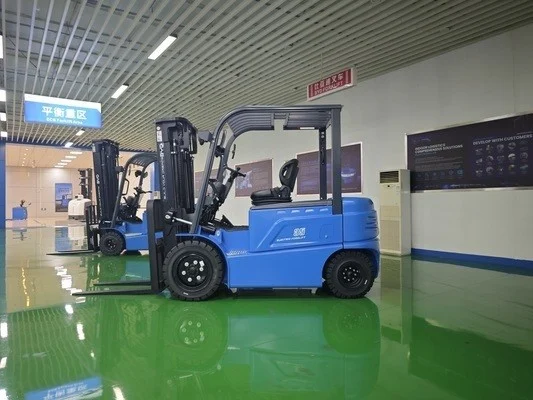
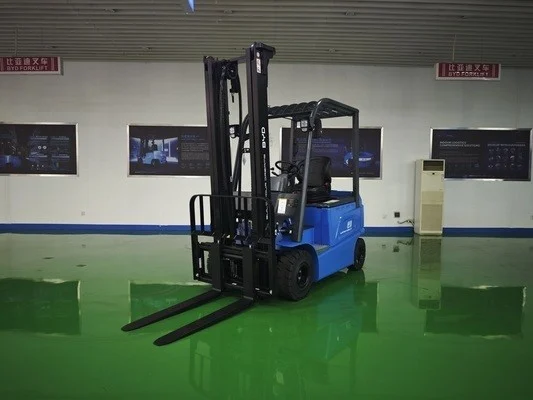
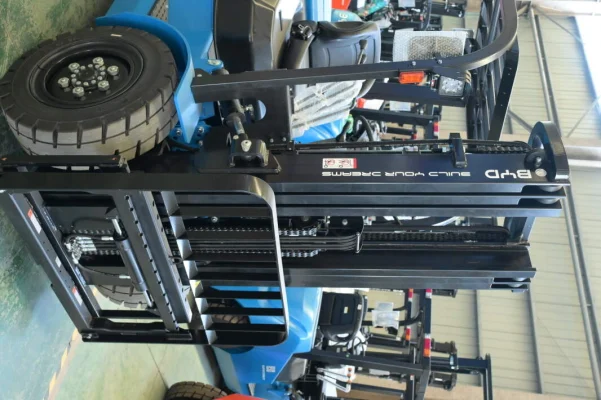
Physical conditions also constrain the plan. Confirm floor capacity and surface condition, aisle width against the truck and load dimensions, doorway and rack clearances, and any ramps or slopes on the route. A four-wheel counterbalance electric forklift is a common general-purpose choice in factories, loading areas, and warehouse transfer work, but suitability still depends on these site details. Where a route includes grades or tight aisles, verify the truck’s rated performance under those conditions with the supplier.
Finally, match the specification to the task: rated capacity at the actual load center, lift height, mast type, and any attachment that shifts the load center. A truck rated at a nominal capacity may carry less when the load center moves forward or an attachment is added. Request written confirmation of capacity at your intended load center and height.
Frequently Asked Questions
How many forklifts does a warehouse need to hit a throughput target?
Divide the required peak-hour moves by the realistic moves one truck completes per hour, then add a margin for breakdowns and demand variation. Use observed cycle times where available. The result is a starting estimate, not a guaranteed figure, because congestion and scheduling affect actual output.
Is opportunity charging enough across three shifts?
It can be, if breaks provide enough usable charging time and the battery and charger support frequent partial charging. Calculate energy consumed per shift against energy returned during breaks. If the gap is large, a swap plan or additional charging capacity may be necessary.
What information should I provide when requesting a forklift configuration?
Share load weight and load center, required lift height, route distance, aisle width, floor and slope conditions, shifts per day, break schedule, and available charging space. These details let the supplier propose a four-wheel counterbalance electric forklift configuration that matches the actual duty cycle rather than a generic model.
Can a larger battery eliminate the need for swapping?
Sometimes, but not automatically. A larger battery adds weight and cost and must still fit the truck and charging plan. Confirm capacity at your load center and the charging time required. If shift length and charging windows still leave a deficit, swapping may remain the practical option.