Electric Forklift Factory RFQ Checklist: Load Center, Lift Height, and Battery Voltage Questions Buyers Should Resolve First
News 07/11/2026
A useful RFQ to an electric forklift factory does more than ask price. It gives the supplier enough data to propose a four-wheel counterbalance electric forklift that fits your loads, aisles, and charging routine. Three items cause the most rework when left vague: load center, lift height, and battery voltage. Resolve them before you send the inquiry, and the quotation you receive will be easier to compare and less likely to change later.
This checklist covers the information a factory needs, the questions to settle internally first, and the points to confirm before you accept a proposal. Where a value depends on your site or on a specific manufacturer’s technical data, confirm it with measurements and the supplier’s documentation rather than assuming a number.
Load Center: The Number That Sets Real Capacity
Rated capacity is tied to a stated load center, the horizontal distance from the vertical face of the forks to the center of gravity of the load. A load whose center of gravity sits farther out reduces the capacity the forklift can safely handle. That is why a truck rated at a given capacity at one load center cannot be assumed to handle the same weight when the load is deeper or the attachment shifts the center of gravity forward.
Questions to answer before the RFQ
- What are the dimensions and weight of your heaviest typical load, not just the average one?
- Where does the center of gravity sit on that load, and does the pallet or packaging change it?
- Will you use any attachment that moves the load forward, and has the supplier confirmed the derated capacity that results?
- Does the load stay stable during transport, or could it shift outward?
If you cannot state the load center precisely, describe the load and ask the factory which load center its capacity rating assumes. Then compare that assumption with your actual handling. A proposal that lists capacity without a load center is incomplete, because the two values only mean something together.
Lift Height, Mast Choice, and Battery Voltage
Lift height affects the mast specification, overall truck height, and what the truck can safely do at the top of the lift. State the height you need to the fork surface, not the height of the rack beam, and note whether you must pass through doorways or under obstructions with the mast lowered.
Lift height details worth stating
- Maximum height you must reach, and the free lift needed to enter racking or a trailer.
- Collapsed mast height and overhead clearance along your travel route.
- Whether you lift at full height while traveling, or only while stationary.
Battery voltage is a system decision, not a standalone number. It interacts with the motor and controller design, charging equipment, and the shift pattern you plan to run. Rather than asking which voltage is best, tell the factory how many hours the truck works per shift, whether opportunity charging is possible, and what charging infrastructure you already have. The supplier can then confirm which configuration its technical documentation supports. Do not assume a voltage from a similar-looking truck elsewhere; confirm it against the factory’s own specification sheet.
| RFQ item | What to provide | Why it matters |
|---|---|---|
| Load center | Load dimensions, weight, center of gravity, any attachment | Determines usable capacity, not just the headline rating |
| Lift height | Required fork height, free lift, collapsed mast height | Drives mast selection and clearance checks |
| Battery voltage | Shift hours, charging plan, existing chargers | Aligns truck configuration with your energy routine |
Other RFQ Details That Prevent Costly Assumptions
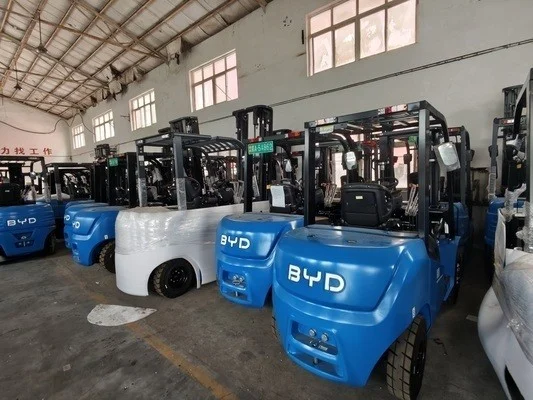
Load center, lift height, and voltage are the first three, but a complete inquiry also covers the operating environment. Aisles, floor condition, and gradients affect whether a four-wheel counterbalance electric forklift suits the site, and they affect tire and chassis choices.
Site and duty information
- Aisle width and turning space, including any tight doorways or rack ends.
- Floor surface and condition, plus any ramps or slopes and their gradient.
- Indoor, outdoor, or mixed use, and whether cold storage or wash-down areas are involved.
- Shift length, number of shifts, and peak handling volume.
Commercial and acceptance points
- Request the specification sheet showing capacity at your stated load center and the mast details.
- Ask which documents accompany delivery, such as manuals and conformity paperwork, and confirm what the factory actually provides.
- Agree on a pre-delivery inspection checklist and who performs it.
- Confirm warranty terms, spare parts availability, and service arrangements in writing.
For a hypothetical example, a buyer moving palletized goods in a warehouse with narrow aisles and a short ramp might describe loads, aisle width, and gradient, then ask the factory to confirm whether a four-wheel counterbalance electric forklift is appropriate and which configuration fits. That framing invites a grounded answer instead of a generic quote. If your operation needs a different truck type, say so; the supplier can tell you whether it is outside its range rather than forcing a poor match.
FAQ
Can I send an RFQ before I know the exact load center?
Yes. Describe your loads and ask the factory which load center its capacity rating assumes. You can refine the figure once you measure the center of gravity, but state clearly that the value is provisional so the proposal is not treated as final.
Should I choose battery voltage before contacting the factory?
You can state a preference, but the better approach is to share shift hours and charging plans. The factory can then confirm which configuration its technical data supports. Choosing a voltage without that context risks a truck that does not match your charging routine.
What if my aisle is too narrow for a four-wheel counterbalance truck?
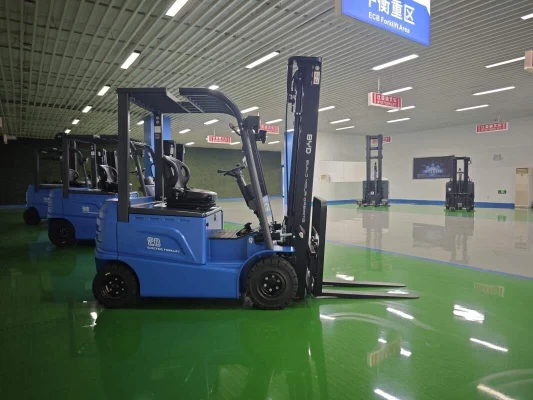
Tell the supplier your measured aisle width and turning requirements. Four-wheel counterbalance trucks suit many general handling tasks, but very tight aisles may call for a different approach. An honest supplier will say when the fit is poor rather than stretch the specification.
Which documents should I request with the quotation?
Ask for the specification sheet tied to your load center and lift height, the mast details, charging equipment information, and the list of documents supplied at delivery. Confirm warranty and service terms in writing, and do not rely on verbal assurances that are absent from the proposal.