Electric Forklift for Sale Near Me: Questions to Settle on Hydraulic Controls, Service Access and Dealer Support Before Buying a Four-Wheel Counterbalance Unit
News 06/11/2026
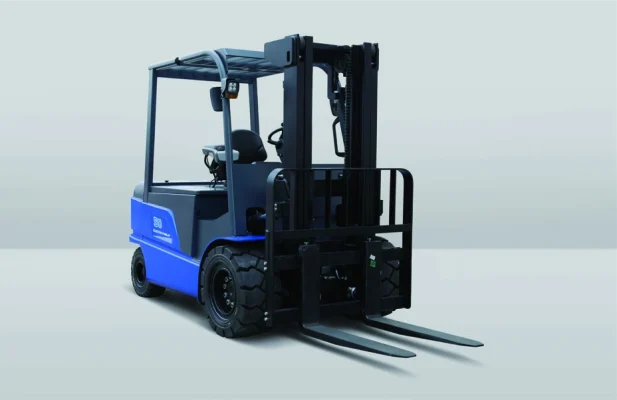
If you are searching an electric forklift near you, the useful first step is not comparing prices but defining what the machine must do and what you must verify before signing. A four-wheel counterbalance electric forklift is a common general-purpose choice in factories, loading areas and warehouse transfers, yet hydraulic controls, service access and dealer support are three areas where a low purchase price can hide higher long-term costs. This guide lists the questions to settle during inquiry, the documents to request and the checks to complete before acceptance, so you can compare offers on equal terms.
Start With Duty, Load and Site Conditions
Before discussing any configuration, write down the real working conditions. Every recommendation on hydraulic controls, battery choice and service layout depends on these numbers, and a dealer cannot quote responsibly without them.
- Rated load and actual load: the heaviest load, including attachments or packaging, not just the average pallet.
- Load center: the distance from the fork face to the load center; capacity changes when the load center moves outward.
- Lift height and mast type: maximum lift height, free lift needs and overhead clearance in doorways or racking.
- Aisle width and turning space: measure the narrowest aisle and doorway the truck must pass.
- Floor and slope: surface condition, ramps and gradients, since these affect both safety and battery drain.
- Shift pattern and charging window: hours per shift, number of shifts and when and where charging can occur.
Provide these figures in writing when you request a quotation. A supplier working from vague descriptions may propose a model that fits the price target but not the duty cycle, and correcting that later is expensive.
Hydraulic Controls: Ask About Operation, Not Just Features
Hydraulic controls determine how precisely the operator can position loads and how much fatigue builds over a shift. Rather than accepting a feature list, ask which lever or joystick arrangement is supplied, how the controls are adjusted and what maintenance they require.
Questions to put to the supplier
- Which hydraulic control arrangement is standard on the quoted model, and is an alternative available?
- How are lift, lower, tilt and auxiliary functions assigned, and can the assignment be adjusted on site?
- What does the operator manual say about daily checks on hydraulic oil level, hoses and cylinders?
- Which hydraulic oil grade and service interval does the manufacturer specify?
- Are there restrictions on attachments that change hydraulic demand?
Ask to see the relevant pages of the manufacturer’s technical documentation rather than relying on verbal descriptions. If a feature is described as improved or faster, ask what it is compared with and under which test conditions; without that context, treat the claim as marketing language and not as a specification.
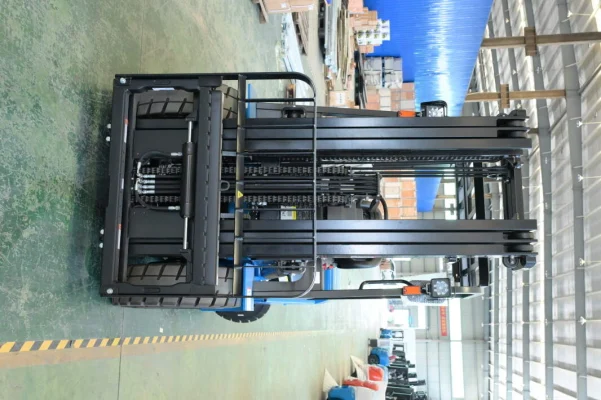
During a demonstration, have your own operator try the controls with a representative load. Smooth modulation matters more than the number of levers, and a control layout that suits one operator may slow another. Record any concerns and ask how they would be resolved before delivery.
Service Access and Maintenance Planning
Service access is the difference between routine checks that take minutes and repairs that take a truck out of service. Walk around the quoted unit, or an equivalent model, and look at how easily the following can be reached:
- Hydraulic oil reservoir, filter and level indicator
- Drive and hydraulic motors, plus grease points
- Battery compartment and charging connection
- Controller area, fuses and diagnostic port
- Brake and steering components
Confirm whether the supplier’s service technicians can perform diagnostics on site and which tools or software are needed. Ask how fault codes are read and whether your own staff can access basic diagnostic information. Also request the planned maintenance schedule and the consumables list, so you can estimate routine upkeep without guessing at prices.
Battery and charging considerations
If the offer includes a lithium battery, ask which charger is supplied, what charging power is available at your site and where the truck will be parked while charging. Confirm the manufacturer’s stated operating temperature range and any restrictions on opportunity charging. These details belong in the quotation, not in a later conversation.
Dealer Support and What to Verify Before Acceptance
Dealer support is difficult to judge from a brochure. Ask direct questions and request answers in writing, because the quality of support after delivery often matters more than the initial discount.
| Area | What to request |
|---|---|
| Delivery and commissioning | Delivery date, who performs commissioning, and what operator familiarization is included |
| Warranty | Written warranty terms, covered components, exclusions and the claim process |
| Parts | Availability of common wear parts and the stated lead time |
| Service response | Service area coverage, response arrangements and labor rates |
| Documentation | Operator manual, maintenance schedule and the technical data sheet matching the quoted unit |
At acceptance, check that the delivered model, battery, charger and attachments match the quotation and the technical data sheet. Confirm the rated capacity plate is present and legible, test the hydraulic functions through their full range without a load, and then with a representative load where safe to do so. Record any defects and agree a resolution date before final payment.
If you are considering a four-wheel counterbalance electric forklift from this site, share your load, lift height, aisle and charging details so the selection and configuration can be matched to your actual work rather than to a generic specification.
Frequently Asked Questions
Can a dealer quote accurately without my load and lift height?
Not reliably. Rated capacity depends on load center and lift height, so a quotation without these figures may describe a truck that is unsuitable once the real load is applied. Supply the heaviest load, its center and the maximum lift height before requesting a price.
Should I choose a lithium battery or a lead-acid battery?
The right choice depends on shift length, charging windows, available charging power and where the truck will be parked. Ask the supplier to state the manufacturer’s charging recommendations and temperature limits, then compare those with your operating pattern. Do not assume one chemistry suits every site.
What should I check during a demonstration?
Have your own operator handle a representative load and test hydraulic modulation, visibility with the mast raised, steering in the narrowest aisle and comfort over a full shift. Note any concerns and ask how they would be addressed before delivery.
Which documents should accompany the quotation?
Ask for the technical data sheet matching the quoted model, warranty terms, the maintenance schedule, the operator manual and a list of included attachments and charger. These documents let you compare offers on the same basis and verify the delivered unit at acceptance.