Evaluating BYD Electric Forklift Lithium Iron Phosphate Battery Performance Across Indoor Industrial Material Handling Applications
News 07/10/2026
Indoor industrial material handling places unique demands on forklift power sources. Confined spaces, consistent daily operation cycles, strict emissions rules, and weight capacity requirements make battery performance a critical evaluation point when choosing equipment. This guide covers core performance traits of BYD electric forklift lithium iron phosphate (LFP) batteries across common indoor use cases, plus practical selection advice and known limitations.
Core Performance Traits of BYD LFP Batteries in Indoor Use
Energy Density & Daily Run Time
BYD’s LFP battery packs integrate directly into electric forklift chassis designs. Most models deliver full shift operation on a single charge, matching typical 8-hour work cycles common in warehouses, distribution centers, and manufacturing facilities. LFP chemistry avoids cobalt, which reduces overall battery pack weight compared to many alternative lithium chemistries, while still supporting consistent power output under load.
Thermal Stability In Controlled Indoor Environments
Indoor spaces rarely expose batteries to extreme outdoor temperature swings. BYD LFP chemistry offers inherently high thermal stability, reducing risk of thermal runaway in enclosed spaces. This trait aligns well with indoor environmental control standards many facilities maintain. Unlike lead-acid batteries, LFP units do not release harmful gas during charging, which simplifies charging placement inside indoor facilities without dedicated ventilation infrastructure.
Cycle Life & Maintenance Requirements
LFP chemistry supports thousands of full charge-discharge cycles before capacity drops below 80% of original rating. BYD packages these batteries with integrated battery management systems (BMS) that regulate charge voltage and cell balance, extending usable service life. LFP batteries require none of the regular water top-ups lead-acid designs demand, cutting routine maintenance time and associated labor costs.
Performance Across Common Indoor Application Scenarios
Warehouse Order Picking & Storage Operations
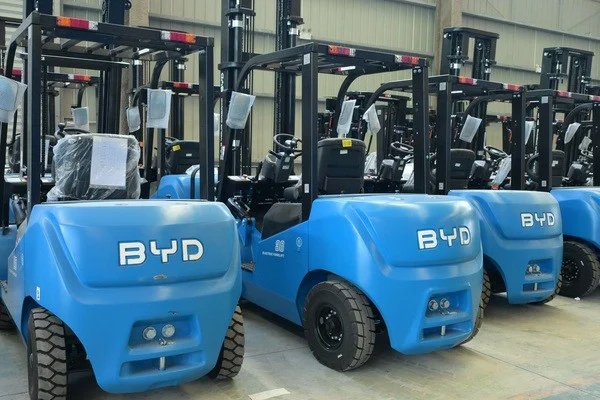
High-frequency stop-start operation defines most warehouse order picking work. BYD LFP batteries support fast opportunity charging during short breaks, which lets facilities extend operation without full, multi-hour shutdowns needed when swapping batteries. Low center of gravity from under-chassis battery placement improves forklift stability when lifting loads to high rack levels, a key safety benefit within narrow aisle warehouse layouts.
Manufacturing Line Material Feeding
Manufacturing lines require consistent, reliable power to avoid costly production stops. BYD electric forklifts with LFP batteries deliver steady torque across varying load weights, matching the frequent load changes common in feeding raw materials or moving finished components along indoor production lines. Zero tailpipe emissions also align with clean production requirements industries like food and pharmaceuticals enforce within indoor work zones.
Cold Storage Indoor Facilities
Cold storage represents a demanding indoor environment with sub-zero operating temperatures. LFP chemistry does experience reduced power output at temperatures below freezing, but BYD’s BMS often includes optional pre-heating functionality that brings cells to optimal operating temperature before use. This addresses most performance drops in typical cold storage settings, though extreme sub-zero (-20°F and below) environments may require additional insulation or specialized battery configurations.
Key Limitations To Consider
No power source fits all indoor material handling needs, and BYD LFP-powered electric forklifts carry specific limitations:
- Higher upfront equipment cost compared to lead-acid powered electric forklifts. Total cost of ownership may balance out over time, but initial capital outlay creates a barrier smaller operations face.
- Performance drops in extreme cold without pre-heating, which adds additional cost to the system when used in cold storage settings.
- Third-party replacement battery costs remain high, though most BYD LFP batteries include multi-year warranties covering capacity degradation.
Actionable Selection Guidance
When evaluating a BYD electric forklift with LFP battery suited to your indoor operation, follow these steps:
- Map your daily operation cycle length and break times to confirm opportunity charging can support your work schedule, if you do not plan to install dedicated overnight charging infrastructure.
- Measure your facility temperature ranges across all work zones to confirm whether optional pre-heating meets your needs.
- Calculate your annual maintenance labor cost associated with existing lead-acid batteries to compare total long-term cost against the higher upfront price of BYD LFP-powered models.
- Test equipment in your actual work environment during a full shift before committing to large fleet purchases, to verify performance matches your specific load and operation requirements.
Frequently Asked Questions
Are BYD electric forklift LFP batteries safe in enclosed indoor spaces?
BYD LFP batteries offer inherently higher thermal stability than many other lithium chemistries, and they produce no emissions during operation or charging. This makes them a safe option suited to most enclosed indoor material handling work zones.
Can BYD electric forklifts operate multiple shifts within indoor facilities?
With opportunity charging during employee breaks, most BYD electric forklifts with LFP batteries can support two 8-hour shifts after a single full overnight charge. Check specific model capacity ratings to confirm alignment with your operation’s shift length and load requirements.
Do BYD LFP batteries require specialized charging equipment?
BYD typically provides matching charging equipment with new LFP-powered forklift purchases. Most units work with standard facility electrical inputs common in industrial indoor settings, though high-capacity fast chargers may require upgraded electrical service.
How does LFP battery performance compare to lead-acid in indoor applications?
LFP batteries deliver longer service life, lower maintenance needs, and faster charging than lead-acid batteries. They also produce no emissions, making them easier to accommodate in enclosed indoor spaces. Upfront cost is higher than lead-acid powered alternatives, however.
Evaluating BYD electric forklift LFP battery performance requires matching core traits to your specific indoor material handling needs. Most standard indoor applications like warehousing, manufacturing, and moderate cold storage benefit from reliable, low-maintenance performance BYD LFP batteries deliver, supporting consistent daily operation. Always account for upfront cost and environmental limitations like extreme cold before finalizing your equipment selection.