Evaluating Counterbalance Forklift Power Options Based On Your Operational Site Constraints
News 05/10/2026
Counterbalance forklifts remain one of the most widely used pieces of equipment in material handling. Their design allows them to handle heavy loads without front outriggers, which makes them ideal for many work environments. However, the power source you choose directly depends on your site specific constraints. A wrong choice can lead to compliance issues, reduced productivity, higher operating costs, or even safety hazards. This guide breaks down common power options, maps them to typical site constraints, and helps you make an informed decision.
Key Site Constraints That Impact Power Source Selection
Before you review power options, document all core constraints your site presents. These are the most common factors that shape your final choice.
Indoor Versus Outdoor Operation
Ventilation is the top concern when operating inside enclosed spaces. Internal combustion engines produce exhaust fumes that build up quickly in areas without open air flow. Outdoor sites rarely face this issue, but they often face rough terrain, moisture, and variable temperature conditions that impact battery performance.
Fuel Or Charging Infrastructure Availability
Each power source requires dedicated space and infrastructure. Electric models need charging stations, adequate grid capacity, and separate space to store and charge spare batteries. Combustion models need secure, compliant storage space for fuel. Many urban or small sites lack extra space for these requirements, which narrows your options immediately.
Footprint And Maneuvering Space
Different power sources change the overall size and weight of your counterbalance forklift. Larger battery packs or fuel tanks add length or width to the chassis, which can make the unit too big for narrow aisles common in many modern warehouses.
Common Counterbalance Forklift Power Options Explained
Three main power options dominate the market today. Each has distinct advantages and limitations that align with different site constraints.
Battery-Electric Power
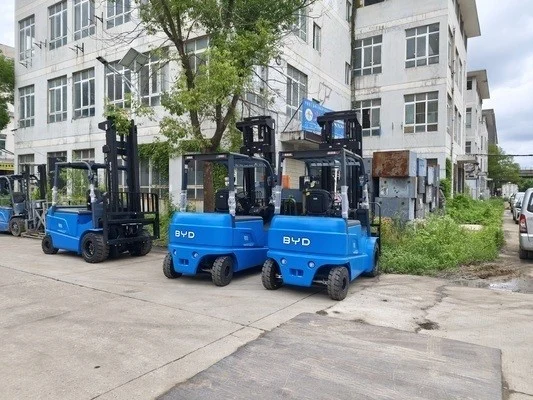
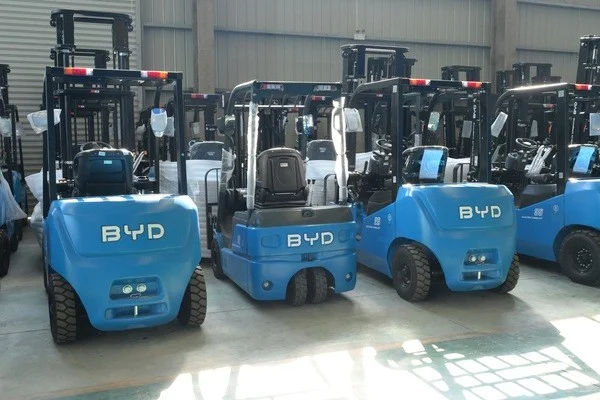
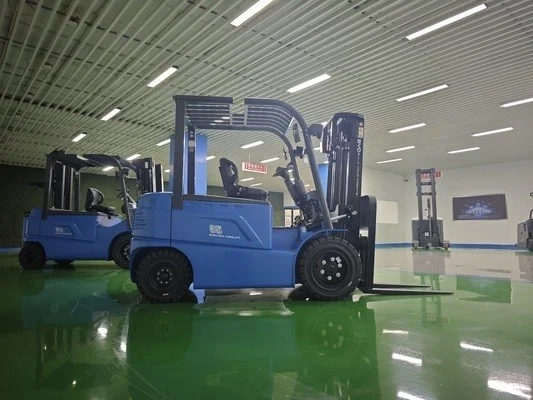
Battery-electric counterbalance forklifts run on either lead-acid or lithium-ion batteries. They produce zero on-board emissions and operate at much lower noise levels than combustion options. These features make them well suited to indoor enclosed spaces with limited ventilation.
Key limitations include infrastructure requirements. You need dedicated charging space and enough grid capacity to support regular charging. Lead-acid batteries require 8 to 12 hours to fully charge, plus additional cool down time, so most operations need spare batteries to run multiple shifts. Lithium-ion batteries charge faster and last longer, but carry a higher upfront cost. Cold temperatures also reduce battery output, so unheated outdoor sites in cold climates see reduced run times.
Diesel Internal Combustion Power
Diesel counterbalance forklifts deliver high torque and can handle the heaviest load capacities common in heavy industry and outdoor yards. They operate for long stretches without refueling, and refueling takes just a few minutes. This makes them ideal for high-volume outdoor operations.
The main limitation is exhaust emissions. Diesel engines produce high levels of pollutants, so you cannot use them inside enclosed spaces without extremely powerful, costly ventilation that meets regulatory requirements. They also produce more noise than electric models, and require secure, compliant storage for bulk diesel fuel. Many regions enforce strict emissions standards that restrict or ban older diesel models in populated areas.
Liquefied Petroleum Gas (LPG) Power
LPG counterbalance forklifts offer a middle ground between electric and diesel options. They produce lower emissions than diesel, and refueling just involves swapping out a portable gas cylinder, which takes less than five minutes. This makes them suitable for mixed operations that move between indoor and outdoor spaces, as long as the indoor area has adequate ventilation.
Key limitations relate to storage and safety. You need dedicated, regulated space to store full and empty LPG cylinders. Local codes often limit the number of cylinders you can keep on site, which can restrict multi-shift operations. LPG also delivers less torque than diesel, so it does not work well with the highest load capacities common in heavy outdoor yards.
Matching Power Options To Common Site Constraint Scenarios
These real-world common scenarios show how matching works in practice:
Scenario 1: Small Indoor Warehouse With Narrow Aisles
The site has limited ventilation, no extra space for fuel storage, and aisles that only fit compact forklifts. The best choice here is a compact battery-electric counterbalance forklift with a lithium-ion battery. Lithium batteries fit into smaller compartments than lead-acid, so the overall chassis stays narrow enough for tight aisles. You only need one small charging station, which fits into a corner of the facility. This aligns with all site constraints.
Scenario 2: Open Outdoor Construction Supply Yard With Heavy Loads
The site has plenty of open space, no enclosed work areas, handles 20,000+ pound loads, and operates across multiple shifts. The best choice here is a diesel counterbalance forklift. It delivers enough torque to handle heavy loads, operates through long shifts with quick refueling, and emissions dissipate quickly in open air. You only need a compliant, locked diesel storage tank, which fits along the edge of the yard.
Scenario 3: Mixed Loading Operation That Moves Between Outdoor Yards And Enclosed Distribution Bays
The site sees daily movement of goods from outdoor trucks to indoor storage bays, has high daily volume, and has adequate ventilation in the indoor bays. The best choice here is an LPG counterbalance forklift. It produces low enough emissions for indoor use with proper ventilation, refuels quickly to support high volume, and handles the varied terrain of both indoor and outdoor spaces. You just need a small, regulated storage cage for a few spare cylinders, which fits in a back corner of the facility.
Frequently Asked Questions
What weight capacity changes come with different counterbalance forklift power sources?
Generally, diesel and LPG counterbalance forklifts support higher maximum weight capacities than most standard electric models. High-capacity electric options exist, but they require larger battery compartments and heavier chassis, which increases overall footprint. This means high-capacity electric models only work in sites with enough aisle space to accommodate the larger size.
Can I convert an existing counterbalance forklift from one power source to another?
Most full conversions are not cost-effective or structurally safe. Power sources require custom chassis, fuel delivery or wiring systems, and counterweight configurations that do not align across different types. Minor upgrades like swapping lead-acid batteries for lithium count as component upgrades, not full power source conversion, and are possible in many cases.
Do local regulations restrict counterbalance forklift power source use?
Many regions enforce emissions rules that ban internal combustion engines inside enclosed commercial spaces. Some locations also limit on-site storage of flammable fuels like LPG or diesel, which impacts which power options you can legally use. Always check local occupational safety and environmental regulations before finalizing your selection.
Final Selection Steps
Start by listing all your site constraints first, before you compare power options. Document ventilation access, available space for infrastructure, load capacity needs, and daily operating hours. Cross reference each constraint against the advantages and limitations of each power source, then narrow your options down to two or three that meet all requirements. Also factor in long-term operating costs: electric models have lower maintenance costs over time, while LPG and diesel models often have lower upfront costs. This process ensures you select a power source that works within your site constraints and supports your operational needs long term.