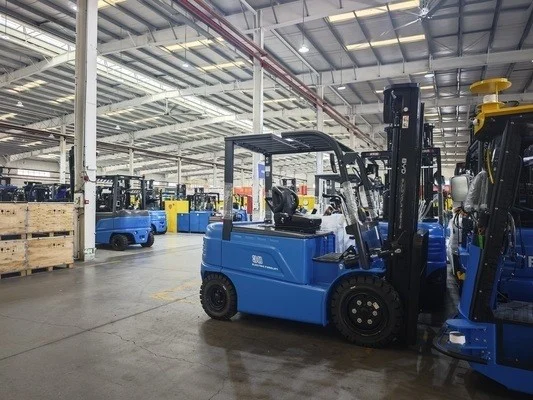
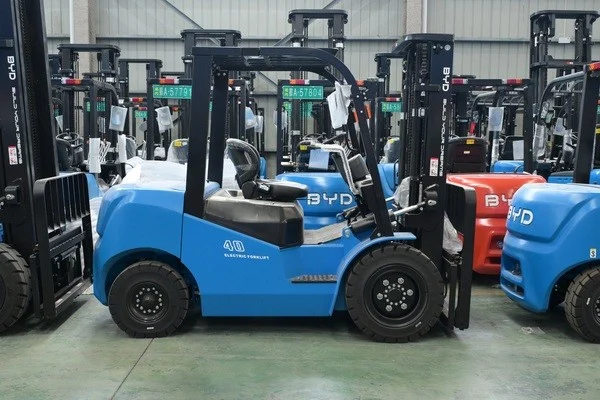
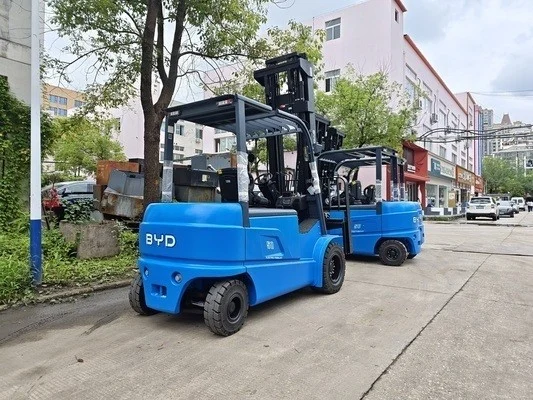
Food Industry Electric Forklift Procurement: Load Chart and Attachment Derating Checks on Four-Wheel Counterbalance Models
News 22/10/2026
When sourcing powered lifting equipment in food industry, two technical checks prevent costly capacity mismatches and safety issues. This guide focuses on four-wheel counterbalance electric forklift, the common general purpose option suited to most factory, warehouse and loading dock operations in food sector. We walk through core checks every procurement team must complete before finalizing specification.
Load Chart Interpretation: What You Need To Confirm
A four-wheel counterbalance electric forklift load chart outlines maximum lifting capacity across two key variables: lift height and load center. Many procurement teams only check base maximum capacity listed on the unit specification, but this value only applies under standard test conditions. Standard conditions use a 500mm or 600mm load center, depending on manufacturer design. If your actual load center sits further forward than this standard value, maximum safe capacity drops immediately.
- Non-standard pallet sizes used in bulk food storage
- Stacked loads that extend beyond the standard load center distance
- Over-sized crates or containers supporting bulk ingredient transport
Always cross reference your actual load dimensions against the load chart. Match your maximum planned lift height to the corresponding capacity value, do not use the base ground-level capacity in your planning. This step ensures your selected unit can handle all daily lifting tasks without exceeding safe operating limits.
Attachment Derating: Critical Verification Supporting Food Handling Operations
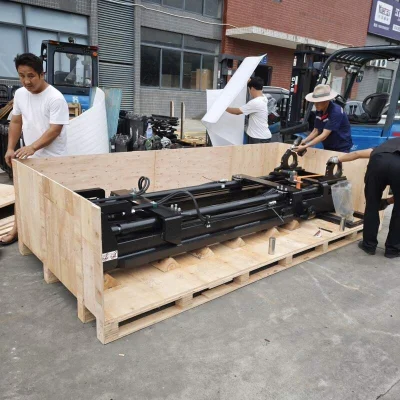
Food handling operations often require specialized attachments to handle different load types. Common attachments include side shifters, fork positioners, clamp attachments and rotators. Every attachment adds extra weight to the front of the forklift, and shifts the combined load center forward. This change requires capacity derating, an adjustment to the maximum safe lifting capacity the unit can handle.
Derating values vary based on attachment type and weight. A heavy-duty clamp attachment brings a larger capacity reduction than a lightweight side shifter. Many generic procurement resources overlook this step, leading to units that cannot handle rated loads after attachment installation.
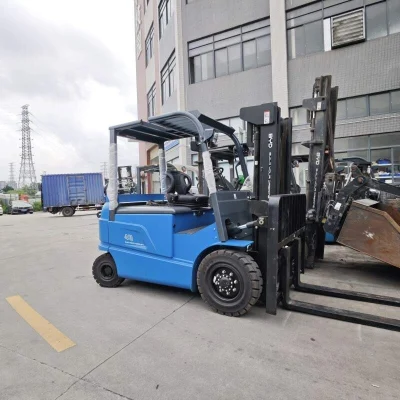
When working with BYD four-wheel counterbalance electric forklift, official specification documents include derating values across all manufacturer approved attachments. You must confirm the final capacity after adding your required attachment before finalizing your purchase order. Never assume base capacity remains unchanged after adding any attachment.
Operations that swap multiple attachments across daily tasks need confirmation of the lowest capacity value across all attachment configurations. Your unit must meet your highest load requirement even with the attachment that creates the largest derating.
Frequently Asked Questions
Do all attachments cause capacity derating?
Nearly all attachments add extra front-end weight, so almost all require some level of capacity reduction. Only very small, low-weight accessories may bring negligible changes that do not affect safe operation. Always check official manufacturer documentation to confirm derating values regardless of attachment size.
What risks come from skipping these checks?
Skipping load chart and derating checks creates two main issues. First, overloading the unit reduces component service life and increases risk of catastrophic load drop, which endangers worker safety and damages product inventory. Second, an under-capacity unit cannot complete required tasks, forcing costly early replacement or modification that eats into operational budget.
How can I get correct derating data matching my operation needs?
Share your specific load dimensions, required attachments and operational layout with our team. We can pull official manufacturer derating data matching your selected BYD four-wheel counterbalance electric forklift, and help you confirm correct capacity before you place your order.
Once you complete these two technical checks, your team moves closer to a procurement decision that matches your food operation needs. Share your full set of operational requirements with our team today to get tailored specification support.