Specifying Fork Dimensions and Hydraulic Attachment Compatibility When Ordering a Four-Wheel Counterbalance Electric Forklift
News 23/10/2026
When purchasing an electrical forklift (specifically four-wheel counterbalance electric forklift, our core offering), matching fork dimensions and hydraulic attachment compatibility to your daily operation needs prevents costly downtime, safety issues, and unnecessary reconfiguration after delivery.
Industry Context: General Manufacturing Loading & Unloading
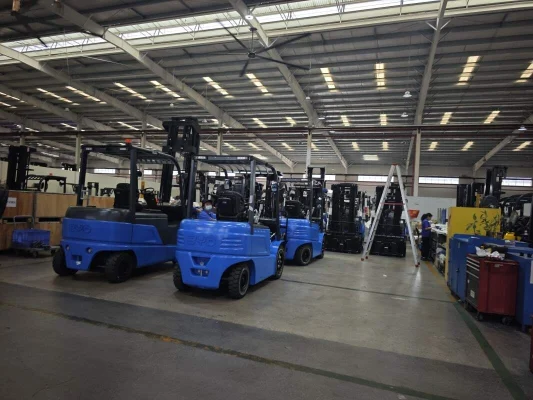
General manufacturing facilities handle mixed loads: standard pallets, oversized raw materials, and custom-processed components. Variable load sizes require correctly specified forks and compatible hydraulic attachments to keep operations efficient. This guide aligns all guidance to our offered BYD four-wheel counterbalance electric forklifts, covering key checks you must complete before placing your order.
Core Fork Dimension Specifications You Must Confirm
Fork dimensions directly impact load stability, pallet access, and overall forklift safety. Below are key dimensions and their relevance to daily general manufacturing operations:
Fork Length
Fork length determines how much of your load or pallet gets support from the fork. Too short leads to uneven weight distribution, increasing tip-over risk. Too long increases risk of striking other loads, racking, or facility structures when entering or exiting loading areas.
When ordering, measure the full depth of your most commonly used pallets. Fork length must cover at least two-thirds of the pallet depth to distribute weight properly. Always ask your supplier to confirm how different fork lengths adjust the forklift’s rated load capacity, as longer forks shift the effective load center.
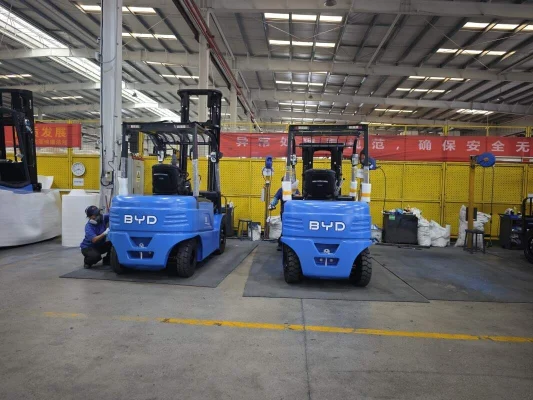
Fork Width and Thickness
Fork width controls contact area with your load, and thickness determines the fork’s bending resistance. Narrow, thin forks work well for small pallet openings but may bend under heavy repeated loads. Wide, thick forks add stability but cannot fit through narrow openings on smaller pallets.
Before ordering, measure the internal width and height of your pallet’s fork openings. Confirm the selected fork dimensions leave enough clearance for smooth insertion and removal. Also confirm the fork’s load rating matches your maximum expected operating load.
Hydraulic Attachment Compatibility Checks
Many general manufacturing operations require hydraulic attachments like side shifters or fork positioners to handle varying load sizes. Compatibility issues leave your new forklift unable to use your chosen attachment, requiring expensive modifications after delivery. Key checks include:
- Hydraulic System Output: Each hydraulic attachment requires specific flow and pressure levels to operate correctly. Mismatched specs lead to slow attachment movement, damage to hydraulic seals, or total failure to function.
- Carriage Mounting Interface: Attachments connect to the forklift’s front carriage. Mismatched hole spacing or carriage size prevents secure mounting, even if the hydraulic system matches.
- Adjusted Load Capacity: Adding any hydraulic attachment shifts the load center forward, reducing the forklift’s maximum safe load capacity. This adjustment varies based on attachment type and forklift model.
| Specification | Potential Operational Risk | Required Confirmation Item | Configuration Type |
|---|---|---|---|
| Fork Length | Load instability or pallet damage | Confirm alignment with your most common pallet depth | Standard or optional based on order request |
| Fork Width/Thickness | Fork jams or bends under load | Match to your pallet opening dimensions | Customizable per order |
| Hydraulic Flow & Pressure | Attachment failure or hydraulic system damage | Match system output to attachment requirements | Factory configured per order |
| Carriage Mounting Interface | Attachment cannot be installed | Confirm mounting dimension alignment | Matched by factory on request |
| Attachment Adjusted Load Capacity | Unintended overloading and safety risks | Get written confirmation from your supplier | Dependent on forklift and attachment model |
Common Configuration Tradeoffs and Limits
When selecting your fork and attachment configurations, you need to balance your needs against practical limits. Common tradeoffs include:
- Longer forks improve load coverage for large pallets, but reduce the maximum safe load the forklift can handle.
- Wider forks add stability for heavy loads, but cannot fit narrow fork openings on smaller standard pallets.
- Higher capacity hydraulic systems support a wider range of attachments, but add upfront cost to your order.
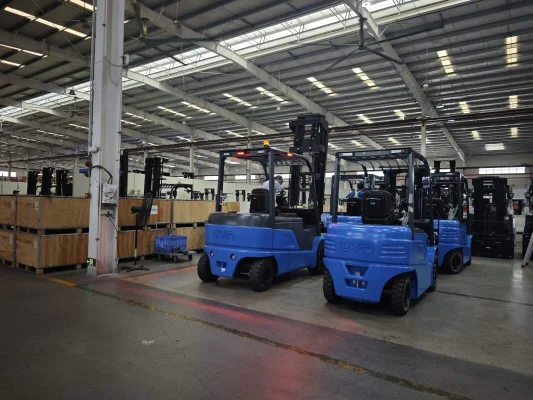
BYD four-wheel counterbalance electric forklifts support a wide range of custom fork and hydraulic attachment configurations, but all options must align with the base model’s core design limits. No configuration can exceed the base forklift’s overall design rating for safety and performance.
Frequently Asked Questions
Can I reuse existing forks from an old forklift on my new four-wheel counterbalance electric forklift?
Reuse works only if your old forks match the new forklift’s carriage mounting dimensions, weight rating, and interface requirements. You must get all specs verified by your supplier before installation to avoid avoidable safety risks.
Do all four-wheel counterbalance electric forklifts work with any hydraulic attachment?
No. Compatibility depends on the base forklift’s hydraulic system output, carriage size, and overall load rating. Most attachments require custom factory configuration before delivery to ensure proper function.
What details should I share with my supplier to get correctly matched configurations?
You should share your maximum common operating load weight, dimensions of your most frequently used pallets, types of attachments you intend to use, and your daily operation shift pattern. This information helps your supplier align all configurations to your actual needs.
Before finalizing your order, share your specific facility and operation details with our team. We help you confirm all fork dimensions and hydraulic attachment compatibility match your needs, ensuring your new BYD four-wheel counterbalance electric forklift works as expected from day one.