Identify Key Forklift Types With Pictures: Visual Overview of Core Design Traits and Suitable Application Scenarios That Inform Industrial Buying Decisions
News 08/10/2026
Choosing the right forklift depends on matching design features to your worksite needs. Visual references help buyers quickly distinguish between common models, so this guide breaks down core types, key design traits, ideal applications, and critical limits each model brings to your operation.
Common Core Forklift Types: Design Traits and Ideal Applications
Counterbalance Forklift
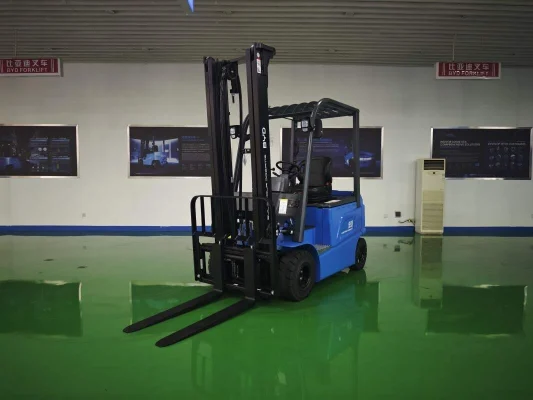
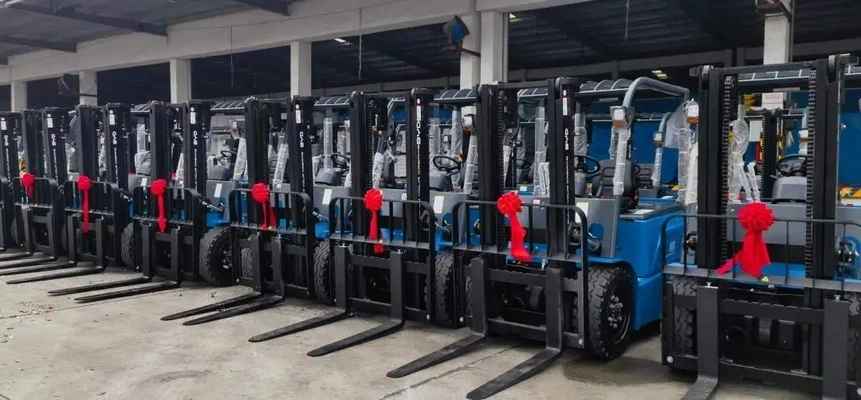
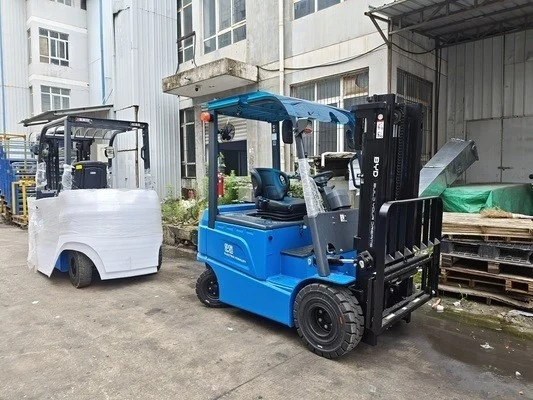
Counterbalance models remain the most widely used forklift in most industrial operations. Its core design places a heavy counterweight at the rear of the machine. This counterweight offsets weight placed on front forks, eliminating need for extended support legs out front.
Key visual traits include a straight front frame, no outriggers, and forks mounted directly to the front of the chassis. Most models sit low to the ground, and operators sit facing forward in an enclosed or open cabin.
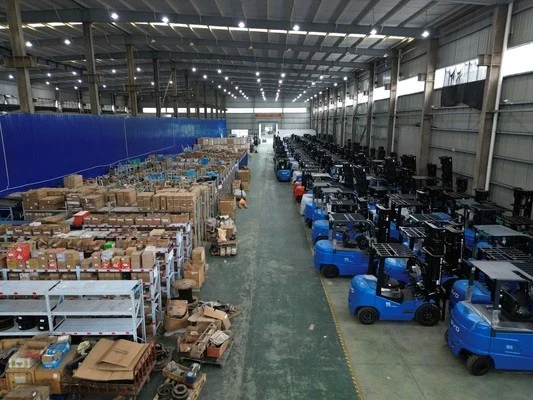
Ideal application scenarios include outdoor paved yards, indoor warehouse storage areas with wide aisles, and loading/unloading trucks and shipping containers. Three-wheel counterbalance variants fit tighter indoor spaces than four-wheel models, while four-wheel units handle heavier load capacities.
Key limits: Wide turning radius makes these models poor fit for very narrow aisle storage. They cannot handle uneven terrain well unless modified with heavy-duty tires and suspension.
Reach Truck
Reach trucks are built specifically for high-bay warehouse storage. Its extended reaching mast lets operators access pallets stored far above ground level. The “reach” comes from an extendable carriage that moves forks forward into storage racks without moving the entire machine.
Key visual traits include outrigger legs along the front base, a tall telescoping mast, and a compact chassis. Most reach trucks sit on small solid tires built for smooth indoor concrete floors. Operators often stand during operation, though some sit-down variants exist for longer shifts.
Ideal application scenarios include narrow aisle warehouses with racking up to 30+ feet high, order picking operations, and high-density storage facilities. Their compact size lets them maneuver in aisles less than 10 feet wide, something counterbalance models cannot do.
Key limits: Not designed for outdoor use on uneven ground. Lower overall load capacity compared to counterbalance models, and cannot load/unload transport trucks as efficiently.
Pallet Jack
Pallet jacks (also called pallet trucks) are the simplest low-capacity material handling solution. They lift pallets only a few inches off the ground, so they move loads over flat surfaces rather than stacking them high.
Key visual traits include two long forks that slide under pallets, a hydraulic lifting handle, and no enclosed cabin. Manual variants use human power to lift and move, while powered variants use an electric motor for movement and lifting.
Ideal application scenarios include moving pallets short distances around warehouses, loading delivery vans, and transporting goods from storage to packing areas. Manual pallet jacks work well for small operations with limited budget, while powered versions handle heavier loads over longer distances.
Key limits: Cannot lift loads to high storage levels. Not suited for uneven ground or long-distance travel across large facilities.
Rough Terrain Forklift
Rough terrain forklifts are built for unimproved worksites. Their heavy-duty design handles uneven, muddy, or sloped ground common construction and outdoor storage sites.
Key visual traits include large, deep-treaded pneumatic tires, high ground clearance, a powerful diesel engine, and often a rigid frame with four-wheel drive. Many models also have optional boom attachments that extend reach beyond standard forks.
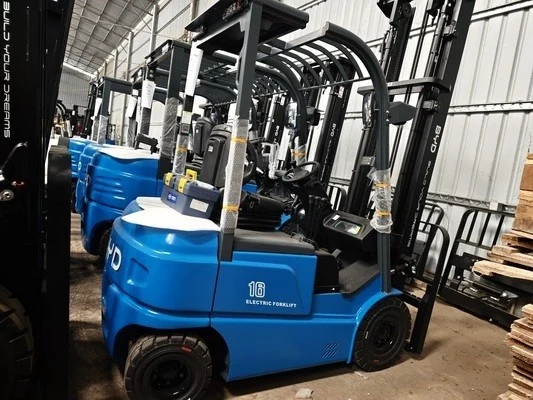
Ideal application scenarios include construction sites, lumber yards, outdoor storage of bulk materials, agricultural operations, and unimproved work sites without paved surfaces.
Key limits: Too large and rough on floors for indoor warehouse use. Poor maneuverability in tight spaces, and higher fuel and maintenance costs compared to indoor electric models.
Order Picker
Order pickers are specialized forklifts built to lift both the load and the operator to picking height. Instead of lifting just the forks, the entire operator platform raises alongside the load to let workers grab items directly from high storage racks.
Key visual traits include a raised platform that moves up and down with the mast, forks mounted low on the carriage, and controls mounted on the platform let the operator adjust position while elevated.
Ideal application scenarios include e-commerce fulfillment centers, piece-picking operations in high-bay warehouses, and inventory management tasks that require worker access to high storage levels.
Key limits: Lower load capacity than other forklift types, only designed for indoor smooth surfaces, and cannot handle full-pallet lifting to high racks as efficiently as reach trucks.
Key Selection Criteria To Inform Your Buying Decision
After you match visual design traits to your worksite, use these core criteria narrow your choice:
- Worksite surface: Paved indoor spaces work well with electric pallet jacks, reach trucks, or counterbalance models. Unpaved outdoor sites require rough terrain models.
- Aisle width: Narrow aisles under 11 feet need reach trucks or order pickers, while wide aisles support larger counterbalance and rough terrain models.
- Maximum lift height: High-bay storage over 20 feet requires reach trucks or order pickers, while low-level transport only needs pallet jacks.
- Load capacity: Heavy loads over 5,000 pounds need four-wheel counterbalance or rough terrain models, while lighter loads work with smaller electric units.
Frequently Asked Questions
What is the most common forklift type used in warehouses?
Counterbalance and reach trucks are the most common forklift types in traditional warehouses. Counterbalance models handle loading and unloading transport vehicles, while reach trucks manage high-density storage in narrow aisles.
Can I use a rough terrain forklift indoors?
Most rough terrain forklifts run on diesel fuel, which creates harmful emissions inside enclosed indoor spaces. Their large heavy tires also damage smooth concrete warehouse floors, so they are not recommended for regular indoor use.
Do I need special certification operate any forklift type?
Most regions require all workers operating powered industrial forklifts complete formal certification and training. Check local occupational safety regulations confirm requirements within your area.
What separates a reach truck from a counterbalance forklift?
Reach trucks have extending masts and outrigger legs built for narrow aisle high lift storage, while counterbalance models use a rear counterweight offset load weight. Counterbalance models handle heavier loads and outdoor loading better, while reach trucks fit tighter spaces and reach higher storage levels.
Final Selection Takeaways
Visual identification of forklift types lets you quickly narrow options that match your worksite needs. Start by documenting your worksite conditions, maximum load size, lift height, and aisle width before you compare models. Match core design traits to your requirements, and prioritize models designed specifically your use case avoid unnecessary maintenance or operational issues.