Indoor Electric Forklift Battery Thermal Management: Questions Buyers Should Ask About Lithium-Ion Packs in Multi-Shift Four-Wheel Counterbalance Operations
News 06/11/2026
Heat is the quiet constraint in multi-shift indoor work. A lithium-ion pack that performs well on a single shift may behave differently when a four-wheel counterbalance electric forklift runs back-to-back shifts in a warm, enclosed space with limited charging windows. Buyers who ask the right thermal questions before ordering avoid surprises later. This procurement guide lists the questions worth putting to a supplier, the documents to request, and the points to verify at acceptance. It does not quote temperatures, charge rates, or cycle figures; those must come from the manufacturer’s technical data sheet applied to your actual duty cycle.
Questions to Raise Before You Request a Quote
Start with the operating environment and the work pattern, because thermal behavior depends on both. An indoor electric forklift often works in still air, near heat sources, or in areas where ventilation is fixed. Multi-shift use compresses the time available to charge and cool. Describe these conditions in writing when you ask a supplier to propose a configuration.
Duty cycle and ambient conditions
- How many hours per shift, and how many shifts per day, will the truck actually run?
- What is the measured ambient temperature range in the working area, including summer peaks near doors, ovens, or roof glazing?
- Are there hot spots where the truck idles or parks, such as near shrink-wrap equipment or charging areas?
- What is the floor surface, and are there ramps or gradients that raise motor and controller load?
- How much of the shift involves lifting near rated capacity, which increases current draw?
Charging and parking arrangement
Ask where charging will take place, whether that area is ventilated, and whether the truck can cool between shifts. Confirm whether opportunity charging is intended, and how many trucks share each charger. A supplier needs these facts to advise on pack configuration and charging routine; without them, any thermal recommendation is guesswork.
Pack and battery management details
Request the battery management system (BMS) description: which parameters it monitors, what protections it applies, and how it reports faults. Ask whether the BMS limits charge or discharge when temperatures move outside the allowed window, and how the truck indicates that condition to the operator. Confirm the temperature range the manufacturer specifies charging and discharging, and the storage conditions. These are verifiable specifications, not marketing claims, and they belong in the quotation package.
Technical Documents and Acceptance Checks
Thermal management is only as good as the documentation behind it. Before placing an order, ask the supplier which documents they will provide and review them against your site conditions.
What to request with the proposal
- Battery technical data sheet, including specified operating and storage temperature ranges.
- BMS functional description and fault code list.
- Charging instructions, including any temperature-related restrictions.
- Maintenance and inspection schedule the manufacturer recommends.
- Warranty terms, stated clearly as they apply to the battery and the truck.
Checks at delivery and commissioning
At acceptance, confirm the pack model and BMS version match the order. Ask the commissioning technician to demonstrate how the truck responds to a high-temperature warning and where the operator sees it. Record the ambient temperature at commissioning and note the charger model installed. Keep these records; they make later warranty conversations factual rather than speculative.
| Item to verify | Why it matters | Where to confirm |
|---|---|---|
| Specified charge and discharge temperature window | Defines when the BMS may restrict operation | Battery data sheet |
| BMS warning and cutoff behavior | Affects how operators respond mid-shift | Commissioning demonstration |
| Charging area ventilation | Influences heat removal between shifts | Site survey with supplier |
| Warranty conditions | Clarifies responsibility if thermal limits are exceeded | Written quotation |
Common Buying Mistakes and FAQ
Most thermal problems trace back to assumptions made during procurement rather than to the pack itself. The following errors appear often enough to check deliberately.
Mistakes worth avoiding
- Specifying a truck from a single-shift pattern when the site runs two or three shifts.
- Treating the charging area as a storage space with no airflow assessment.
- Assuming the BMS will allow full performance in every condition; it may derate or pause to protect the pack.
- Comparing suppliers on price alone without matching battery capacity, BMS features, and warranty terms.
- Failing to brief operators on warning indicators and the correct response.
How do I know whether my indoor site needs extra thermal attention?
Look at ambient temperature, shift pattern, and charging time together. A warm, enclosed area with short charging windows and continuous multi-shift use deserves closer review than a cool, single-shift operation. Measure the actual temperature where the truck works and parks rather than relying on general impressions, and give those figures to the supplier.
Will the battery management system prevent overheating on its own?
A BMS typically monitors cell temperature and applies protections such as limiting charge or discharge when limits are approached. It is a safeguard, not a substitute for suitable site conditions and correct charging practice. Ask the supplier to explain exactly what the system does and how the truck signals a restriction to the operator.
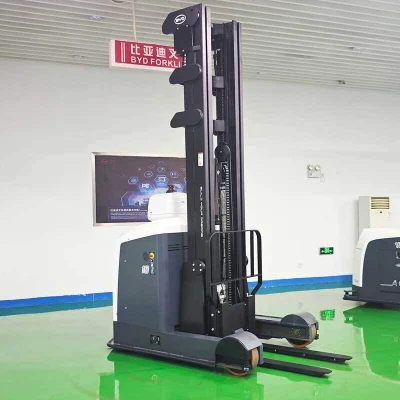
What should I include when asking about a four-wheel counterbalance electric forklift configuration?
Provide shift length and count, measured ambient temperature range, load weights and lift heights, floor and ramp conditions, charging location and ventilation, and the number of trucks sharing chargers. With those details, a supplier can propose a battery and charger combination and state the conditions under which it applies. Confirm all specifications against the written technical documents before ordering.