Comparing Different Forklift Types on Four-Wheel Counterbalance Electric Models: A Buyer’s Checklist of Questions to Ask Suppliers
News 08/11/2026
Buyers who search “different forklifts type” usually face the same problem: brochures describe many configurations, but the real decision sits inside a handful of operating numbers. When the scope is a four-wheel counterbalance electric forklift, the useful comparison is not a list of model names. It is a set of questions that reveal whether a supplier’s proposal matches your load, your building, your shift pattern, and your charging setup. This checklist organises those questions so you can compare answers side by side instead of comparing sales language.
Start with the Load, Not the Model Name
Rated capacity means little until it is tied to a load centre and a lift height. A truck rated at a nominal capacity at a standard load centre may carry less once the load centre moves outward or the forks rise. Ask suppliers to state capacity at the load centre and height your loads actually require, and to explain how the rating changes across the lift range.
Useful questions at this stage:
- What is the rated capacity, and at what load centre and lift height is it defined?
- How does capacity change at my maximum lift height and my longest load?
- What fork length and spacing does the proposal assume, and does that match my pallets?
- What attachment is quoted, and how does it reduce remaining capacity?
A common error is comparing two trucks by their headline capacity while ignoring load centre. If your loads are long or the attachment is heavy, the gap between the brochure figure and the usable figure can decide whether one truck is suitable at all. The honest answer may be that you need a different capacity class rather than a different brand.
Compare the Operating Envelope: Height, Aisle, Floor, and Slope
Four-wheel counterbalance electric forklifts are a common general-purpose choice in factories, loading areas, and warehouse transfers, but “general purpose” is not “universal.” The building usually sets harder limits than the truck. Ask suppliers to confirm each of the following against your actual site, not a typical site.
Lift height and overhead clearance
Confirm the maximum lift height you need, the collapsed mast height, and the free lift available. If you work inside trailers or under mezzanines, overhead clearance may rule out a tall mast even when the capacity is correct.
Aisle width and turning
Ask what aisle width the proposed truck needs with your pallet size, including the clearance margin the supplier recommends. Measure your narrowest real aisle, not the widest one. If the aisle is tight, discuss whether a four-wheel counterbalance truck fits at all before discussing options outside this class.
Floor condition and slope
Describe floor joints, drainage covers, ramps, and dock levellers. Ask how the truck behaves on the slopes you actually have and whether the supplier’s guidance changes with a loaded versus unloaded truck. Do not accept a generic “it handles ramps” answer; ask for the conditions attached to that statement.
Duty cycle and shift pattern
State how many hours the truck runs per shift, how many shifts per day, and how much of that time is lifting versus travelling. This shapes battery and charger sizing far more than the model name does.
Battery, Charging, and Site Readiness Questions
On lithium battery models, the buying decision often shifts from the truck to the charging infrastructure. Ask suppliers to separate what is known from what must be tested on site.
- What battery capacity is proposed, and what duty cycle does that assume?
- What charger is included, what input power does it need, and where must it be installed?
- Can the truck opportunity-charge during breaks, and what does the supplier say about partial charging?
- What ventilation, temperature range, and electrical protection does the charging area need?
- What battery data or monitoring is available, and who reads it?
Be cautious with claims about battery life or run time that arrive without test conditions. Ask what test produced the figure, at what ambient temperature, and with what load profile. If the supplier cannot describe the conditions, treat the number as marketing rather than planning data.
Supplier and Proposal Questions That Reveal Real Differences
Two proposals can look identical on paper and differ sharply in support, documentation, and configuration control. Use the questions below to compare the commercial and service side.
Configuration and documentation
Ask which parameters are fixed in the quotation and which remain open. Request the specification sheet that will govern delivery, including mast type, fork dimensions, attachment, tyres, and any derating. Confirm the manuals and language available.
Service, parts, and response
Ask what local service coverage exists, what parts are normally stocked, and how response times are defined. Vague assurances are not commitments; ask what is written into the agreement.
Acceptance and handover
Agree how the truck will be checked on arrival: capacity plate details, lift and lower function, brake and steering behaviour, and operator familiarisation. Confirm who performs the pre-delivery inspection and what record you receive.
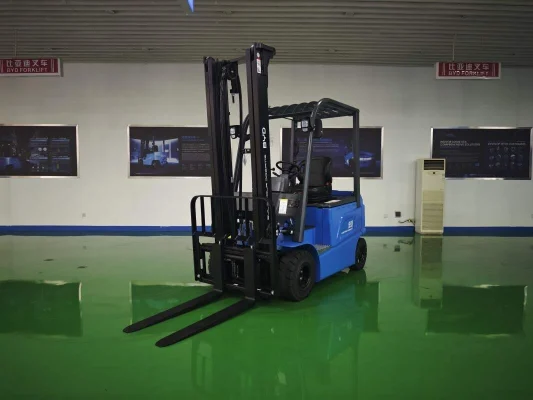
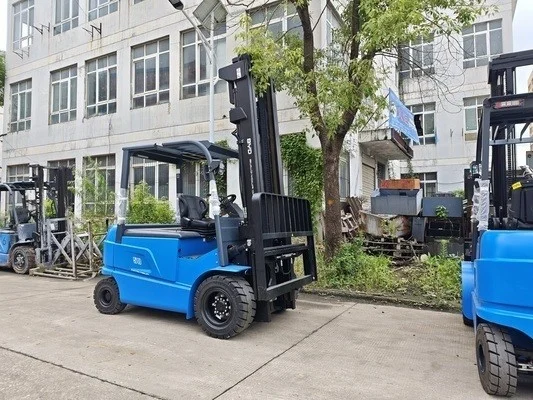
This is also the point to share your real operating conditions with the supplier. Load weight, lift height, aisle width, floor and slope details, shift hours, and charging location let a supplier propose a configuration you can verify. If you are evaluating BYD four-wheel counterbalance electric forklifts, ask which models and battery configurations are available to your site and request the current technical documentation rather than relying on general figures.
Quick comparison table
| Question area | What to ask | Why it matters |
|---|---|---|
| Capacity | Rating at your load centre and lift height | Headline capacity can overstate usable capacity |
| Height | Max lift, collapsed height, free lift | Overhead clearance may exclude a mast |
| Aisle | Required aisle width with your pallets | Site layout can rule out the class |
| Floor and slope | Behaviour on your ramps and joints | Affects safe operation and wear |
| Battery | Capacity, charger, charging window | Shift coverage depends on charging plan |
| Support | Service coverage and parts stocking | Downtime cost is often the deciding factor |
Frequently Asked Questions
Is a four-wheel counterbalance electric forklift suitable as a general factory truck?
It is a common general-purpose choice, but suitability depends on load centre, lift height, aisle width, floor condition, slope, shift hours, and charging arrangements. Confirm each condition with the supplier before treating it as a fit.
How do I compare two trucks with the same rated capacity?
Compare capacity at your actual load centre and lift height, then compare mast dimensions, required aisle width, battery and charger specification, and the service commitments in writing. Identical headline capacity does not mean identical capability.
What should I prepare before requesting a quotation?
Gather maximum load weight and dimensions, required lift height, narrowest aisle, floor and ramp details, daily operating hours, and the intended charging location and power supply. Suppliers can then propose a configuration you can check against site conditions.
Can I rely on run-time figures in a brochure?
Only if the test conditions are stated. Ask what load profile, ambient temperature, and charging pattern produced the figure. Without those conditions, treat the number as indicative and plan a site trial or a clearly defined acceptance check.
Before signing, reduce the comparison to a short list: verified capacity at your load centre, confirmed dimensions against your aisles and clearances, a charging plan that matches your shifts, and written service commitments. Where a supplier cannot answer a question, record it as an open item rather than assuming the best case.