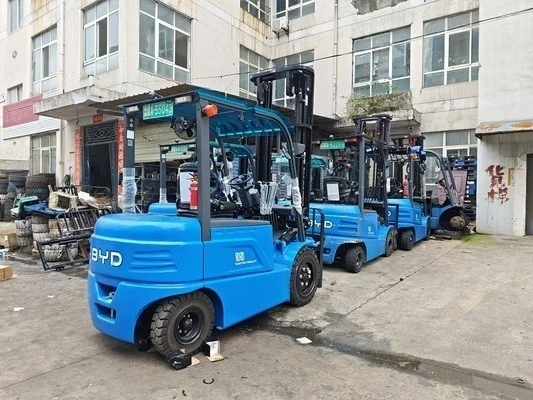
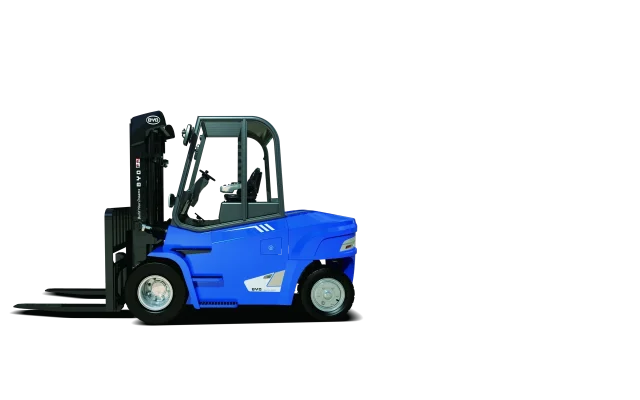
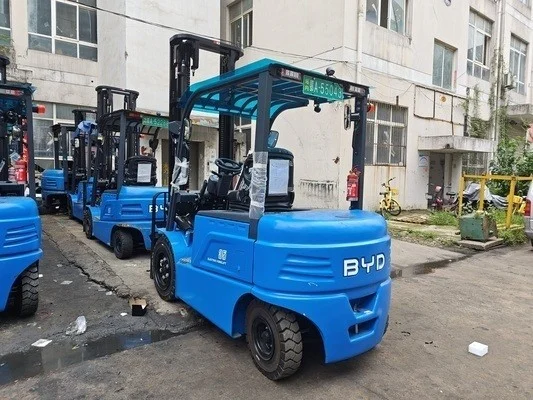
Four-Wheel Counterbalance Electric Forklift: Defining Duty Cycle and Shift Patterns Before Choosing Battery Capacity
News 30/10/2026
Battery capacity should follow the work, not the other way around. Before comparing kilowatt-hour ratings on a four-wheel counterbalance electric forklift, map two things: how hard the truck works during a shift (duty cycle) and how the operation structures its working hours (shift pattern). This guide explains which operating details to collect, how they narrow the capacity range, and where the decision still needs the manufacturer’s technical data. It is written as general selection guidance, not as measured test results.
Start with the Work, Not the Battery Label
A larger battery is not automatically the better choice. Capacity has to match the energy a truck actually consumes between charging opportunities, and that consumption depends on load weight, lift height, travel distance, attachment use, floor conditions and operator habits. In a factory setting, an electric forklift that runs short, repetitive cycles looks very different from one that moves heavy loads across long aisles or feeds a loading dock all day.
Two operations can use identical trucks and still need different battery strategies. One may run a single busy shift with a long break in the middle; another may run continuous three-shift coverage. The first can often be planned around opportunity charging, while the second needs a more careful energy balance or a battery exchange routine. Neither answer can be read from a sales sheet alone.
Useful first step: describe a typical day in plain language, then convert it into the variables below. This keeps the conversation with a supplier grounded in your operation rather than in generic recommendations.
Duty Cycle: The Variables That Drive Energy Use
Duty cycle describes how intensively the truck works. It is not a single number; it is a profile. The following factors are the ones most worth documenting before any capacity discussion.
Load weight and how often it approaches rated capacity
Record the typical load, the heaviest routine load, and how much of the shift is spent near the truck’s rated capacity. A truck rated at a given load may have a lower capacity once an attachment is fitted or the load center moves forward, so the load figures should always be checked against the data plate and the manufacturer’s load chart.
Lift height and lift frequency
Lifting consumes energy, and lifting heavy loads to high racks repeatedly is more demanding than moving pallets at floor level. Note the usual lift height, the maximum height, and roughly how many lift cycles occur per hour.
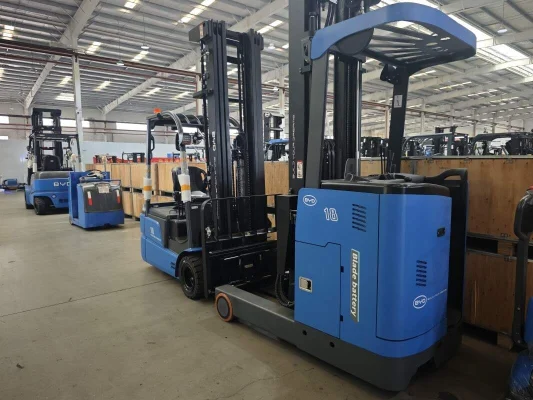
Travel distance and route character
Estimate distance per trip and trips per hour. Also note ramps, thresholds, dock plates and congested areas where the operator accelerates and brakes often. Frequent starting and stopping, reversing and tight maneuvering all add to the energy drawn from the battery.
Attachments and auxiliary functions
Clamps, rotators, side shifters and similar attachments change both the load chart and the energy profile. If an attachment is part of the plan, it belongs in the duty-cycle description from the start.
Environment and operator behavior
Cold storage, wash-down areas, dusty floors and uneven surfaces affect how the truck is driven. Operator habits matter too: smooth acceleration and planned routes usually consume less energy than aggressive stop-start driving. These are general tendencies, not guarantees, and they vary by site.
A simple duty-cycle worksheet
The table below is a template, not a set of recommended values. Fill it with your own observations, ideally from a timed study of a representative shift.
| Item | What to record | Why it matters |
|---|---|---|
| Typical and peak load | Weight range and share of time near rated capacity | Sets the real load the truck carries |
| Lift profile | Usual and maximum height, lifts per hour | Lifting is a major energy draw |
| Travel profile | Distance per trip, trips per hour, ramp use | Travel and acceleration add consumption |
| Attachment use | Type and share of time in use | Changes load chart and energy demand |
| Route conditions | Aisle width, floor type, congestion | Affects maneuvering and stop-start cycles |
| Idle and waiting time | Approximate minutes per shift | Distinguishes real work from standby |
Once this profile exists, the capacity question becomes narrower: how much energy does this profile require between charging windows, and what charging or exchange routine keeps the truck available?
Shift Patterns: Matching Charging Windows to Real Schedules
Shift pattern describes when the truck is available and when it is not. It determines whether a battery must carry the whole shift alone or can be topped up during breaks.
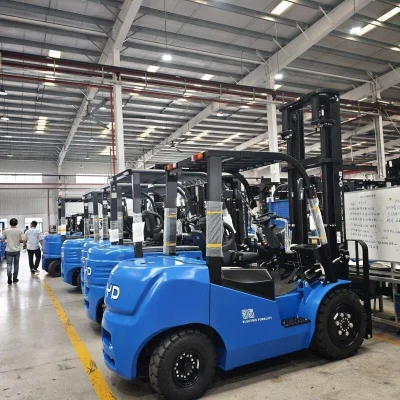
Single-shift operation with long breaks
A single shift with a meal break and a clear end-of-shift period often allows opportunity charging during breaks and a fuller charge overnight. The key checks are whether the charger is accessible where the truck parks and whether charging time fits inside the break without disrupting material flow.
Two- and three-shift operation
Continuous coverage reduces charging windows. Options include a larger battery, scheduled opportunity charging at every available pause, battery exchange, or a mix of these. Each option has trade-offs in capital cost, floor space, handling effort and the risk of a truck standing idle while it charges.
Seasonal or variable demand
Factories with peak seasons may need a battery strategy that handles the busiest weeks without over-specifying the quiet ones. It is worth asking whether the peak can be covered by tighter charging discipline, a spare battery, or temporary rental capacity, rather than by buying the largest battery available.
Charging infrastructure and site constraints
Confirm the available power supply, charger location, ventilation and the space needed to park and charge. Lithium-ion batteries generally suit opportunity charging better than older lead-acid designs, but the specific charging profile and limits must come from the battery and charger documentation. Do not assume any charging pattern is acceptable without confirming it with the supplier.
Turning the Profile into a Capacity Shortlist
With duty cycle and shift pattern documented, the next step is a structured conversation with the supplier. The goal is a shortlist of configurations that fit the work, not a single number pulled from a brochure.
Questions to bring to the supplier
- Given this load, lift height and travel profile, what energy consumption range should we expect, and on what basis is that estimate made?
- Which battery capacities are available on the four-wheel counterbalance electric forklift models you offer, and how do they change the truck’s weight, dimensions and load chart?
- What charging routine does the battery manufacturer permit, and what does that mean our shift pattern?
- If we add an attachment later, how does that affect both capacity and energy use?
- What documentation will confirm the final configuration: data plate, load chart, battery specification and charger requirements?
Trade-offs to weigh
A larger battery can reduce charging pressure but adds weight and cost, and may affect the load chart. A smaller battery with disciplined opportunity charging can work well in single-shift operations but leaves little margin during peak periods. Battery exchange adds handling equipment and a safe exchange area but can protect uptime in multi-shift use. None of these choices is universally right; the correct balance depends on the profile you recorded.
Common mistakes
- Choosing capacity from a competitor’s specification without checking the load chart your truck configuration.
- Assuming a full shift of charging is available when breaks are short or chargers are shared.
- Ignoring attachments, ramps or cold areas when describing the duty cycle.
- Treating a supplier’s estimate as a guarantee instead of asking what assumptions it rests on.
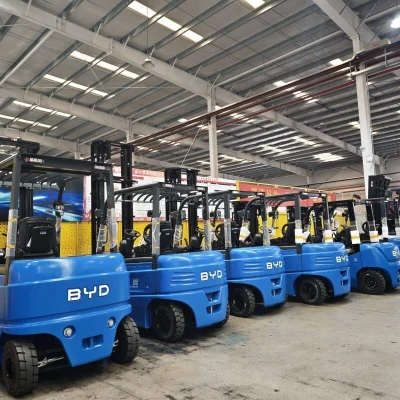
If you share your load range, lift height, shift schedule and charging conditions with us, we can help narrow the configuration options among our BYD four-wheel counterbalance electric forklifts and identify which parameters still need confirmation from the technical documentation.
Frequently Asked Questions
Can I choose battery capacity from the truck’s rated load alone?
No. Rated load tells you what the truck can lift under stated conditions, not how much energy a shift consumes. Load weight, lift height, travel distance, attachments and shift length all influence the energy requirement, so capacity should be sized against a documented duty cycle.
Is a bigger battery always the safer choice?
Not necessarily. A larger battery may reduce charging frequency but can add weight and cost and may alter the load chart. In some operations, a moderate battery with a planned charging routine is the more practical fit. The right answer depends on the shift pattern and the available charging windows.
How do I know whether opportunity charging suits my operation?
Check whether the truck has regular pauses long enough to charge, whether a charger is reachable without disrupting flow, and whether the battery and charger documentation permits the pattern you intend. Confirm these points with the supplier rather than assuming any pause is usable.
What should I prepare before requesting a configuration recommendation?
Bring a description of a typical shift, typical and peak loads, lift heights, travel distances, attachment use, floor and ramp conditions, the number of shifts per day, and the available power supply and parking space. These details let the supplier propose configurations grounded in your actual work.