How Traction And Brake Calibration Impact Factory Electric Forklift Operation On Inclined Loading Docks And Facility Ramps
News 15/10/2026
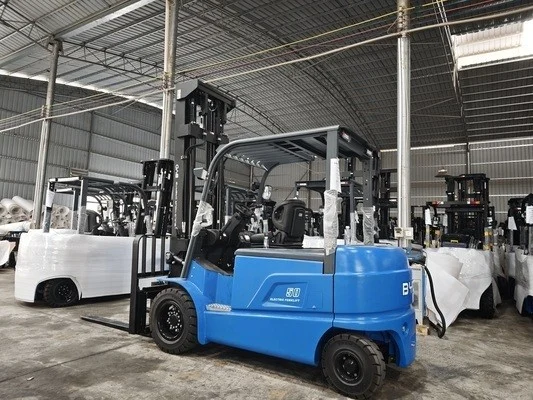
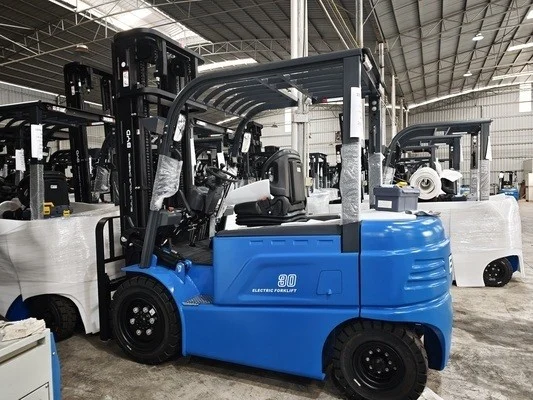
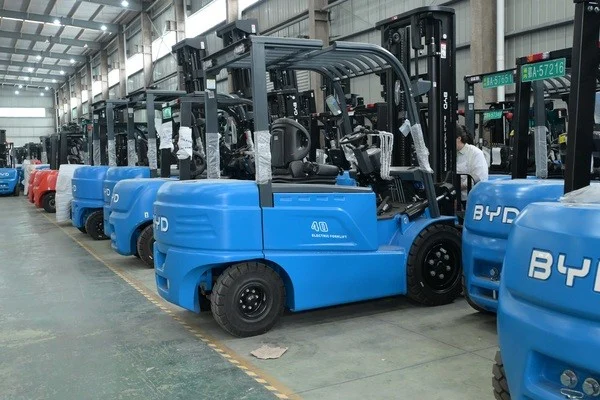
Manufacturing facilities regularly rely on factory electric forklifts moving loads between production floors and loading areas. Many of these areas sit on inclined loading docks or access ramps, where traction and brake calibration directly impacts daily safety and efficiency.
Core Risks Uncalibrated Systems Create In Manufacturing Operations
Uncalibrated systems create avoidable risks that disrupt production and threaten worker safety. Common issues include unexpected rollback during stops, traction loss during climbs, and uneven braking that causes load shift or drift into dock edges. Manufacturing operations see frequent daily load movements, so even small risks become major safety hazards over time.
Many facility ramps develop uneven surfaces or increased slope over years of heavy use, which means calibration needs shift as the facility ages, even when forklifts remain the same. Unaddressed calibration issues can also lead to premature component wear, increasing maintenance costs and unplanned downtime for production lines.
Key Calibration Parameters Manufacturing Teams Must Verify
| Parameter | Manufacturing Risk | Verification Step | Configuration Notes |
|---|---|---|---|
| Traction control response threshold | Unresponsive or overly sensitive control leads to wheel spin on ascent, rollback on stop | Test with maximum rated load up/down your typical facility ramp, check response consistency | Some systems allow on-site adjustment, others require factory setup; confirm available adjustment prior to delivery |
| Brake engagement balance | Uneven brake pull causes forklift to drift into dock edges or storage racking | Perform multiple stop tests at mid-ramp with full load, check directional stability | Standard on most models; periodic re-calibration included in most routine maintenance plans |
| Hill hold activation timing | Delayed activation allows unintended movement during load transfer | Measure activation timing from brake pedal press during stationary stop on ramp | Optional automatic hill hold available on higher-capacity models; confirm activation delay specification prior to purchase |
| Traction control torque distribution | Uneven torque delivery to drive wheels causes slip on stained or wet ramp surfaces common in manufacturing | Test on your facility’s actual ramp surface with typical moisture or debris conditions | Automatic adjustment to changing surface traction is often an optional upgrade |
Why Surface Conditions Change Calibration Requirements
Manufacturing ramps often have oil stains, spilled raw materials, or wet concrete from outdoor access. Uncalibrated traction systems cannot adjust torque delivery correctly, leading to slip events that threaten worker safety and damage loads. Facilities with frequent outdoor access need to test calibration against their actual working surface, not generic test conditions provided by equipment makers.
Calibration is not a one-time task. Worn ramp surfaces over years require periodic re-checks as part of routine forklift maintenance, to match changing conditions at your facility.
Purchasing And Pre-Delivery Checklist Suited To Manufacturing Facilities
- Share your ramp’s exact slope range and surface type with your supplier before finalizing your order; this lets technicians pre-calibrate systems to match your working conditions
- Require a full on-site test with your maximum expected load before accepting delivery of new equipment
- Confirm how often calibration needs rechecks, and whether your in-house maintenance team can perform adjustments or requires factory service
- Document initial calibration settings to create a baseline for future routine checks
- Verify automatic hill hold functionality matches your operation’s typical pause times during load transfer on ramps
Many manufacturing facilities change ramp usage over time, as production volumes increase or dock layouts change. Updating calibration after layout changes keeps operation safe and efficient. Older forklifts can also have shifted calibration from regular use, so adding traction and brake calibration checks to annual service schedules prevents unexpected issues.
Frequently Asked Questions
Can I use an older factory electric forklift on my inclined loading dock without re-calibration?
Older units can work safely on ramps only after a full calibration check. Wear on brake pads and traction system sensors shifts calibration over time, even when the unit worked correctly on the same ramp previously. Always complete a full test and adjustment before putting an older or used unit into regular ramp service.
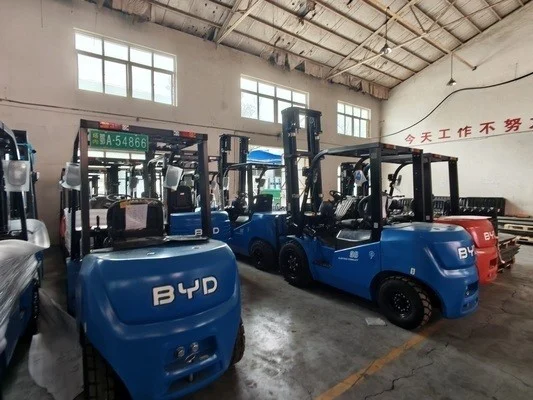
Does automatic traction control eliminate regular calibration check requirements?
Automatic systems adjust to changing surface conditions during operation, but base calibration settings can still shift from regular use, vibration, and component wear. Base calibration checks remain necessary to keep automatic systems working correctly.
Do all factory electric forklift models support ramp-specific calibration?
Not all models offer adjustable calibration suited to inclined surfaces. Lower-cost entry-level models often have fixed calibration settings designed primarily to work on flat factory floors. Confirm adjustable calibration capabilities with your supplier prior to purchasing if your operation requires regular ramp use.
How does calibration affect battery life of factory electric forklifts?
Poorly calibrated traction systems draw more power during ramp climbs, as wheel spin and uneven torque delivery wastes energy. Correct calibration reduces unnecessary power draw, which helps maintain consistent battery run time across full work shifts. Exact changes depend on ramp frequency and load size, so no universal performance gains apply without site-specific testing.