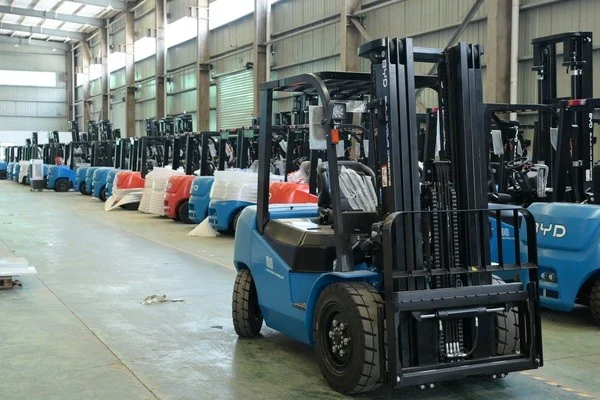
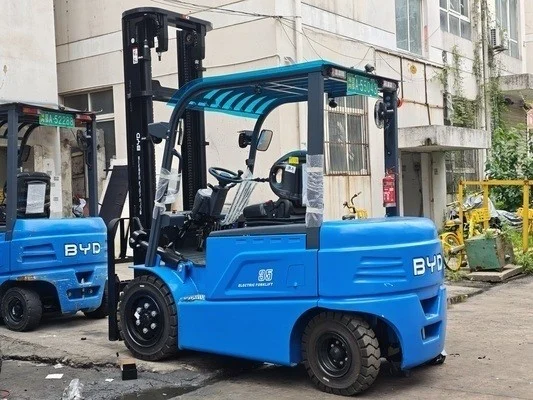
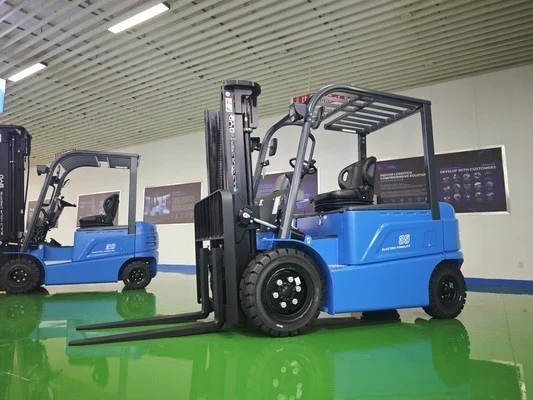
Four-Wheel Counterbalance Electric Forklift Fleet Planning: Matching Duty Cycle and Battery Capacity Across Different Forklift Types
News 13/11/2026
Fleet planning starts with one question: what does each truck actually do in a shift? Different forklift types exist because duty cycles differ, and a four-wheel counterbalance electric forklift is the right default when loads move on pallets, need lifting to racking, and must travel on mixed surfaces. The planning work is to match each truck’s duty cycle to battery capacity, then confirm the numbers against real aisle, load, and charging conditions rather than catalog claims.
Start With the Duty Cycle, Not the Truck
A duty cycle is the pattern of work a truck repeats: how much it lifts, how high, how far it travels, how often it stops, and how long it runs between breaks. Two trucks with the same rated load can have very different energy demands. Before comparing models, record the following per shift:
- Number of pallet moves and average load weight
- Lift height and whether loads are handled at the rated load center
- Travel distance and surface type (smooth concrete, ramps, dock plates, outdoor yards)
- Shift length, breaks, and whether the truck is shared between operators
- Charging windows and available power at the charging location
These inputs decide whether a single battery pack covers a full shift, whether opportunity charging is needed, or whether a spare battery makes sense. Without them, any battery capacity recommendation is a guess.
Where Different Forklift Types Fit
The phrase “different forklifts type” usually hides a simpler question: which truck class suits the aisle and the load? A four-wheel counterbalance electric forklift carries the load outside the wheelbase, so it needs more aisle width than a reach truck, but it handles trailers, dock work, and block stacking without a dedicated narrow-aisle layout. Reach trucks suit very narrow aisles and high racking. Pallet trucks and stackers suit horizontal movement and low lifts. These are different tools, not substitutes, and the choice should follow the layout and task, not a preference.
Three-point and four-point counterbalance trucks also differ. A three-wheel truck turns tighter, which helps in cramped areas, while a four-wheel counterbalance design generally offers more stability with heavy loads at height. If your aisles are tight or your lifts are very high, confirm whether a four-wheel counterbalance truck fits before committing the fleet to it.
Battery Capacity: What Actually Drives the Number
Battery capacity is measured in voltage and ampere-hours, and usable energy depends on the battery chemistry and the manufacturer’s discharge limits. A larger pack does not automatically mean a longer shift; the real figure is energy consumed per hour under your duty cycle. Ask the supplier to calculate expected runtime from your pallet count, average load, lift height, and travel distance rather than quoting a generic hours-per-charge figure.
Lithium batteries change the planning logic. They generally accept opportunity charging during breaks, which can reduce the need to swap packs between shifts. That advantage depends on charger availability, charging current limits, and the battery management system’s rules. Confirm these points in writing:
- Recommended charger output and charging time from a given state of charge
- Whether partial charging between shifts is permitted and under what conditions
- Operating and charging temperature limits
- Expected capacity loss over the warranty period and the warranty terms covering it
Matching Trucks, Shifts, and Charging in Practice
A practical fleet plan groups trucks by task rather than by department. Consider this hypothetical scenario: a warehouse runs two shifts, with dock unloading in the morning and put-away to racking in the afternoon. The dock trucks travel short distances with frequent stops; the put-away trucks lift higher and travel longer loops. Planning both with the same battery size may leave the put-away trucks short on energy while the dock trucks carry unused capacity.
The table below shows how to organize the comparison. It lists what to check, not verified product values, because those must come from the manufacturer’s data sheet and your own measurements.
| Planning item | Why it matters | What to confirm with the supplier |
|---|---|---|
| Rated load and load center | Capacity drops as load center moves outward or attachments are added | Remaining capacity at your actual load center and lift height |
| Lift height and mast type | Higher lifts reduce residual capacity and change stability | Capacity chart at your racking height |
| Aisle width and turning radius | Determines whether a four-wheel counterbalance truck can work the aisle | Turning radius and right-angle stacking aisle data |
| Battery voltage and ampere-hours | Sets available energy per charge | Runtime estimate based on your duty cycle |
| Charging method | Opportunity charging can cut battery swapping | Charger rating, charging windows, temperature limits |
| Floor and ramp conditions | Affects traction, braking, and energy use | Tire options and gradeability data |
Treat every row as a question to answer before purchase. If the supplier cannot provide a capacity chart at your lift height or a runtime estimate tied to your duty cycle, that is a gap in the proposal, not a detail to settle later.
Common planning mistakes
- Choosing battery size from a single shift average instead of peak demand
- Ignoring attachments, which change capacity and load center
- Assuming a tighter-turning truck fits every aisle without measuring
- Buying chargers after the trucks, when charging windows are already fixed
- Comparing trucks across different duty cycles as if the numbers were equivalent
Frequently Asked Questions
How do I know whether one battery covers a full shift?
You cannot know from the truck’s rated load alone. Record pallet count, average weight, lift height, and travel distance per shift, then ask the supplier to estimate energy use from those figures. If the estimate is close to the battery’s usable capacity, plan opportunity charging or a spare pack.
Does a four-wheel counterbalance electric forklift suit narrow aisles?
Often it does not, because the load is carried ahead of the wheels and the truck needs a wider right-angle stacking aisle than a reach truck. Measure your aisle and compare it with the manufacturer’s stacking aisle data. If the aisle is too narrow, a different truck class is the honest answer.
Can lithium batteries be charged during breaks?
Many lithium battery systems allow opportunity charging, but the permitted current, temperature range, and charging windows are set by the battery and charger manufacturers. Confirm these limits in writing rather than assuming every pack behaves the same way.
What data should I collect before requesting a fleet proposal?
Collect aisle widths, racking heights, average and peak load weights, load center, floor and ramp conditions, shift patterns, charging location and available power, and any attachments in use. These inputs let the supplier size trucks and batteries against your operation instead of a generic profile.
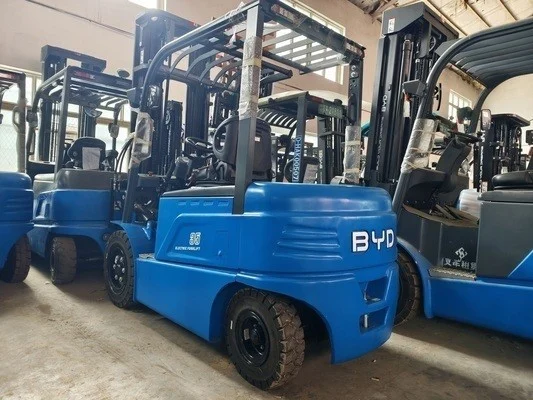
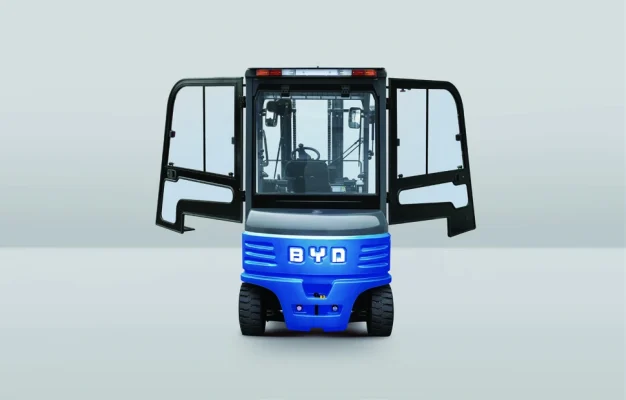
To move from planning to a concrete proposal, share your actual duty cycle, load weights, lift heights, and charging conditions with our team. We can then discuss suitable configurations within our range of BYD four-wheel counterbalance electric forklifts and identify which specifications still need confirmation from the manufacturer’s technical data.