Four-Wheel Counterbalance Electric Forklift Battery Options: Comparing Lithium-Ion Pack Configurations and Charging Logistics
News 12/11/2026
A four-wheel counterbalance electric forklift can use more than one lithium-ion pack architecture, and the choice affects how the truck fits your shift pattern, charging area and floor space. The main decision is not simply which pack is “better.” It is whether a given pack configuration, charge window and facility layout can keep the truck available without overloading your electrical capacity or blocking aisles. This comparison sets out the dimensions that matter when you specify a lithium-ion pack on a four-wheel counterbalance electric forklift, and it identifies the details you should confirm with the manufacturer before ordering.
What Actually Differs Between Lithium-Ion Pack Configurations
Lithium-ion is a broad category, so two trucks advertised with “lithium-ion” packs may differ in cell chemistry, nominal voltage, capacity, physical enclosure, battery management system (BMS) behaviour and how the pack is removed or exchanged. Treat each of these as a separate comparison dimension rather than assuming they move together.
Voltage and capacity relative to truck class
Pack voltage must match the truck’s electrical system, and capacity must be read alongside the duty cycle you expect. A pack sized to a light single-shift routine will not necessarily support a demanding multi-shift schedule. Because we have no verified performance figures here, the practical step is to ask for the manufacturer’s technical data sheet and confirm the rated voltage, rated capacity and the duty assumptions behind any runtime statement.
Pack enclosure and exchange method
Some lithium-ion packs are built as fixed enclosures charged in place; others are designed to be removed or exchanged. Exchangeable designs can reduce time spent waiting on a charger, but they require lifting equipment, a dedicated exchange area and trained staff. Fixed packs simplify handling but make charging time part of the operating schedule. Neither approach is universally superior; the right one depends on how many trucks you run and how much space you can allocate.
Battery management and charging communication
The BMS governs how the pack accepts charge and what it reports to the charger and the truck. Confirm whether the charger and pack are designed to communicate, what charging profile is specified, and what the BMS does at temperature extremes. These details belong in the technical documentation, not in assumptions based on the word “lithium.”
Charging Logistics: Matching the Pack to Your Site
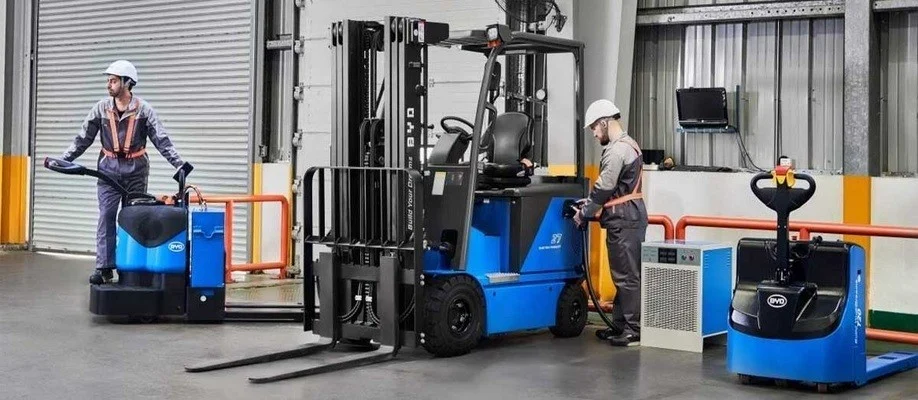
Charging logistics often decide the outcome more than the pack label does. Before comparing configurations, map your actual operating day: how long the truck works, when it can be parked, where it can be parked, and what electrical supply is available at that location.
Opportunity charging versus a fixed charge window
Opportunity charging means topping up during breaks and idle periods; a fixed window means a single planned charge period. Opportunity charging can suit operations with frequent short pauses, but it depends on charger availability at the parking point and on the pack being rated to accept partial charges. A fixed window is simpler to schedule but concentrates demand on one period. Ask the manufacturer which pattern the specified pack and charger support, and do not assume partial charging is acceptable on every pack.
Electrical capacity and charger placement
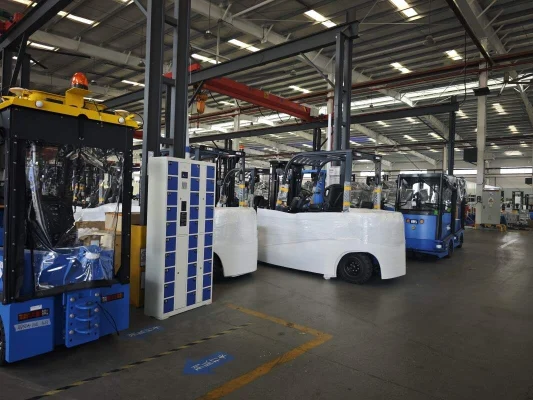
Charger input requirements, site wiring and available power should be checked by a qualified electrical professional. Charging areas also need ventilation and clearance consistent with the equipment instructions. Placing chargers near the work area shortens travel, but it may conflict with aisle width or pedestrian routes. In a hypothetical warehouse layout, a common mistake is reserving charger space on paper without checking whether a loaded four-wheel counterbalance electric forklift can still turn and exit safely.
Multi-shift planning and pack count
When a truck runs across shifts, the question becomes how many packs or charging positions are needed to keep it available. This is a scheduling calculation based on your own shift lengths and confirmed charge times, not a fixed rule. Request the manufacturer’s charging time data under stated conditions and build the plan from those figures.
Selection Checks and Common Mistakes
Use the following checks to compare configurations on equal terms. They are general selection guidance, not a ranking of pack types.
- Confirm the truck class first. The pack must be specified for a four-wheel counterbalance electric forklift, not adapted from another vehicle category.
- Match capacity to duty, not to habit. Oversizing adds cost and weight implications; undersizing risks interrupted work. Base the decision on documented duty assumptions.
- Check lift height, load centre and attachment effects. These change the energy demand and stability envelope, so the pack and truck specification should be reviewed together.
- Verify the charging environment. Confirm supply, ventilation, clearance and the charger model the pack is designed to work with.
- Plan pack handling. If exchange is intended, confirm lifting provisions, floor space and staff training requirements.
- Read the warranty and service terms. Ask what the documentation states about pack care, inspection and end-of-life handling.
A frequent error is treating “lithium-ion” as a complete specification. Another is buying a pack based on a quoted runtime without recording the test conditions. Since we have no verified test data in this article, we do not present runtime or life comparisons. Instead, require the manufacturer to state the conditions behind any figure and keep that record with your purchase documents.
If your operation involves ramps, uneven floors, narrow aisles or heavy attachments, raise these points early. A pack configuration that works on a flat, wide aisle may not suit a constrained layout, and the truck’s suitability should be assessed as a whole. To move from general comparison to a specific proposal, share your load weight, lift height, shift pattern, floor and aisle conditions, and charging location with our team so the four-wheel counterbalance electric forklift specification and lithium-ion pack can be checked against your actual requirements.
Frequently Asked Questions
Can any lithium-ion pack be fitted to a four-wheel counterbalance electric forklift?
No. The pack must match the truck’s voltage, mounting arrangement and control communication, and it must be approved by the manufacturer for that model. Fitting an incompatible pack can affect safety, warranty and performance. Always confirm compatibility using the truck’s technical documentation.
Is opportunity charging suitable on every lithium-ion pack?
Not necessarily. Whether partial charging is acceptable depends on the pack’s BMS and the charger’s specified profile. Ask the manufacturer to confirm the supported charging pattern rather than assuming all lithium-ion packs behave the same way.
How do I decide between a fixed pack and an exchangeable pack?
Compare your shift pattern, the confirmed charge time, available floor space and the labour needed to exchange packs. Fixed packs suit operations that can schedule charging around work; exchangeable packs may help where continuous availability matters, provided handling equipment and a safe exchange area exist.
What information should I request before ordering?
Request the technical data sheet, the rated voltage and capacity, the supported charging profile, charger compatibility, handling instructions, warranty terms and any stated test conditions behind performance claims. Also confirm the truck configuration, including lift height and load centre, matches your application.